The European Union is evaluating a new tightening of Russian oil: Brussels is reportedly examining the possibility of freezing the dynamic price cap on Moscow crude at current levels, preventing the automatic increase expected for the summer.
The measure would be part of the twenty-first package of sanctions against Russia and would have a dual objective: to limit the Kremlin’s revenues and contain the instability of oil prices. The indiscretion is reported by Bloomberg.
How the dynamic price cap on Russian oil works
Last year the EU introduced a dynamic system to cap the price of Russian oil. The mechanism provides for the limit to be set at 15% below the average market price of Urals crude oil.
The decision came after the previous fixed price cap (i.e. price limit) of 60 dollars per barrel, introduced in 2022, had progressively lost effectiveness due to changes in the energy market.
With the recovery of international prices, the system should have brought the ceiling to around 65 dollars a barrel in July. Now, however, Brussels is considering blocking the automatic adjustment.
The EU plan on Russian oil
The hypothesis is to maintain the current limit at 44.10 dollars a barrel. In this way the limit would remain more than 20 dollars lower than the 65 dollars foreseen by the current mechanism for the summer.
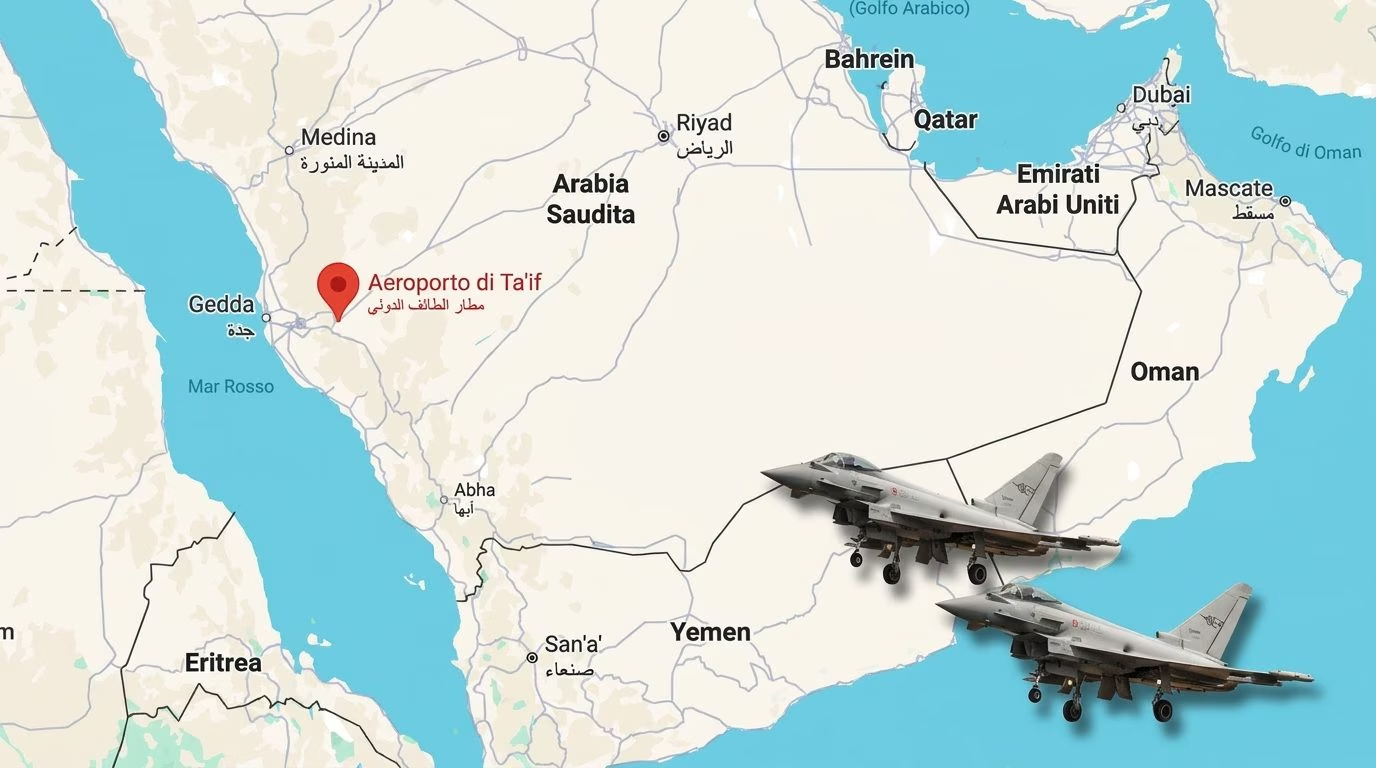
The measure, if confirmed, would tighten restrictions on Russian oil just as Moscow’s energy revenues are starting to grow again thanks to the Strait of Hormuz crisis.
According to the Crea research center, in April 2026 revenues from Russia’s fossil fuel exports increased by 4% compared to the previous month, reaching 733 million euros per day. This is the highest level recorded in the last two and a half years, despite a 7% reduction in export volumes.
Moscow’s response
No official comments on the possible European initiative have arrived from the Kremlin. Presidential advisor Kirill Dmitriev intervened, commenting on the indiscretion on X by writing:
As expected, the energy crisis is forcing the EU to be more realistic and start correcting the mistakes of the past. Europe needs Russia to survive.
In the meantime, however, the weight of Russian oil in European imports continues to decline.
How much Russian oil still reaches Europe
The data indicates that in 2025 the share of Russian oil in European imports fell to 2.2%, compared to more than 24% recorded before the invasion of Ukraine.
The supplies still present on the European market mainly concern the exemptions granted to Hungary and Slovakia through the Druzhba pipeline. In Italy, however, direct imports of Russian crude oil are now minimal.
New sanctions against banks and financial operators
But freezing the price cap would not be the only measure being studied by the EU. Always second Bloombergthe new package could include further restrictions against third-country banks, oil traders, refineries and cryptocurrency operators accused of facilitating Russia’s economic activities.
At the moment, however, the introduction of a total ban on maritime services linked to the transport of Russian crude oil appears less likely.