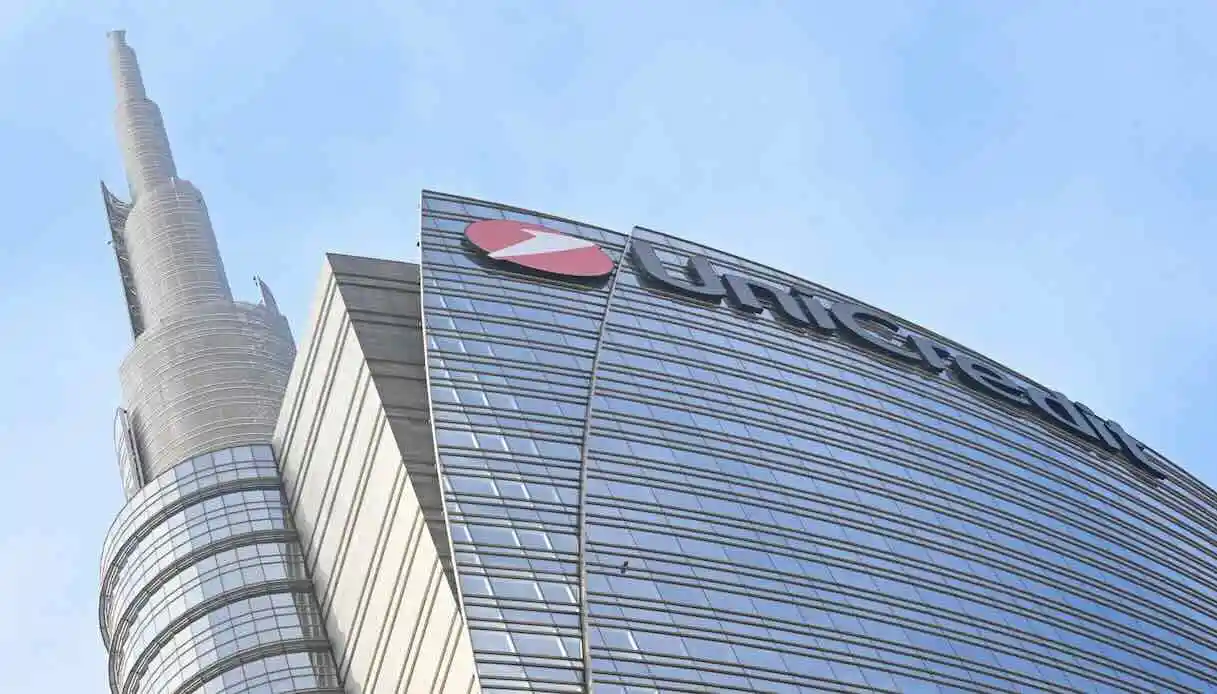
The Milan-Frankfurt banking axis is strengthening, at the center of the largest European financial consolidation maneuver in recent years. The Public Exchange Offer (OPS) launched by UniCredit on Commerzbank is progressing successfully and laying the foundations for redefining the balance of the Eurozone banking sector. Official data confirms that the strategy of UniCredit’s CEO, Andrea Orcel, is bearing the desired results, despite the wall raised by Germany.
The partial results of the OPS and the “Potential” control
UniCredit has officially declared that it has achieved your own strategic objective initial to exceed the threshold of 30% of Commerzbank’s share capital.
Thanks to the subscriptions to the OPS equal to approximately 7.6% of the capital, UniCredit’s direct shareholding rose to 34.35% from the initial 26.8%. But the most striking data concerns the aggregate position: by adding the direct shares and the package of complex derivative instruments (both physically and cash-settled), UniCredit today holds the potential control of 50.67% of Commerzbank.
The offer, which will remain open until June 16, 2026with a possible technical extension until the beginning of July, provides for an exchange ratio of 0.485 new UniCredit shares for each Commerzbank share, corresponding to approximately 30.8 euros per share, with a premium of 4% on the closing date of 13 March. The overall offering is valued at approximately 38.6 billion euros.
The Purpose of the Operation
UniCredit’s strategy is not limited to simple geographical expansion, but responds to precise industrial logics. The union between UniCredit (which already owns HypoVereinsbank in Germany) and Commerzbank would create the first banking group on German soil and an absolute leader in the Eurozone.
Then there are reasons that concern purely economic aspects such as synergies and cost cutting: UniCredit’s model aims to streamline processes and digitalize structures, with the aim of generating a strong increase in combined net profit by 2028, reducing overlaps and operating costs of the German bank.
The operation also aims to Strategic flexibility (Optionality)as the massive use of cash-settled derivatives allows UniCredit to lock down its takeover, preventing other competitors from interfering, while maintaining the freedom to reduce the share if market conditions or European regulators should make it necessary.
Commerzbank’s Position
Commerzbank management firmly rejected the offer from day one, calling it “unagreed” and in fact hostile. According to Commerzbank, the price offered by UniCredit (currently at a discount compared to the market prices of the German stock) does not in the slightest reflect the real intrinsic value and autonomous growth potential of the bank.
Furthermore, German leaders and internal unions fear that UniCredit’s plan is purely a “cost-cutting maneuver” that would put thousands of jobs in Germany at risk, weakening credit support for the Mittelstand (the historic small and medium-sized German companies).
The Role of the German Government
Behind the corporate clash, a political battle is also taking place, as Berlin still holds a strategic share of the 12% in Commerzbank and confirmed its firm opposition to the Italian takeover, in an attempt to protect the independence of a financial column of the country.
However, with UniCredit now above the 30% threshold and with its hands on more than half of the potential voting rights, Berlin’s position becomes more difficult. In the coming weeks, after the official closure of the OPS in mid-June, the focus will shift to ECBwhich will have to formally authorize UniCredit to increase up to 50%. The game is still long: UniCredit itself estimates that to complete the entire operation and proceed with the possible integration we will have to wait for the first half of 2027.