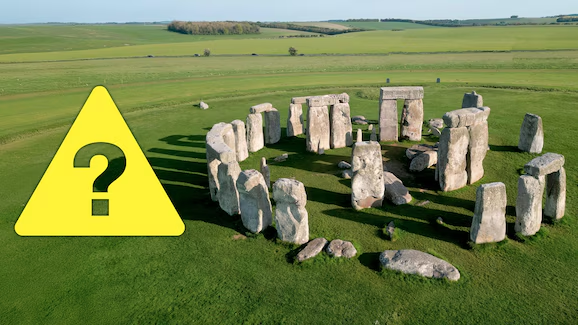
An ancient wooden monument dating back around 5,000 years ago could help better understand the origins of the astronomical practices that characterize Stonehenge. The discovery was made at Bulford, on Salisbury Plain, where archaeologists from Wessex Archeology identified a Neolithic structure aligned with major solstitial events.
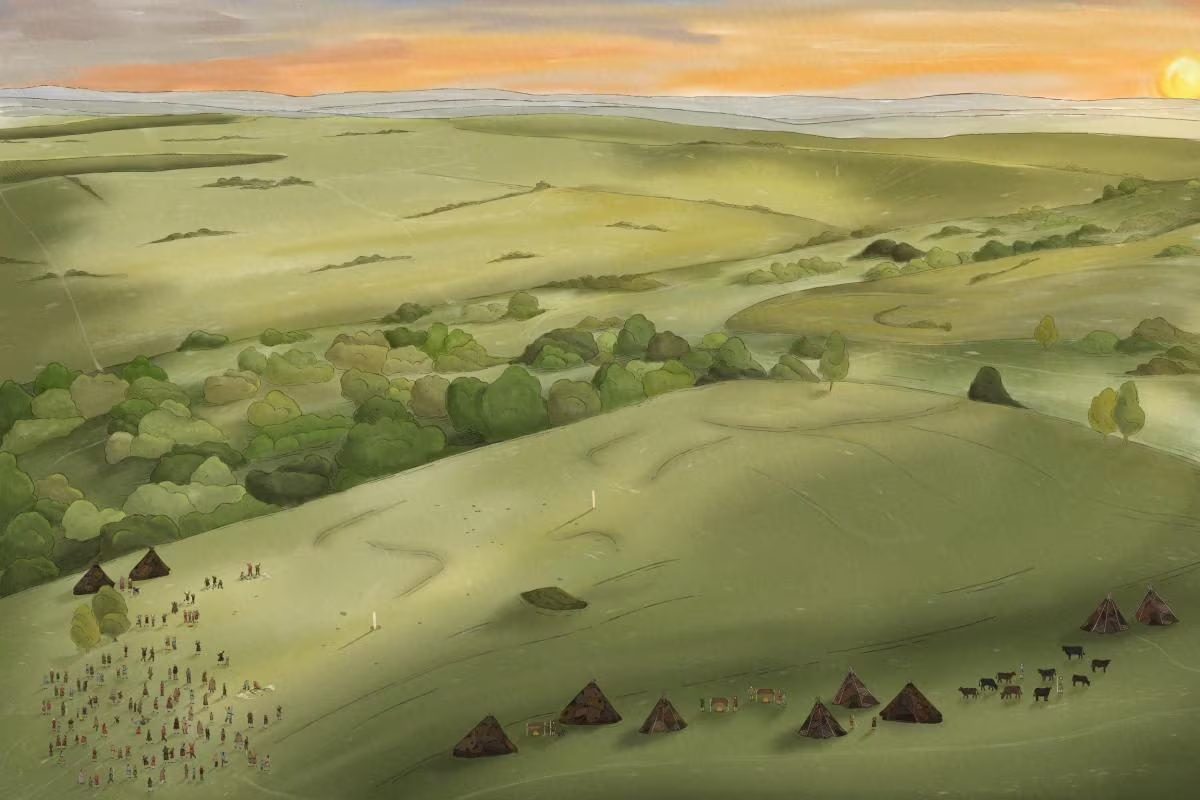
The site, which contains the oldest known structure aligned to the solstices in the entire Stonehenge area, was identified during preventive investigations conducted between 2015 and 2017 in view of the construction of new military infrastructures. The excavations brought to light two large pits which originally housed large wooden poles. Radiocarbon dating places the construction around 2950 BC, several centuries before Stonehenge’s best-known monumental phase, constituting a “prototype” – not in the sense of a model, but as part of the same cultural context and evidence of attention to alignments.
The analysis of the archaeological context has shown in fact that the two poles were arranged along an axis oriented towards the sunrise of the summer solstice and the sunset of the winter solstice. To test this interpretation, the team collaborated with archaeoastronomer Fabio Silva, who reconstructed the landscape and apparent position of the Sun in the Neolithic.
The results indicate that the alignment is not random, and that the structure was likely designed to highlight these particular times of the year. According to archaeologists, the Bulford monument belongs to a tradition of wooden structures that preceded the construction of the large megalithic complexes in the region. In this period, wood was in fact one of the main materials used to create ceremonial fences, monumental poles and other places intended for community activities.
The discovery is extremely important because it shows that interest in solar cycles was already present in Salisbury Plain before the erection of the famous Stonehenge stones.
Scholars believe that the observation of the solstices could have had practical functions linked to the seasonal calendar, but also a role in the ritual activities of Neolithic communities. The experts at Wessex Archeology underline that it is not a primitive version of Stonehenge in the strict sense, but rather a testimony belonging to the same cultural context. However, the presence of such an ancient solstitial alignment suggests that some of the ideas behind the famous monument were already developed in the region several centuries before its construction.