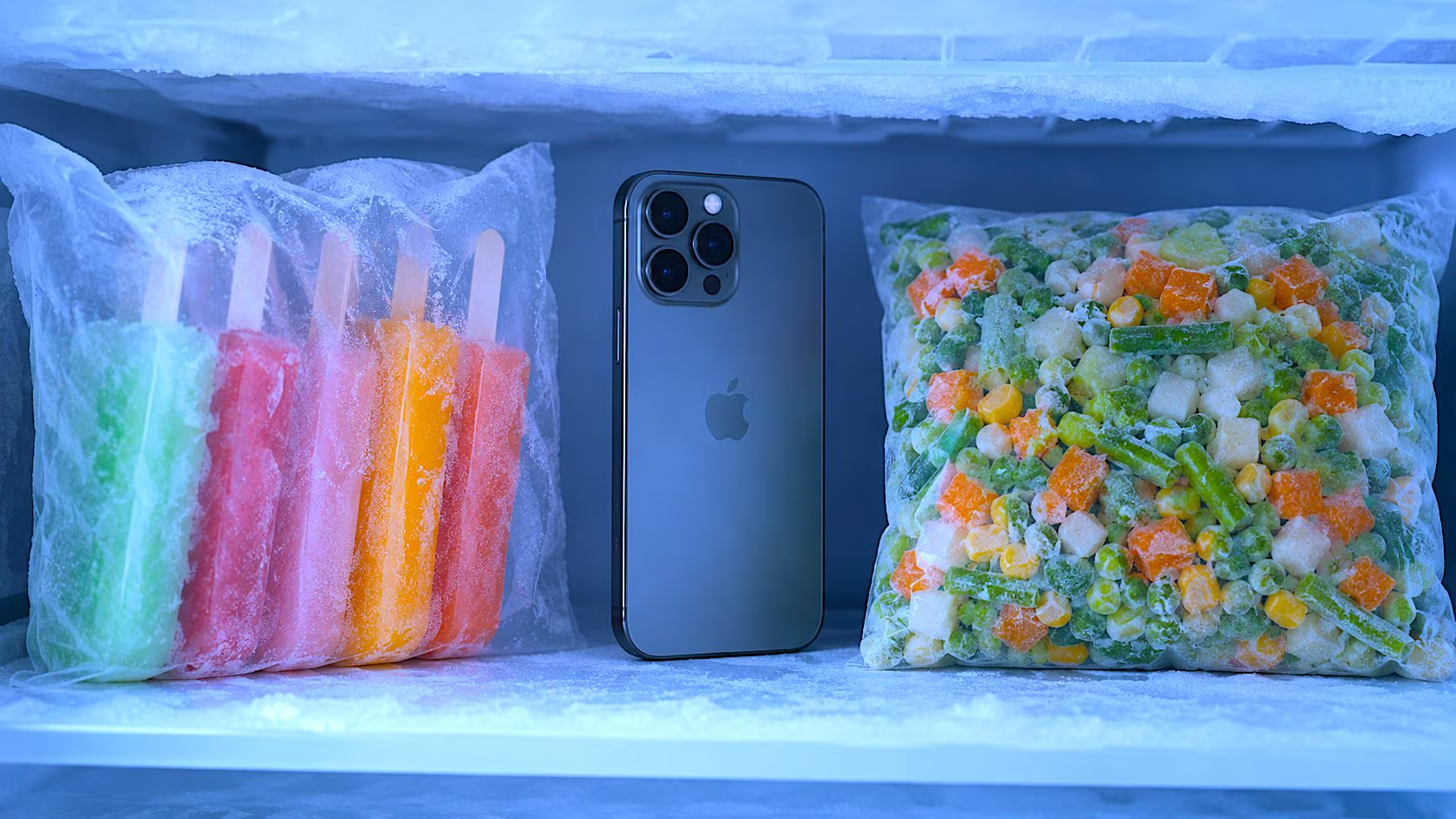
The heat waves that have kept Europe in check could push us to look for imaginative solutions, if we want to put it mildly, to keep smartphones and other electronic devices safe. Among the “artisanal” remedies that are back in fashion this year – also thanks to viral videos on social media – is putting your smartphone in the freezer. This practice is absolutely inadvisable and represents one of the worst mistakes you can make with your phone.
By returning the smartphone to a higher temperature than that of the freezer, condensation can form inside it; not to mention that the device could be damaged by thermal shock. To protect your smartphone from the heat, as Samsung and Apple explain, it is better to resort to calmer solutions, for example avoiding exposing it to direct sunlight, using it less on the hottest days and removing the cover to facilitate heat dissipation.
What happens if I put my phone in the freezer: condensation and thermal shock
One of the biggest problems that arise from putting your smartphone in the freezer concerns the formation of condensation. The risk is not so much when the phone remains in the freezer, but when it is removed and brought back to room temperature: the risk of humidity forming inside the device is real. This is because when the phone abruptly switches from a very cold environment to a warmer one, water vapor from the air condenses on contact with the still cold internal components. Moisture can thus reach delicate components such as the logic board and display, promoting corrosion, short circuits and failures.
Then there is the issue of thermal shock: a too rapid change in temperature puts stress on the internal materials, which expand and contract differently from each other. According to the magazine TechSpotthis sudden change in temperature can «excessive stress on the screen, glass, gaskets, adhesives and internal components; and battery damage due to extreme cold».
It is the lithium ion battery that pays the highest price, the technology used by the majority of smartphones in circulation. Its operation is based on the movement of ions between two electrodes during the charging and discharging processes: too high temperatures or sudden thermal changes can deteriorate the internal structure, to the point of causing it to swell, a clear signal that something has gone wrong and that it must be replaced immediately.
How to protect your smartphone from the heat safely
Now that we understand that putting your smartphone between popsicles and frozen minestrone soups isn’t the best thing, let’s try to understand what to do to protect your smartphone from the heat. Here are five useful tips for the summer, which you could learn more about with the dedicated article you find at the end of the bulleted list:
- Avoid direct sun: even a few minutes are enough to cause the body temperature to rise rapidly.
- Lighten your workload: no gaming, streaming or heavy apps on hot days.
- Lower the brightness: this way the phone will heat up less.
- Don’t charge it unnecessarily: charging also generates heat, so it’s best to avoid it if the phone is already hot.
- Remove the cover if the phone gets hot: then place the device in a cool, shaded place, but never in the fridge or freezer, obviously!