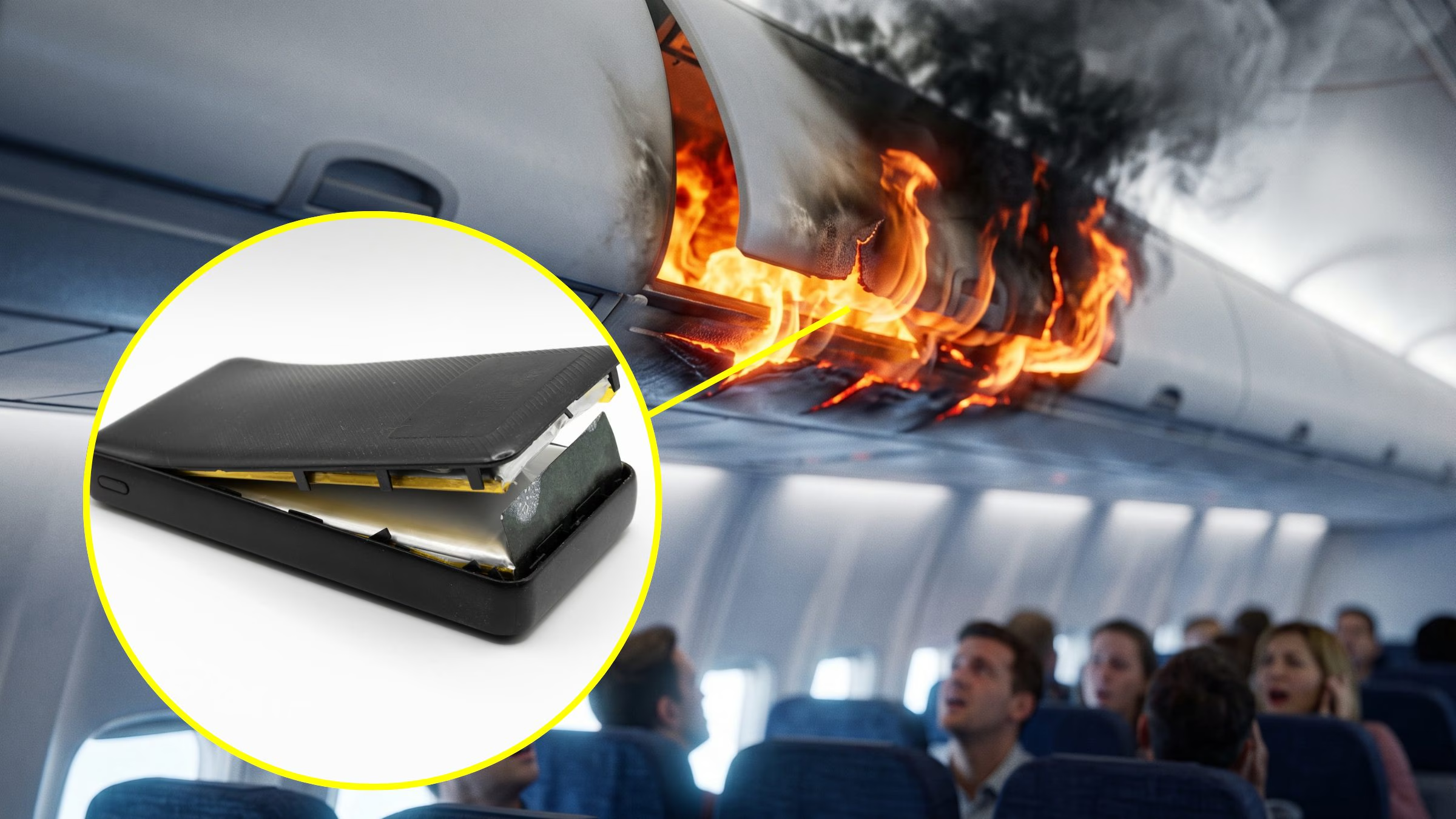
A recent event on board an Air China flight, during which a power bank caught fire, forcing an emergency landing, has brought attention to the issue of safety of electronic devices on airplanes. Episodes of this type occur periodically, raising a common question: does transporting portable batteries at altitude pose a risk?
From a technical perspective, the pressurized environment of the aircraft is not the cause of the trigger. Power banks can only overheat and generate flames if they have manufacturing defects, are damaged, overcharged or exposed to extreme temperatures. The frequency with which these events are recorded on board is linked to a statistical question: the growing dependence on electronic devices (smartphones, tablets, computers) means that on every commercial flight there is a very high concentration of lithium batteries.
ICAO provisions for the in-flight transport of portable batteries
Precisely to manage the high presence of these energy accumulators, the International Civil Aviation Organization (ICAO) has introduced specific directives. Starting from March 27, 2026, the regulation provides that:
- Each passenger can carry a maximum of 2 power bankswith a capacity not exceeding 100Wh each.
- The devices cannot be used (and therefore do not have to deliver or receive charge) during the flight.
- Transportation is permitted exclusively in hand luggage and is strictly prohibited in the hold.
- Battery contacts should be isolated (for example by placing them in protective bags or covering the connectors with adhesive tape) to prevent accidental short circuits.
The chemistry of lithium batteries: what is “thermal runaway”
To understand why a damaged power bank can catch fire, it is necessary to analyze its internal functioning and the chemical-physical process known as thermal runaway (thermal runaway). Lithium ion batteries are made up of two electrodes, an anode and a cathode, immersed in a liquid solution called electrolyte, which has the task of conducting the ions. These electrodes have protective layers to prevent corrosion and are kept physically separated by an insulating membrane.
During the normal charge or discharge cycle, a part of the energy is physiologically dissipated in the form of heat. However, if the battery is defective or has suffered structural damage, this heat increases abnormally. When the internal temperature exceeds a specific critical threshold, a chain reaction is triggered: the excessive heat initially wears out the protective layer of the anode which, finding itself exposed, enters into a direct chemical reaction with the electrolyte. This exothermic process generates further heat, quickly leading to the melting of the separating membrane. If this fundamental physical barrier fails, the anode and cathode come into contact, causing an internal short circuit. At that point, temperatures soar enough to vaporize the electrolyte, releasing flammable gases and oxygen. The result is autonomous internal combustion that continues to feed itself.
The importance of hand luggage
The only effective method to stop this chain reaction is to quickly and significantly lower the temperature of the device.
This is the technical reason behind the ban on transport in the hold: keeping power banks in hand luggage, inside the passenger cabin, allows the crew to immediately notice any onset of overheating (noticing smoke or anomalous heat) and to intervene promptly with the cooling and containment procedures required by aeronautical protocols.
Using certified batteries, in good condition and complying with ICAO regulations remains the main method to guarantee safety on board.