Cer’s territorial growth estimates for Confesercenti, developed with Cer’s econometric model starting from the latest Upb forecasts, showed an increase in gross domestic product expected for 2026 of 0.9% for Italy, beyond the estimates of the Government and international organisations.
However, the report also shows the strong divisions between the various territories. One of the most relevant data concerns the North, which is returning to growth faster than the rest of the country, while the South, with the PNRR investments running out, is struggling. In both areas, however, cities emerge as the engine of the economy.
How much Italy will grow in 2026
Confesercenti estimates show that Italian GDP could grow by 0.9% in 2026. This is a more positive figure than other estimates. The OECD, the International Organization for Economic Development, in June estimated Italian growth for this year at 0.5%.
The latest Istat findings, however, give support to these estimates, given that the increase in GDP in the second quarter led to an acquired growth of 0.8%.
The regions that will grow the most and those that will grow the least
However, Cer’s estimate also separates the data by region, identifying those with the most sustained growth:
- Tentino-Alto Adige, +1.5%;
- Lazio, +1.2%,
- Tuscany, +1.2%;
- Emilia-Romagna, +1.1%;
- Basilicata, +1.1%;
- Liguria, +1.1%.
They do worse, however:
- Valle d’Aosta, -0.1%;
- Calabria, +0.1%;
- Molise, 0.5%.
The role of cities in the economy: the surprise of Naples
Confesercenti underlines the importance of cities in Italian economic growth. The regional capitals often drag an entire area, with Rome and Milan which, alone, represent 20% of the entire Italian GDP. However, it is not those with the most sustained growth that surpass Bolzano, whose GDP increases by 1.8%.
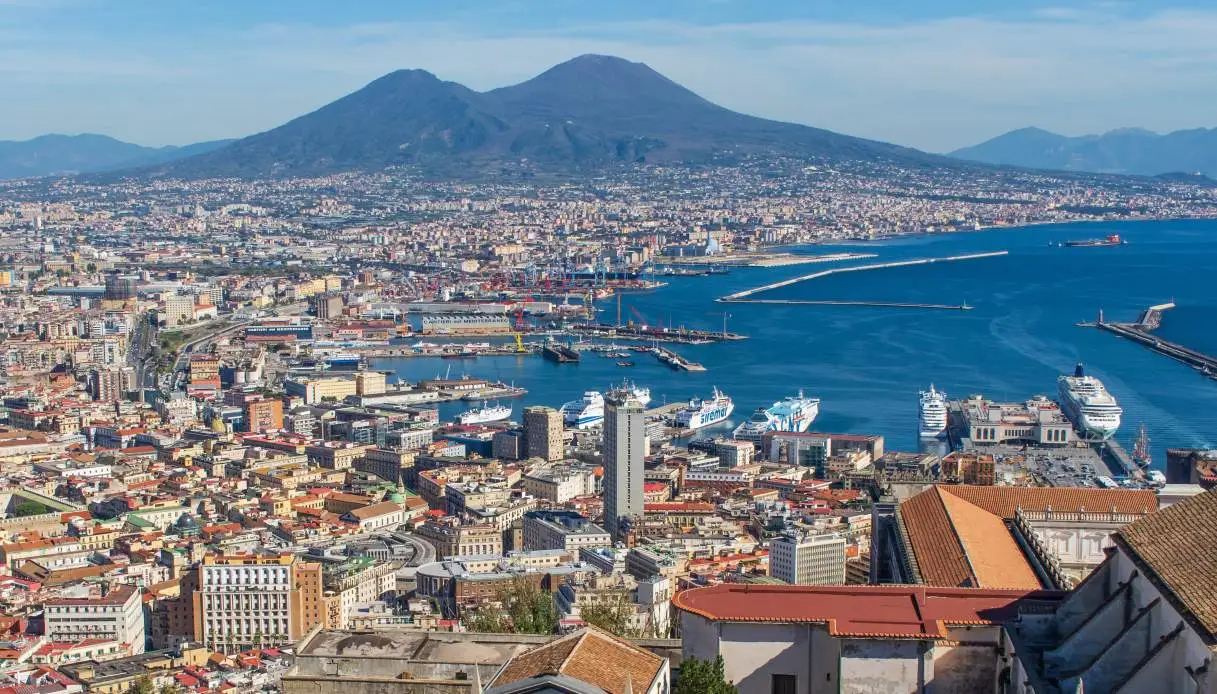
The figure for Naples is notable, growing at 1.5%, only a tenth of a point less than Milan and Rome. This is an increase in GDP in strong contrast with that of the area in which the city is located, the South and the Islands, which grows by only 0.8%.
Inflation hits the South the hardest
Confesercenti’s estimates also calculated possible inflation, heavily influenced by the war in the Middle East and the resulting economic crisis. There are few cities below 2%, the threshold considered ideal, while there are several, especially in the South, where the increase in prices is very significant:
- Reggio Calabria, +4.3%;
- Naples, +3.5%;
- Bolzano +3.4%;
- Rome, +3.4%;
- Bari, +3.2%;
- Palermo, +3.2%.
Nico Gronchi, president of Confesercenti, commented on the data in a statement that accompanied the report:
In a period in which the only certainty seems to be the tropical heat that will accompany us throughout August, the numbers give some satisfaction: GDP forecasts improve and inflation remains, on the national average, below the 3% threshold. Half of the growth expected for 2026 is concentrated in five cities: urban economies are now an independent engine of national development, and we need to start from here.