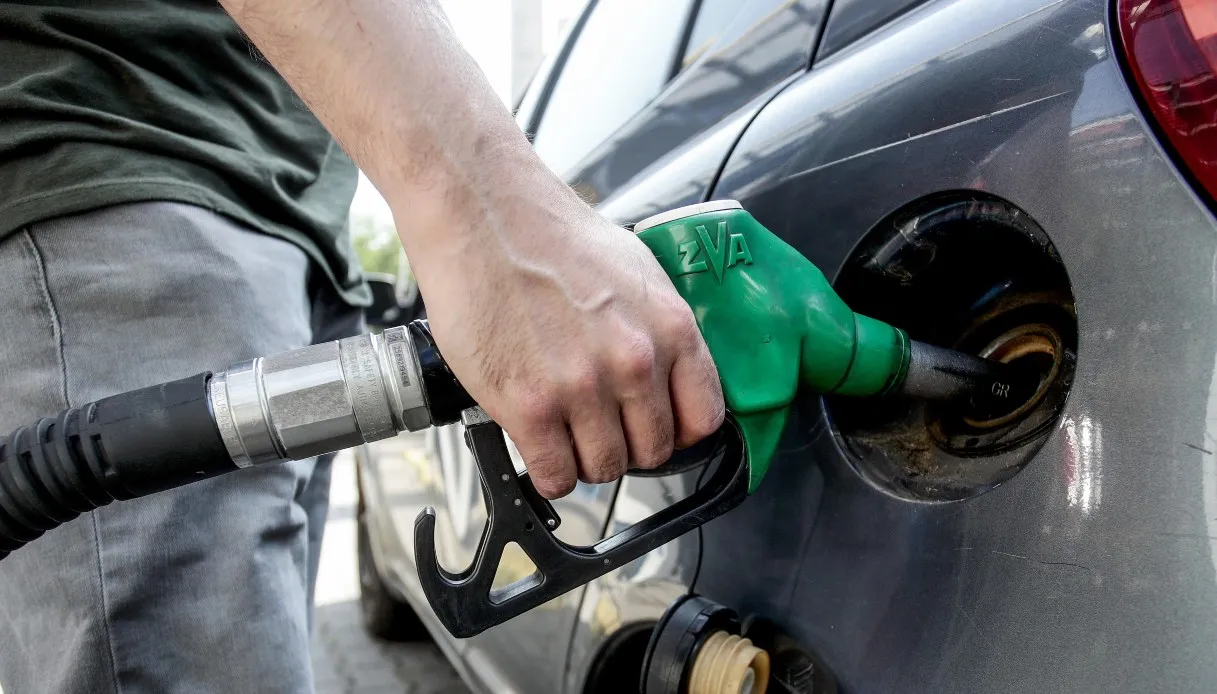
Italians continue to consume fossil fuels even with the price of petrol having exceeded 2 euros per litre. After an initial slight decline in June, 900,000 tonnes of petrol were released for consumption in Italy in July: this is the highest monthly value in the last 16 years. This was communicated by the Energy Union for Mobility (UNEM), formerly the Oil Union.
A fact that must be read in the current context, with high prices at the pumps and a lack of possibilities to invest in alternatives to mobility. The numbers tell us one thing: mobility needs do not change based on the price at the pump.
Two faces for Italian consumption
In July, sales on the petroleum products market were around 4.7 million tons, down from the same month last year. The data is analyzed by the trend of diesel fuel, which was not balanced by the growth of petrol and the historical record of jet fuel.
Petrol has in fact begun to show positive signs, reaching the highest record of volumes consumed for 16 years now: it reached 900,000 tonnes released for consumption in a month, marking a +3.1% (i.e. 27,000 tonnes) more than the same month last year.
And this happened even though prices at the pump rose from the beginning of July until the end of the month, especially for petrol, which was not affected by the cut in excise duties.
On the other hand, however, diesel fuel suffered a drop of 8.4% (-191 thousand tonnes), especially as regards what is defined as “extra-network” (-13.5%), linked to heavy transport.
With the cut in excise duties on diesel expiring on 25 August, in the absence of other solutions, there is already talk of the risk of exceeding the threshold of three euros per litre. It is therefore likely that the data for August and September will be even lower than those for July 2026.
The absence of alternatives
Even with the price of petrol above the psychological threshold of 2 euros per litre, Italians’ need for mobility does not change. This means families make sacrifices elsewhere. The reason is that there is no alternative in many contexts, whether economic or residential.
The increase in consumption is not linked to the war in the Middle East, that data signals the increase in prices; instead we need to look at the dependence on fossil fuels. In Italy the market share of battery electric cars is stuck at 8.2% in 2026.
In the rest of the European market it continues to rise:
- in France and the United Kingdom it exceeded 26.2%;
- in Germany it is 25.9%.
And here we return to the wallet of Italians, to those who “prefer” to spend 2 euros per liter on petrol today rather than investing in the purchase of an electric car. Italy has no incentives for the purchase of electric cars and, if the market share has increased, it is only thanks to the registration of vehicles purchased with the incentives introduced last October, which sold out in one day.
On the other hand, all new cars, regardless of power, have seen their price increase over the last decade by 50%. The problem therefore does not only concern electric models, but in general the difficulty of purchasing a vehicle in a country where real wages have decreased by 6.6% compared to 1990.
Savings on fossil fuel consumption: towards electric cars
Italians mainly drive cars powered by diesel (42%), followed by petrol (39.4%), then hybrids (8.3%), LPG (7.2%) and methane (2.3%). In 2025, according to UNEM data, electric cars represented just 0.8% of the Italian car fleet.
One way to reduce fossil fuel consumption is to reduce the number of vehicles that use them. The European plan envisages bringing the electric fleet to around 38 million vehicles by 2030. It is thus estimated that the consumption of 190 million barrels of oil will be avoided every year, with a direct economic benefit of around 12 billion euros.
But at the moment the transition is at a standstill, also for fear of a worsening of the crisis in the automotive sector. This is a real fact, not negligible, but which must be managed when faced with the decision to change course with respect to fossil consumption.