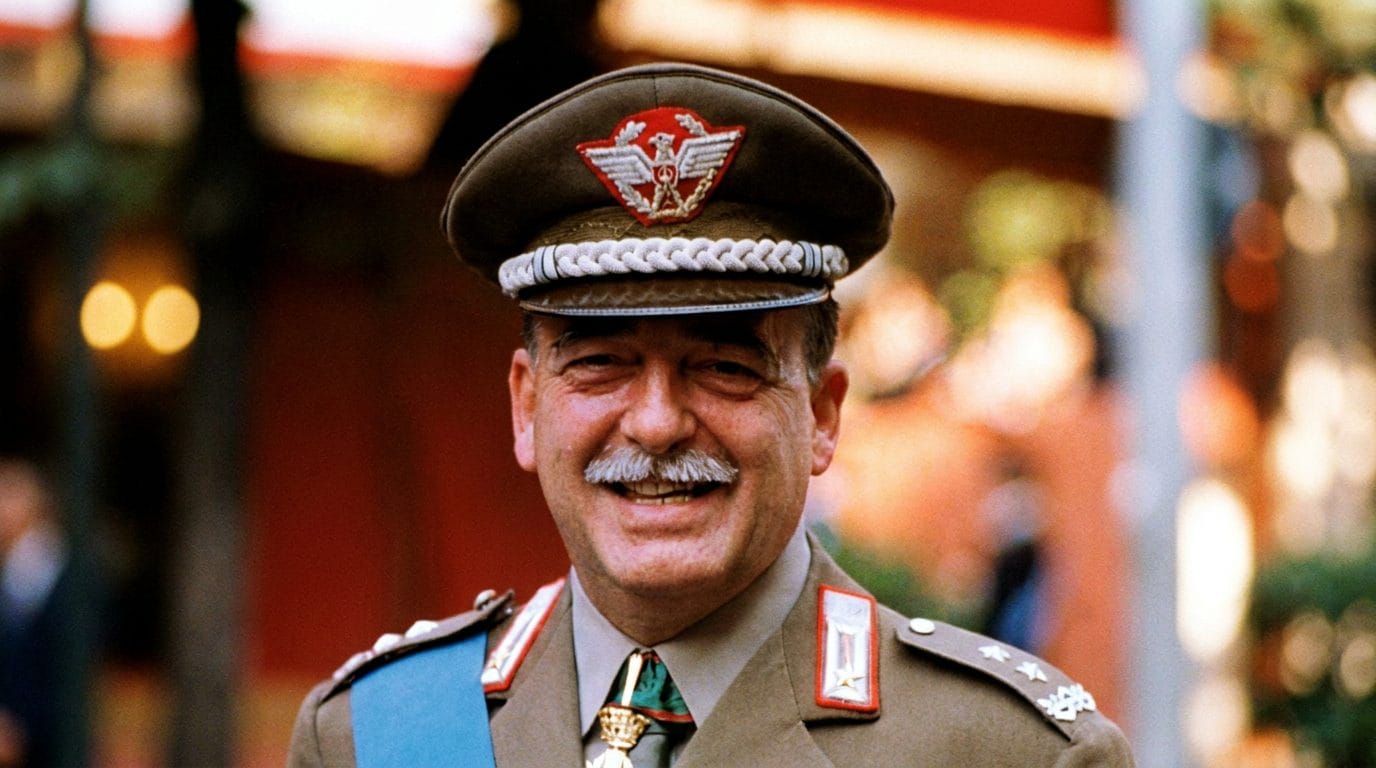
Today, September 3, marks the 44th anniversary of the attack in Via Carini: on that day, in 1982, Cosa Nostra killed Carabinieri General Carlo Alberto Dalla Chiesa, prefect of the city for a few months, together with his wife Emanuela Setti Carraro and escort agent Domenico Russo in Palermo. Carabiniere, partisan, investigator and finally prefect, Dalla Chiesa had based his career on the basis of a solid principle: the State must not give in to violence, be it mafia or terrorist.
Born in the province of Cuneo in 1920, he joined the Carabinieri at 22 and after the war he dealt with the Corleone mafia. In the Seventies, in Turin, he led the Red Brigades’ fight against terrorism and in 1982 he was sent to Palermo, where he was killed a few months later. His death pushes Parliament to approve the Rognoni-La Torre law, which introduces the crime of mafia association (art. 416-bis), and gives impetus to the judicial season which will lead, in the following years, to the Palermo maxi-trial instructed by the anti-mafia pool of Giovanni Falcone and Paolo Borsellino.
Carlo Alberto Dalla Chiesa, a destiny written in the Army
Dalla Chiesa was born in Saluzzo, in the province of Cuneo, on 27 September 1920 into a family that breathed a sense of duty. His father Romano was an officer in the Carabinieri, reaching the role of Deputy General Commander of the Carabinieri. With brothers destined for brilliant careers (one in a bank, the other also a general), Carlo Alberto grew up in a context in which “uniform” meant responsibility, discipline, service.
When the Second World War broke out, he participated as a second lieutenant in the Balkans. Then, in 1942, he officially entered the Carabinieri and the following year he graduated in law in Bari (where among his examiners there was a very young Aldo Moro). Shortly afterwards he also obtained a degree in Political Science.
After the signing of the Armistice on 8 September 1943, while Italy was split in two, Dalla Chiesa refused to collaborate with the Nazis and became one of the protagonists of the Resistance in the Marche. He would later remember that experience as one of the most important of his life: “I found myself at the head of bands of patriots and responsible for entire populations.”
The General’s fight against the mafia: from the Corleone years to Palermo
After the war, his military career was intertwined with his family career: in 1946 he married Dora Fabbo, with whom he had three children, including Nando Dalla Chiesa, professor of «Sociology of organized crime» at the University of Milan and one of the most important voices of civil society against the mafia.
It is Dora’s family, linked to Palermo, that is the backdrop to the first major anti-mafia commitment. Since 1949, with the Banditry Repression Forces Command (CFRB), Dalla Chiesa has faced the criminal reality of Corleone. He investigates the disappearance of the trade unionist Placido Rizzotto, and immediately understands that the “old boss” Michele Navarra is not behind it, but the young emerging Luciano Liggio. It is the first step of a method that will mark his entire life: studying the ties, kinships, networks of mafia power as a system.
In the 1960s, as a colonel in Palermo, he strengthened this vision. He prepares files on mafiosi, tracing family ties and comparative relationships. He even draws maps of Palermo with the neighborhoods controlled by the gangs. His reports on real estate speculation and on politicians such as Vito Ciancimino show an investigative clarity that anticipates the large anti-mafia pools of the 1980s. But the trials of the time, still lacking adequate tools, often ended in nothing. He himself will bitterly state: “We are without nails.”
The season of terrorism: the Special Unit and the Red Brigades
In 1973 he was transferred to Turin and promoted to general. It is the period in which Italy faces a new emergency: red terrorism. After the kidnapping of magistrate Mario Sossi, Dalla Chiesa gets the green light to create the special anti-terrorism unit. He personally selects his men and trains them with a golden rule: absolute discretion and specialization.
His strategy worked: in 1974 the Red Brigade leaders Curcio and Franceschini were arrested, thanks to the infiltration of Silvano Girotto, the famous “machine gun friar”. In the following years the Unit dismantled hideouts, arrested dozens of militants, built an investigative method based on shadowing, interceptions and close collaboration with the judiciary.
After the drama of the kidnapping and killing of Aldo Moro in 1978, Dalla Chiesa became the point of reference for the new anti-terrorism coordination. With him came concrete results: from the blitz in Via Monte Nevoso to the first great repentant of the BR, Patrizio Peci, who in 1980 paved the way for an avalanche of confessions and arrests. In three years, the Red Brigades organization was effectively dismantled.
The return to Palermo and death on 3 September 1982: the prefect “without powers”
After a career full of difficult assignments, in 1982 came the appointment that would mark his destiny: prefect of Palermo. Dalla Chiesa is aware that the city is in the midst of the second mafia war, with the Corleonesi of Totò Riina and Bernardo Provenzano ready to unleash carnage. But here the General is faced with a bitter truth: the State does not give him the promised powers. In a letter to Prime Minister Giovanni Spadolini, the General openly denounces the lack of adequate tools to fight such a powerful enemy. He is isolated, and he is aware of it.
On 3 September 1982 Palermo was shaken by an attack that will remain in history. Dalla Chiesa, married for just 54 days to Emanuela Setti Carraro, travels in his Autobianchi A112 Special together with his wife. With them there is also the escort agent Domenico Russo, in an Alfetta.
In via Carini, a BMW comes alongside Dalla Chiesa’s car, while a motorcycle with Pino Greco on board comes alongside Russo’s Alfetta. AK-47 bursts begin. It’s an execution. General Dalla Chiesa and his wife Emanuela Setti Carraro died instantly, Domenico Russo died 15 days later in hospital.
Italy wakes up to a paradox: the man who had defeated terrorism, sent to Palermo as a symbol of the fight against the mafia, had been left alone. His death becomes a cry, without strong laws and a clear political will, organized crime will continue to kill: the attack pushes Parliament to approve the Rognoni-La Torre law, which introduces the crime of mafia association (art. 416-bis) and the possibility of seizing and confiscating assets illegally accumulated by organized crime.