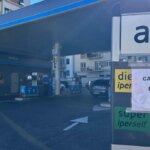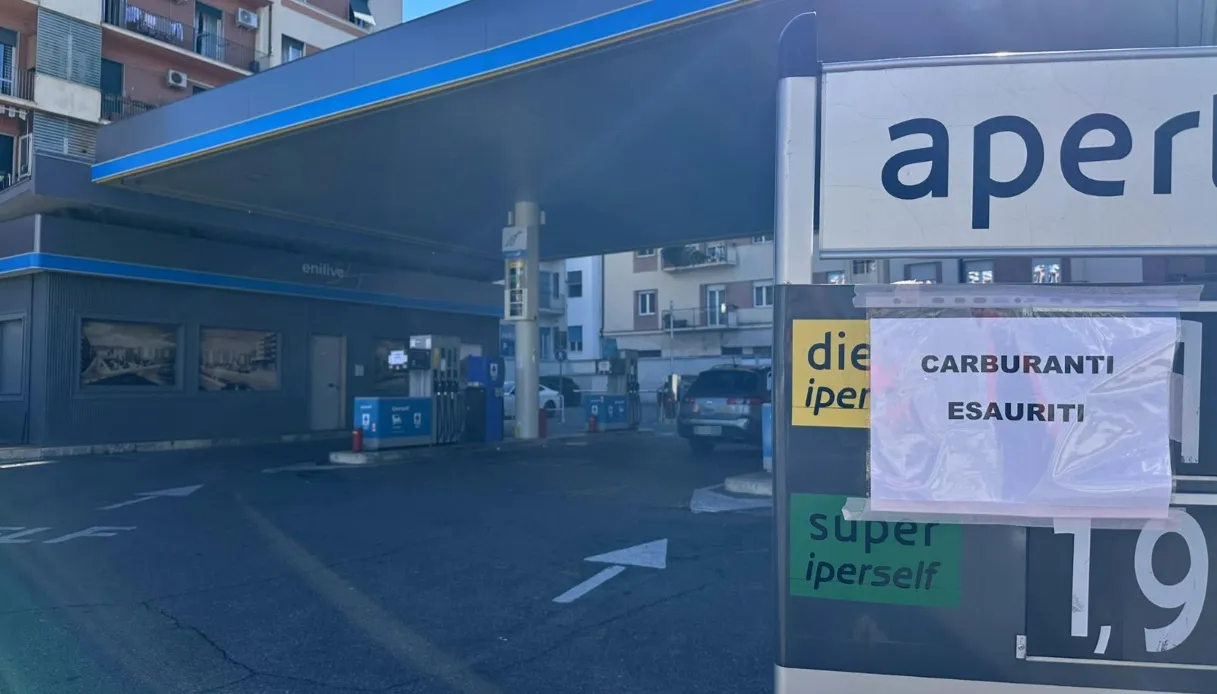
The blockades of the Ilva workers of Taranto, the hauliers and the farmers are showing their effects: the petrol pumps are hanging signs with the words “fuel out” and in the supermarkets the shelves are empty.
The reduced availability of fuel is being felt in large areas of Puglia and Calabria, where long queues at petrol stations have been recorded throughout the day (and even into the night). Critical situation reported in the province of Salento, in Foggia, in Basilicata, in the Cosentino and in the Catanzaro area.
Fuel used up: in which regions
Since October 12, when Ilva workers in Taranto blocked the Eni refinery, fuel supplies began to run low. For those traveling by plane and, even worse, for those traveling by road, bulletins and signs with the words “fuel out” are starting to spread.
So we leave again at Bari airport, but without luggage to lighten the weight; while motorists search for petrol and diesel even at night, sometimes without success.
This is what is happening in various regions of Italy:
- Puglia;
- Basilicata;
- Calabria.
These are the regions that supply to the Eni refinery in Taranto. The numbers of the shortage are given by the trade unions: in Puglia 7 out of 10 petrol stations remained dry. In Matera the police had to intervene to regulate traffic near some service stations, while in Calabria checks increased in view of the demonstrations against the high cost of fuel promoted by farmers and hauliers.
Towards the national blockade
The protests in Taranto, those of farmers and those of hauliers are intertwining in a non-voluntary maxi demonstration against high fuel prices. In the next few days the blockades at Ilva could end because the unions have obtained a summons to Palazzo Chigi on 27 October, while the protest in the other two sectors could take off.
The president of Conftrasporto, Pasquale Russo, explains:
The situation is very worrying because the excess price that road transport is suffering has generated a situation of high tension among companies in the sector which has resulted in spontaneous protests in some areas of the country.
Protests that are spreading especially in Southern Italy, where spontaneous road blocks are being organised, not proclaimed by trade associations. For Russo “they are moving within the desperation of entrepreneurs”.
What are they asking of the Government
Even if these are spontaneous protests, the representative of Conftrasporto reminds the Government of the promise made: the resources allocated and not yet arrived for the expensive fuel. Which in any case would not be enough, they point out: fixed tariffs and the recognition of refreshments would also be needed for Euro 4 and lower class vehicles. According to Russo, the commitment to provide further allocations of resources should be maintained if expensive diesel continues to have these price dynamics.
The risk, he continues, is that the protest centers coalesce into a single large front. For this reason too, an urgent convocation of the associations was requested, which the Ministry of Infrastructure has also accepted for 27 October.
Empty shelves: the appeal of the agri-food sector
Discontent is also coming from the agricultural sector. In these hours, with the tanks of the trucks empty, supply difficulties are being experienced in supermarkets. In fact, fresh products such as fruit and vegetables are starting to run out.
Raffaella Altamura, president of Confesercenti Puglia, photographs the situation:
If no concrete signals or measures arrive from the government in the next few days, the repercussions will end up having a direct impact on the daily lives of citizens.
Raffaele Drei, president of Confcooperative Agroalimentare, underlines the need to prevent the protest from ending up penalizing productions which by their nature cannot wait.
It asks hauliers to think of farmers as allies, ensuring the circulation of fresh and perishable fruit and vegetables “that cannot wait on the sidelines”.