The innovation announced by CATL for electric trucks does not just concern a battery that can be changed in about five minutes. The most interesting bet is financial: transforming part of the initial cost of the vehicle into a service paid over time.
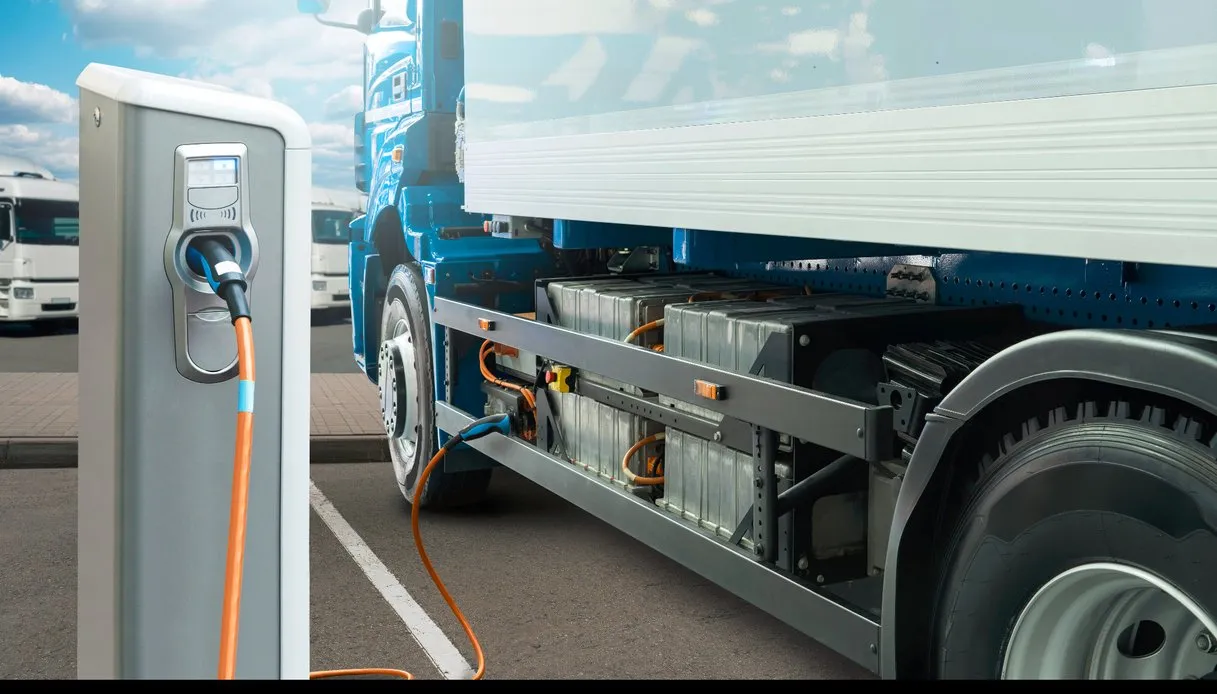
The Chinese battery giant wants to extend the battery swapping model to heavy vehicles. The main package, mounted on the chassis, can be leased and replaced at QIJI stations. A second battery remains on the truck to provide backup autonomy. This way the fleet can pay for the use of the accumulator without having to immediately purchase a large capacity one.
For those who manage trucks, the potential advantage is on liquidity: less capital to immobilize at the beginning and an expense more linked to the activity of the vehicle. Leasing does not erase the cost: it distributes it over time. The convenience will depend on the fees, the price of energy, the kilometers traveled and the availability of stations along the routes.
The model: the battery becomes a service
CATL says its Battery-as-a-Service system charges for the net energy charged, rather than the energy consumed by the vehicle. For basic plan customers, the company indicates a reduction of up to 20% in the battery rental cost. These are conditions communicated by CATL: they are not equivalent to a 20% reduction in the total cost of the truck or the entire transport activity.
Flexibility can also be useful to businesses with seasonal volumes. CATL says the main battery can be rented for different periods, so as to keep costs down when transport demand is lower. For a haulier, however, the decisive question remains: does the saving on the initial capital compensate for the installments and other operating costs throughout the life of the vehicle?
It is a concrete issue for Italian transport companies: the protest by Sicilian hauliers has brought expensive fuel and delays in funding back to the fore. QuiFinanza has reconstructed the comparison on the high cost of fuel and funds for hauliers. The transition to electric changes the expense item, but does not eliminate the need to make ends meet.
The network needs trucks and capital
CATL is aiming for 900 truck battery swap stations in China by the end of 2026, 2,000 in 2027 and 10,000 in the long term. At the launch of the new system it said it had signed agreements for 13,000 units. The figure indicates deals announced by the company, not trucks already delivered or revenue already collected.
Here the second financial side of the story opens. Leasing can ease the initial investment of those who buy or use the truck, but CATL and its partners must cover the costs of the batteries and infrastructure. These expenses are part of the company’s CAPEX: capital investments that must be made before the network can generate revenue. A poorly used station risks not generating enough business to repay the invested capital; a widespread network, however, can make the service more useful and encourage new customers.
| I wait | Possible benefit | Point to check |
|---|---|---|
| Battery leased | Lower initial outlay for the fleet | Fees and overall cost over time |
| Flexible rental | Spending more adaptable to working periods | How much seasonal demand really varies |
| Trading stations | Less downtime than charging | Sufficient usage to cover investments |
| Agreements for 13,000 units | Signal of commercial interest | How many will become deliveries and revenues |
The European testbed: the total cost
The model also affects Europe, but with one important caution: the 900 station plan concerns China. CATL has already announced European collaborations with logistics operators, including Kuehne+Nagel, while the battery swapping project for trucks envisaged in the agreement with the latter is indicated in China. There is, therefore, no official timetable for a CATL network of stations in Italy.
In Europe, CATL and Octopus Energy announced the Swaptopus joint venture to develop a truck battery swapping network. The companies have spoken of a potential of over 300,000 vehicles served and more than 30 billion pounds of private investment that can be activated when the network is fully operational.
Convenience for fleets is not judged by purchase price alone. Energy, tolls, maintenance, financing and the time the truck is stationary count. An analysis by Transport & Environment finds that, in six of the nine main European markets surveyed, electric trucks are already the most cost-effective choice within five years. The result varies by country and operating conditions and is not specific to the CATL system.
For Italy, therefore, the issue is not to establish whether the battery swap will immediately replace diesel or charging. It’s understanding who will finance the batteries and stations, how much the service will cost businesses and how far the vehicles will have to travel for the model to work. CATL is trying to shift the competition from selling a truck to continuously managing its energy. The technology is already on the table; the accounts, for now, are still to be proven.