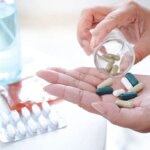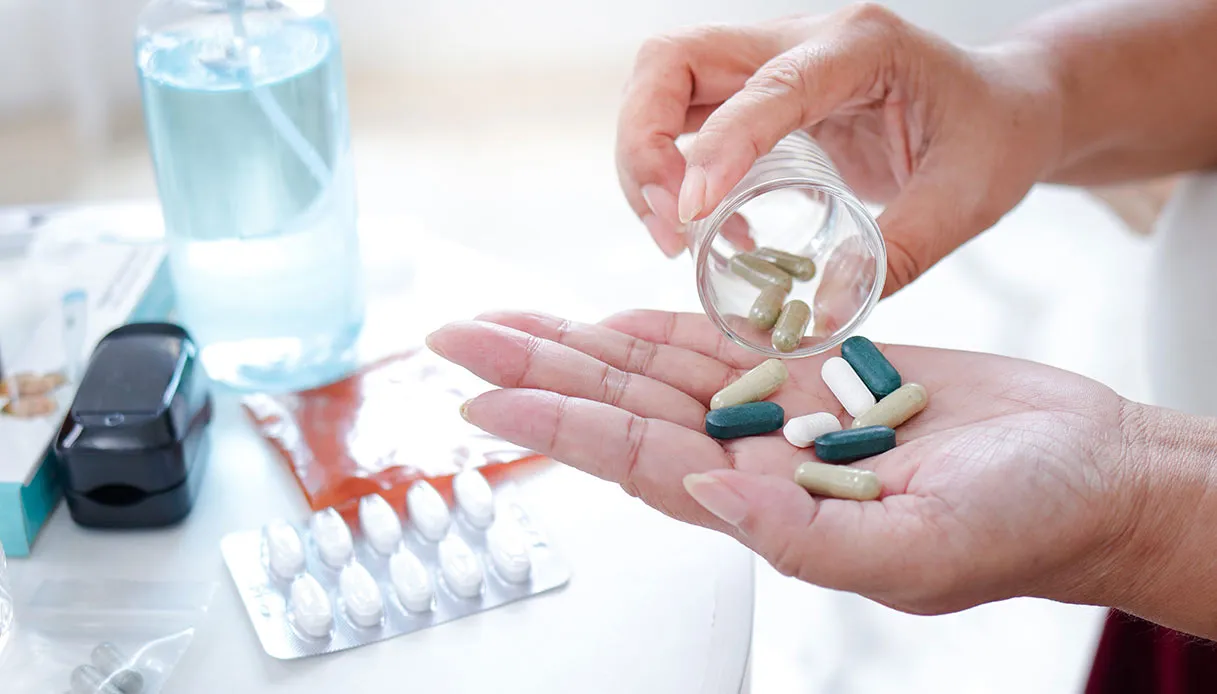
Responsible self-medication. This term can be translated in many ways, but in any case it expresses the value of knowledge to choose medicines together with the pharmacist for small everyday ailments, from stomach and intestinal discomfort to viral ailments, circulation problems, temporary headaches, and occasional fevers. How does this provision combine with healthcare costs, obviously with a view to reducing them? An answer comes from a search entitled “The value of self-medication. A pillar for public health and the country’s economy”, created by TEHA Group for Federchimica Assosalute.
According to the study, self-medication frees up time for family doctors equivalent to approximately 91 million visits per year. An appropriate appeal could also avoid almost a million visits to the emergency room for low-complexity disorders. All of this, with a benefit for the sector. We are talking about 1.35 billion euros of total added value, considering the direct, indirect and induced effects along the supply chain.
In short: The results are clear: every euro of added value generated by companies in the sector activates almost three more in the rest of the economy, while appropriate use of self-medication drugs frees up healthcare capacity for professionals and contributes to living in good health for longer.
The impact on the National Health Service, citizens and the supply chain
In a context in which general practitioners have gone from 44,270 to 36,812 between 2016 and 2024 (-16.8%) and emergency room visits have returned to close to 19 million in 2024, responsible self-medication, complementary and not an alternative to professional assistance, helps to direct every health need towards the most appropriate level of response.
According to the study, self-medication drugs – equal to 13.5% of local pharmaceutical volumes – free up time for the doctor with an estimated value of around 1.9 billion euros, time that can be dedicated to chronic, fragile patients and those with more complex needs; to this we add approximately 600 million euros of time returned to citizens. On the emergency-urgency front, an appropriate use of self-medication could avoid almost 1 million visits per year for low complexity disorders, with an associated cost of approximately 306 million euros, of which 281 are paid by the NHS.
Overall, the economic and organizational benefits generated by self-medication are estimated at almost 3 billion euros per year. These are estimates of care capacity and time freed up. In terms of health, self-medication intervenes on 10.7% of the burden of ill health among Italians, linked to mild and very widespread disorders: without it, according to estimates, over the course of one’s life one would spend an average of 4.8 months less in good health.
The companies associated with Assosalute, which represent over 70% of the market, generated revenues of 1,383 million euros in 2025 (+1.3%) and a production value of 1,270 million. The direct added value is approximately 350 million euros; considering the indirect and induced effects along the entire supply chain, the overall contribution rises to 1.35 billion euros, with an economic multiplier of 3.9 (compared to 3.2 for manufacturing). The added value per employee, approximately 156,000 euros, is almost double that of manufacturing (82,000 euros).
The weight of knowledge
It must be said, however, that the potential of the self-medication drugs sector remains partly untapped. In Italy, per capita spending on over-the-counter medicines is 54.3 euros per year, among the lowest among the main European countries, and less than 1 in 5 Italians declares having used them in the two weeks preceding the survey compared to 37% in Germany and 70% in Finland. Above all, the breadth of the offer has an impact: between 2015 and 2025, Italy recorded 6 switches, i.e. reclassifications from a drug requiring a prescription to a drug without a prescription, compared to 15 in Germany and 26 in the United Kingdom.
Added to this is a cultural theme: although Italy starts from a more solid base on self-medication, with doctors and pharmacists remaining the first references for the most common ailments, the objective remains to strengthen general health literacy (58% of adults have inadequate or problematic health skills compared to 46% of the European average).
The objective is made even more relevant by a scenario in which health information increasingly passes through the internet, social media and artificial intelligence. In the Italian self-medication model, family doctors and pharmacists remain the main references for mild ailments (48.2% and 47.9%), but the weight of digital sources is growing. For this reason, according to the study, it is essential to know how to recognize disorders that can be managed with self-medication, check the sources and know when to contact the doctor or pharmacist. The study also highlights the opportunity to modernize the rules on communicating non-prescription drugs to the public, defined before the spread of social media and artificial intelligence.
“This study highlights that self-medication represents a strategic asset for the country: it gives back time to family doctors, helps to give the most appropriate response to every health need and supports a high-productivity supply chain, with benefits estimated at almost 3 billion euros a year”
reports Michele Albero, President of Federchimica Assosalute.
“Responsible self-medication does not mean leaving the citizen alone, on the contrary, it means putting him in a position to do what he can do well, knowing when and who to turn to. To fully express its potential, two concrete steps are needed: more Health Literacy, with health literacy campaigns, education on correct self-medication and a closer dialogue between pharmacists and doctors – also thanks to the full operation of the pharmaceutical dossier in the Health Record – and a broader offer, with more switch procedures we hope that this work is the starting point for building a stable alliance with institutions, healthcare professionals and citizens to enhance the role of the sector in national pharmaceutical governance”.