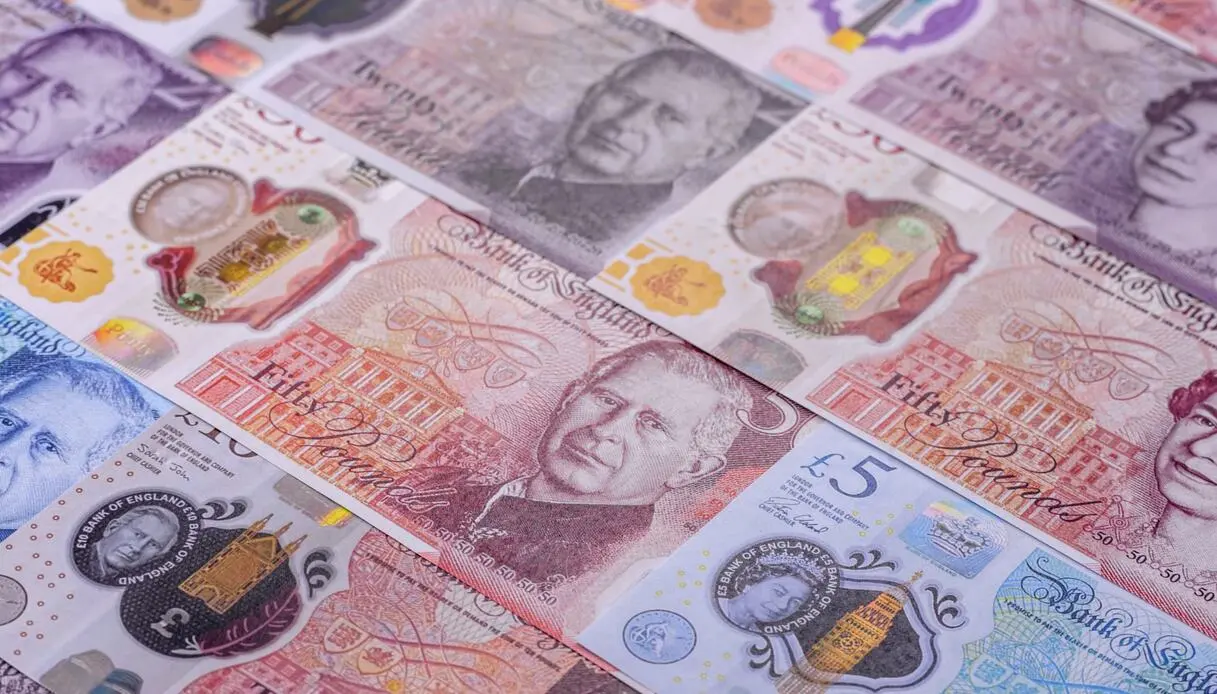
Lending money to the British state today can yield over 5% per year. It is a level that has not been seen for almost twenty years and which could also attract the attention of Italian savers, accustomed to comparing the opportunities offered by BTPs. However, behind an apparently advantageous return lies an important question: how much is really left in the pocket of those who invest in British securities and live in Italy?
The UK placed £4.5 billion of government bonds maturing in March 2032, recognizing an average yield of 5.036%, the highest since 2008 for this maturity range.
The operation tells a double reality: the British government has to bear increasing costs to finance itself, while investors find return opportunities that deserve attention, but also prudence.
Why British government bonds yield so much
UK government bonds are called Gilts. They work in a similar way to BTPs: those who purchase them lend money to the State and receive interest according to the conditions set out in the bond.
The rise in British yields reflects, above all, investors’ concerns about inflation, interest rates and the sustainability of public finances.
The rise in energy prices and geopolitical tensions have complicated the picture. If inflation remains high, the Bank of England may be forced to maintain tight monetary conditions for longer.
Meanwhile, the government must continue to finance public spending and refinance maturing debt.
The result is that to convince investors to lend money, the market requires higher returns.
It doesn’t automatically mean the UK is close to a financial crisis. Rather, it means that the cost of its debt has increased.
5% is not the coupon: pay attention to the difference
One detail of the auction deserves to be clarified.
The Gilt placed on 27 October, identified by the ISIN code GB00BWGDRG14, provides an annual coupon of 4.625% on the nominal value.
The average yield of 5.036% derives, however, from the price at which the security was assigned, lower than the nominal value, as shown by official data from the British Treasury.
They are two different sizes:
- Coupon: the periodic interest expected from the security, calculated on the nominal value.
- Yield to maturity: takes into account the coupons, the price paid and the final reimbursement.
For those who buy later on the market, the yield may be different from that recorded at auction, because the price of the bond changes.
It is the same distinction that matters when evaluating BTPs above 4% and their actual yield.
Can an Italian buy English government bonds?
Yes, even a citizen resident in Italy can invest in Gilts.
You do not need to move to the UK or hold British citizenship.
The purchase can take place through a bank or a financial intermediary that allows these bonds to be traded.
The procedure involves some steps:
- Check that your securities account allows access to Gilts
- Identify the bond by its ISIN code
- Check price, effective yield, maturity and liquidity
- Check fees, currency costs and tax treatment
The direct purchase service offered by the British Treasury is, however, reserved for residents of the United Kingdom.
To understand how post-issue purchases take place, it is useful to know how the secondary market works, where already issued securities are traded.
Gilts or BTPs: what are the differences for the Italian saver
The comparison cannot stop at the percentage of return.
| What to compare | British Gilts | Italian BTPs |
|---|---|---|
| Currency | Sterling | Euro |
| Exchange rate risk | Present | Absent for those who spend in euros |
| Ordinary Italian taxation | Generally 12.5% | 12.5% |
| Coupons | Usually semi-annually | Usually semi-annually |
| Yield | It depends on price and expiry | It depends on price and expiry |
| Purchase from Italy | Through authorized intermediaries | Widely accessible |
For both types it is necessary to consider the risk linked to the issuer and possible price fluctuations.
The most important difference for an Italian family, however, is the currency: BTPs return euros, Gilts return pounds.
Taxation and costs: what to check before purchasing
For an Italian tax resident, income from British government bonds can benefit, under the conditions established by law, from the preferential rate of 12.5%, like BTPs.
To learn more about the differences between the taxes applied to the various financial instruments, the QuiFinanza guide to the taxation of financial investments in 2026 is available.
However, the stamp duty applicable to the securities dossier, the intermediary’s commissions and currency conversion costs must also be considered.
Anyone who operates through a foreign intermediary must also check any tax reporting obligations.
Before investing it is therefore advisable to ask for a complete statement of costs and tax treatment.
What changes for BTPs and why follow London
British yields do not automatically determine Italian ones. However, when investors demand higher interest to finance a state, they can re-evaluate the price of risk in other bond markets as well.
This makes it important to follow British decisions, especially when today’s budget is presented.
For those who already own BTPs, a possible general increase in yields could translate into a decrease in prices, which is particularly significant for securities with more distant maturities.
Those who intend to purchase new bonds could, however, find different conditions. To evaluate the Italian market it is possible to consult the prices and yields of BTPs and BOTs available on QuiFinanza.
The real question, therefore, is not just whether the British 5% is more interesting than a BTP, but how much additional risk is necessary to take to obtain it.
For an Italian saver, the best return is the one evaluated net of costs, taxes and exchange rate risk, taking into account one’s objectives and time horizon.