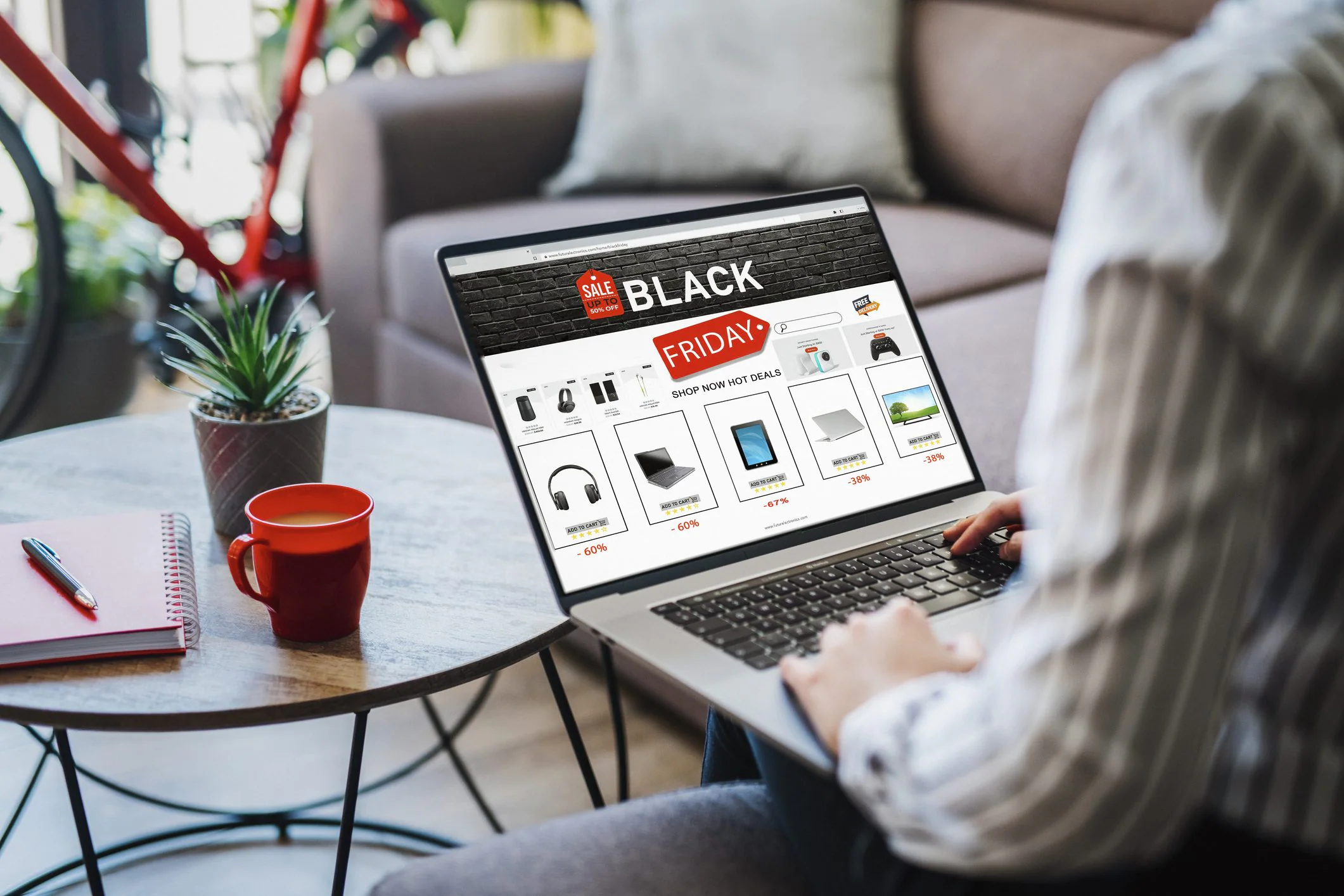
Does buying on Black Friday really mean paying less? Faced with a “-40%” or a crossed out price it is easy to think you have found a deal. Yet, a high discount does not automatically guarantee an affordable price: to understand how much you save you need to know the figure from which the comparison starts and check how much the same product was selling for before the promotion.
This year Black Friday will be November 27th: on some sites, however, the discounts have already started more than a week in advance. A promotion presented as exceptional, however, may have already appeared during the year, or may be less advantageous than those offered by other stores.
Added to this is the pressure to decide quickly, between time-limited offers and messages suggesting limited availability. Checking price history and comparing multiple retailers helps you understand whether it is better to buy now or wait.
How the 30 day discount rule works
Knowing the discounted price and the reduction percentage, it is possible to mathematically calculate the initial value. This calculation, however, does not allow us to establish whether the reference indicated by the seller is correct.
In Italy, when a trader announces a reduction on a good, the legislation provides that the so-called “previous price” is, in general, the lowest applied to the majority of consumers in the previous 30 days in the same sales channel. If, for example, an item has reached a minimum of 100 euros in that period, a subsequent 50% discount must be calculated on that sum, even if it cost more in the meantime. The new amount will therefore be 50 euros.
The rule, however, is not always respected. In a European Commission-coordinated audit of Black Friday and Cyber Monday 2025 promotions, 30% of 314 online operators examined used an incorrect reference price to present discounts. The result concerns the subjects subjected to the verification, not all the shops active on the market.
Furthermore, the regulation does not apply without distinction to every commercial initiative. According to the indications of the Ministry of Business and Made in Italy, the specific mechanism excludes, among other cases, some loyalty programs, personalized offers, cashback, conditional promotions and combined sales. Even during events such as Black Friday, therefore, it is necessary to evaluate the characteristics of the individual proposals, without assuming that they are all subject to the same provisions. However, the rules against unfair commercial practices remain valid.
The 30 day rule therefore represents an important protection, but it does not guarantee that an item will be offered at the cheapest price of the year, because in previous months it may have reached even lower levels.
How to check price history before discounts
For planned purchases, it is best to consult the price history before the start of major promotions. In online shops the amounts can vary for various reasons, sometimes also due to the dynamic pricing. The charts allow you to understand whether a decline is unusual or repeats itself regularly.
For purchases on Amazon, one of the most popular tools is Keepa, which shows price trends over time and allows you to set alerts when an item falls below a threshold chosen by the user. The advantage is not only to discover the minimum reached in the past, but to understand how often similar declines occur.
If a device goes from 300 to 240 euros every few weeks, finding it at 239 euros during Black Friday means paying just one euro less than the recurring discounts, not necessarily taking advantage of an exceptional opportunity.
To compare offers from multiple shops you can instead use Idealo, which also allows you to consult price trends up to the previous 12 months and receive notifications when the desired amount is reached. This way it is possible to check whether an item on promotion on one platform is available for less at another retailer.
A concrete example comes from an analysis published in October 2026 by Altroconsumo. After examining over 500,000 Amazon offers from the Prime Offers Festival, the association reported three products that can be purchased for less at other online stores. In the case of the Xiaomi 17 Ultra smartphone, the difference exceeded 500 euros.
However, there is a fundamental condition: the comparison must concern exactly the same product. The memory capacity of a smartphone, the size of a television, the model code of an appliance or the accessories included can in fact affect the price and make the comparison insignificant. It is also necessary to consider any personalized coupons and discounts, which do not always emerge from the graphs.
A practical method is to choose what you are interested in in advance, write down its usual cost and establish how much you are willing to spend. By setting this figure as the threshold for Keepa or Idealo price alerts, you will be notified when the cost drops to your desired level, without having to constantly check store pages. In this way we arrive at Black Friday with a reference already defined.
When is it best to buy and when is it better to wait
There is no date that always guarantees the lowest price. Promotional campaigns can start before the main event, last several days and offer similar discounts at other times of the year. The right time to buy therefore depends on the relationship between current price, historical price and real need.
If an item is close to the lowest levels recorded in previous months and is within your budget, it may be worth buying. If it costs the same as usual, there’s no reason to rush just because a promotional label appears. The case of a product that is needed immediately is different: a modest but effective reduction may be preferable to waiting for a better opportunity, which may not necessarily arrive.
This concrete urgency, however, is different from the haste caused by commercial strategies. In European audits of Black Friday and Cyber Monday 2025 promotions, 18% of operators surveyed used low-stock messages or countdowns to push purchases.
In more than half of these cases, the techniques were found to be deceptive. The same survey also found that 10% of the subjects audited added extra costs only in the final stages of the order. A timer, therefore, does not demonstrate that a proposal is unrepeatable, just as the price initially shown may not coincide with the final one.
To avoid surprises, before completing the purchase it is best to check the reliability of the seller, the delivery and return conditions and the total to be paid, including shipping and any commissions. Periods of major promotions can also be exploited to spread online scams related to Black Friday, including fake e-commerce, phishing and misleading adverts.
Ultimately, an offer is worthwhile when the final price is truly advantageous and the purchase responds to a concrete need.