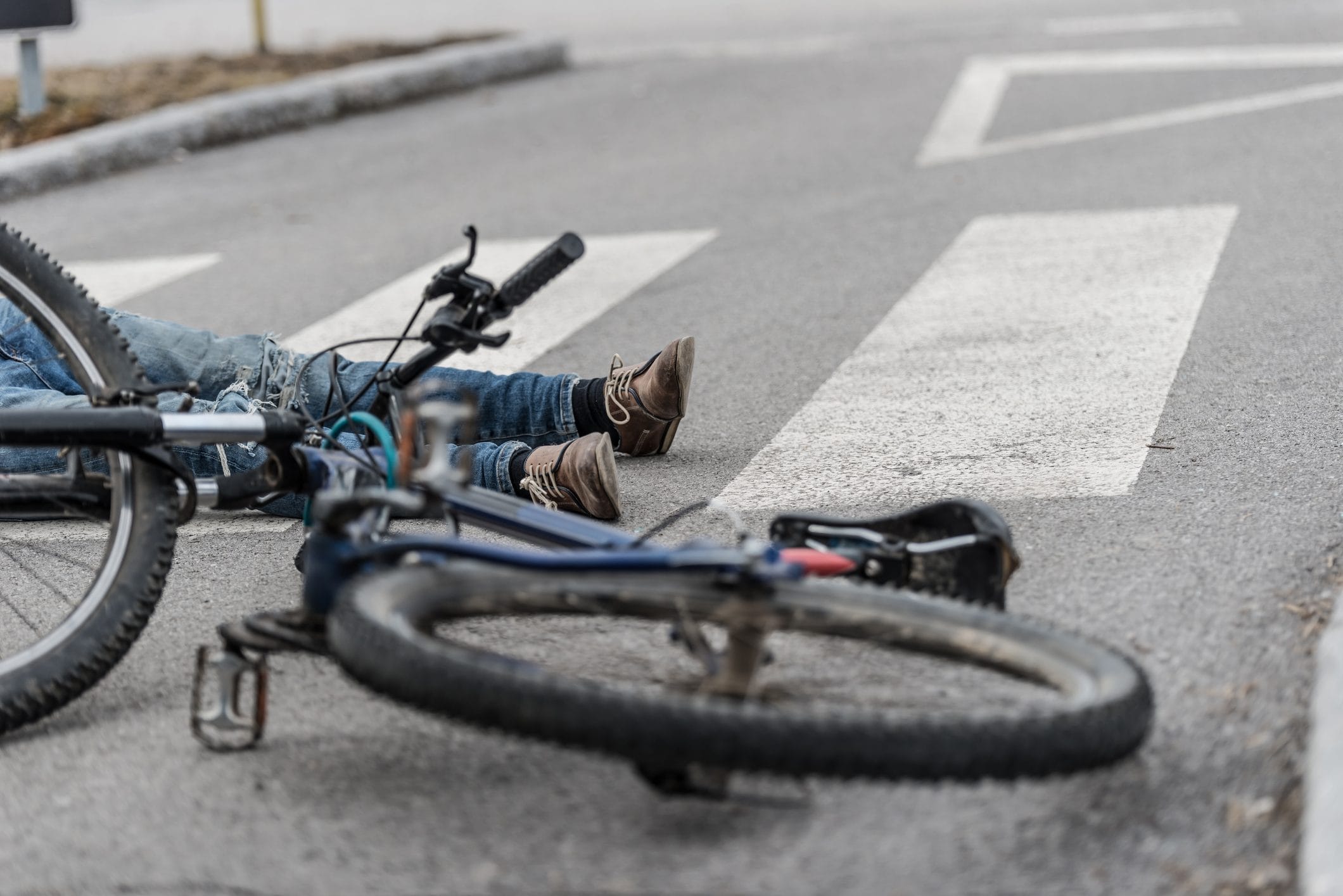
Every day in Italy more than 40 cyclists are involved in a road accident. Accidents involving bicycles represent 10% of total road accidents, but in absolute numbers, this means over 164 thousand accidents in ten years, with more than 3000 deaths and over 150 thousand injuries, of which 17 thousand are serious in 2023 alone.
These statistics come from a recent study by the CRAFT – Competence Center on Anti-Fragile Territories of the Polytechnic of Milan, based on ISTAT micro-data, which published the most complete mapping ever carried out on cycling accidents in Italy from 2014 to 2023, including every type of bicycle, from muscle to e-bikes.
Cyclists victims of road accidents in 2025: the numbers
The bicycle is the symbol of sustainable mobility: it does not pollute, is good for your health and reduces traffic. But, in 2023 alone, over 16 thousand accidents involving cyclists occurred in Italy: on average 45 per day.
The statistics also tell another uncomfortable truth: cycling in Italy can be not only very dangerous, but sometimes even lethal. In the first nine months of 2025, according to the ASAPS-SAPIDATA Cycling Observatory, 175 cyclists have already died, compared to 156 in the same period in 2024: an increase of 12.2%.
Where and when most accidents occur: mapping by region
Not all bicycle accidents are the same: around 3 out of 4 occur in the city, but almost half of the victims lose their lives on extra-urban roads, where speeds are higher and there is a lack of protection.
Looking at the absolute numbers, Lombardy is the region in which both the most accidents and the most deaths occur. In the municipality of Milan alone, more than 10 thousand accidents occurred from 2014 to 2023. Followed by Emilia-Romagna, Veneto and Tuscany: together, these four regions account for almost 70% of cycling accidents in Italy.
The regions where bicycles are used the most (Trentino-Alto Adige, Veneto, Emilia-Romagna and Friuli-Venezia Giulia) are also those with the highest rate of accidents. However, Friuli-Venezia Giulia is safer than Lombardy, probably thanks to a better cycle network and more efficient signage.
This gap then becomes even more clear if we go down to the provincial level. More than one citizen in ten uses a bicycle in Ferrara, Ravenna, Bolzano, Cremona and Rovigo but the highest rate of accidents was recorded in Forlì-Cesena, followed by Ravenna and Rimini.
The majority of accidents occur when colliding with cars (68%), heavy vehicles or motorbikes (11%): a sign that the coexistence of bicycles and motor vehicles is still a critical point. The most frequent accidents are in fact caused by frontal and/or lateral collisions, often at intersections or roundabouts, or by rear-end collisions or collisions with a stopping vehicle. However, independent falls and accidents due to skidding or going off the road remain a minority.
However, the problem is neither the bad weather nor the winding roads: the majority of accidents occurred on straight stretches, with clear weather and dry road surfaces. And not even seasonality, which is quite stable over time: the number of accidents fluctuates between approximately 9% in winter and 11% in summer.
The most dangerous times of the week are Saturday mornings between 10 and 12 and late afternoon on weekdays, when traffic is heaviest.
Men are the most involved in cycling accidents
Across all age groups, men are the most involved in bicycle accidents.
The largest share of injuries is concentrated between 30 and 44 years old, but cycling can also cost your life and half of the deaths concern cyclists over 65.
The data on the over-65s tells of a generation that has rediscovered cycling in retirement, but which pays the price of being the most vulnerable, both due to physical factors (greater reaction times) and the lack of infrastructure truly designed for two-wheelers and separate from motor vehicles.