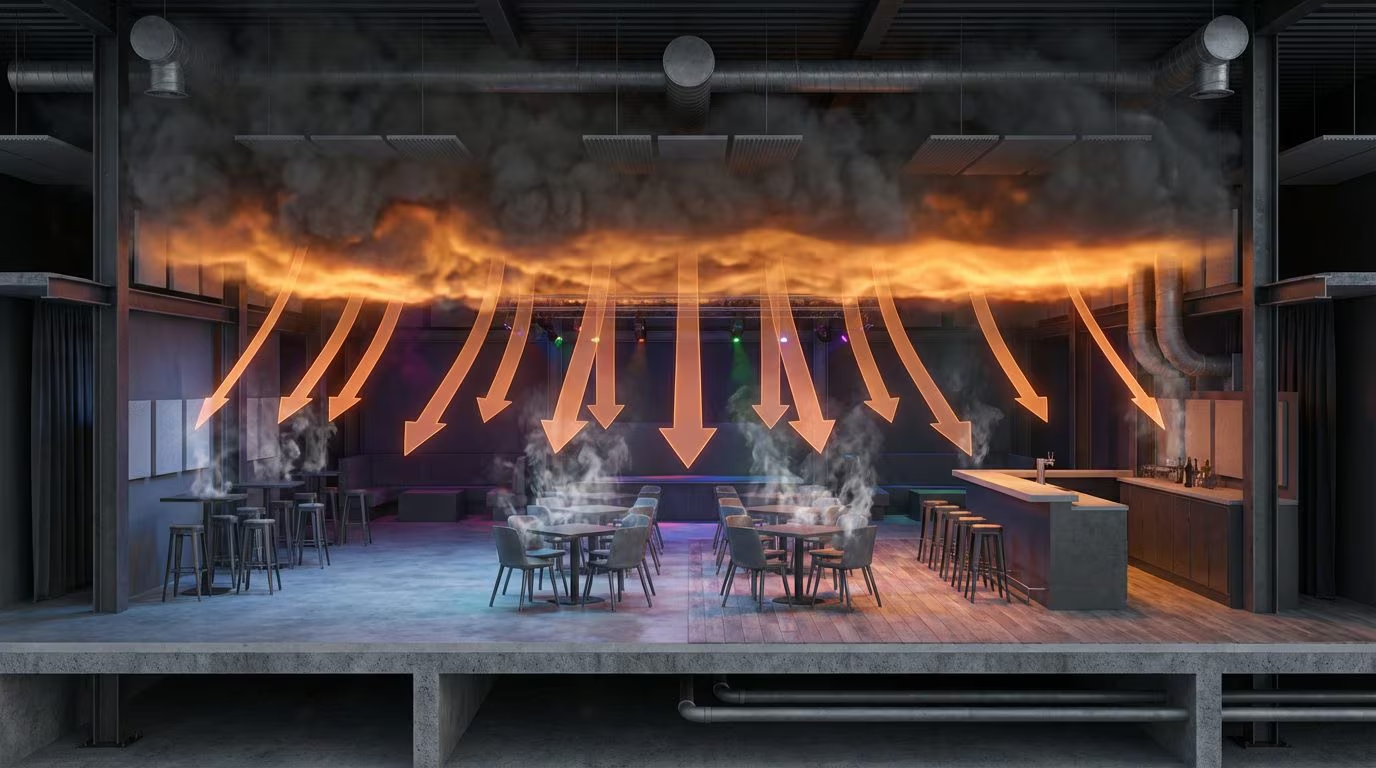
An underestimated element in the scale of the tragedy in Crans-Montana, the Swiss town where a restaurant caught fire on New Year’s Eve, killing 47 people and injuring 115, is the fact that the flames developed not on the ground, but on the ceiling. At first glance it might seem that if the ceiling catches fire people are safer and have more time to evacuate the room, but in reality fires that hit a ceiling can be even more dangerous: at least in the context of the basement room of the bar The Constellationsthe presence of flames above people’s heads worsened an already dramatic situation.
According to initial reconstructions, the soundproofing panel applied to the ceiling of the room was the first to burn. While in a “normal” fire (where something on the floor or in the lower part of the room catches fire) the heat and combustion products mainly spread upwards given their low density, if the ceiling catches fire the tendency of the flames to rise leads them to expand horizontally, especially if the material that is on fire is highly flammable such as the foam of a soundproofing panel. So here we have a fire with significant horizontal development and temperatures around 1000 °C.
While this helps contain the extreme heat in the upper part of the room, for those in there it essentially meant having a “wall of fire” above their heads. Wall of fire that emits a large amount of thermal radiation downwards (i.e. towards the people themselves) and which causes incandescent foam to detach and fall, with temperatures such as to burn the skin and carry the fire even to the floor of the room.
To this must be added the fact that the flames, in their tendency to rise, found the staircase leading to the upper floor as a natural way of propagation and which represented the only escape route for the occupants of the room. At this point we had dozens of completely panicked people crowded into a narrow, uphill corridor, engulfed in flames and filled with toxic fumes. This contributed to the fact that so few of those in the basement of the venue managed to escape the tragedy.









