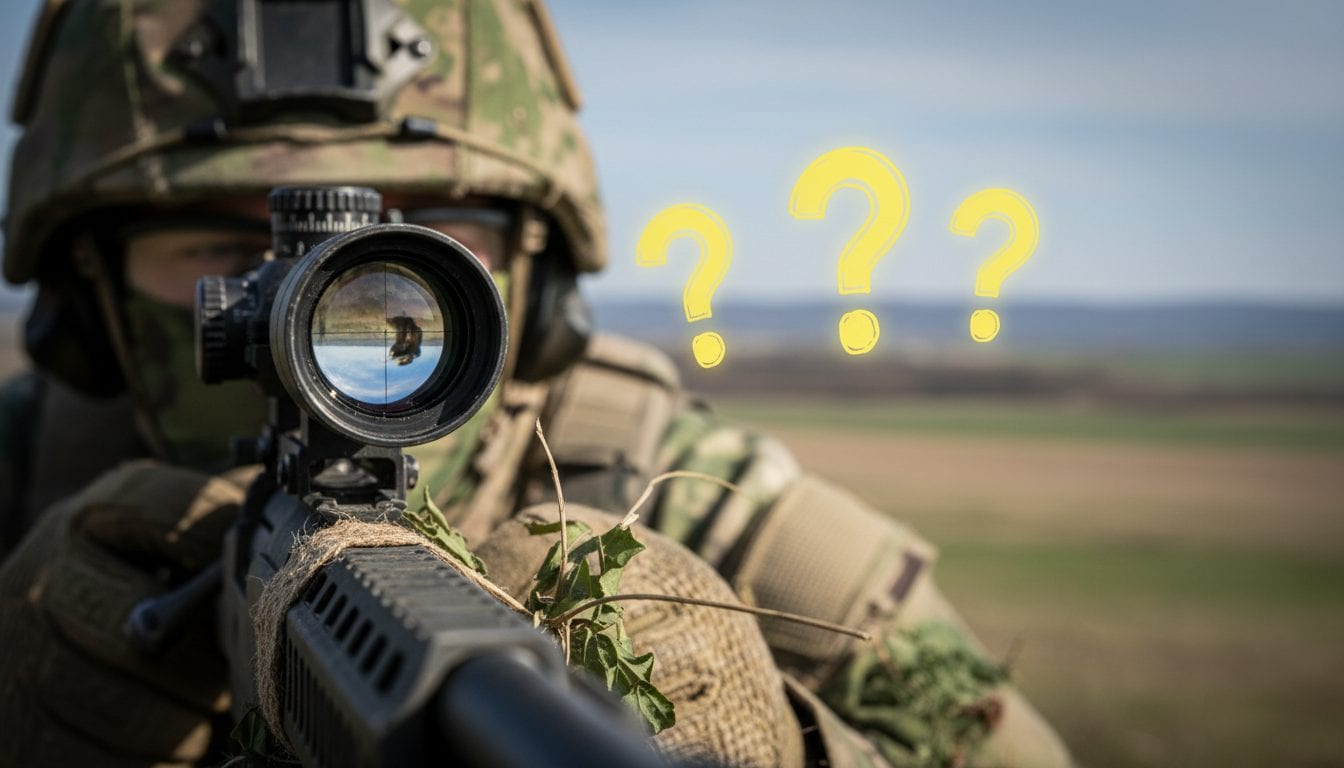
Today the term “sniper” indicates a sharpshooter, a soldier trained to shoot with great precision at a distance – usually from a hidden position – but the history of this word is curious and surprising. In fact, the etymology of “sniper” probably derives from the nickname “Beppe Cecco” given to Emperor Franz Joseph I of Austria during the First World War, used to indicate those who struck from afar.
In Italy, in fact, Beppe Cecco was the name by which Emperor Franz Joseph I of Austria who reigned over the Austro-Hungarian Empire from 1830 to 1916 was called. Italian soldiers began to define “snipers” as those shooters capable of hitting with precision from afar, fundamental in battle, but they also did so with irony, recalling the nickname of the enemy emperor, and transforming the lethal tactic into a biting and sarcastic play on words.
At the beginning, in fact, the term had a negative connotation: sharpshooters avoided melee, struck from afar and took the enemy by surprise, behavior seen as cowardly or devoid of honor. The name has no connection with the sovereign’s war skills and was probably chosen by the Italians for fun, to make fun of the enemy by attributing to him an less than honorable fighting style.
Yet, precisely because of their precision and lethal skill, snipers became feared and sought after, becoming essential figures on the battlefield. With technological progress between the eighteenth and nineteenth centuries, armies formed specialized units, with more precise weapons and camouflage. Today “sniper” remains a technical term, but it is also used for those who show exceptional aim, in sport or in everyday life.
Another more popular theory would connect the term to the fact that the shooter, to aim better, would close one eye and become a little “blind”: paradoxically, this small measure improves aiming and increases the chances of hitting the target.
In truth, the figure of the marksman was born already in the Middle Ages with the first firearms, which were still imprecise and had a short range. In subsequent centuries and conflicts, such as, for example, during the American Revolutionary War, there are further testimonies of snipers present on the battlefield. However, it was only thanks to industrial progress in the late eighteenth and nineteenth centuries that European armies began to form elite rifle units, equipped with more precise weapons, specialized movement tactics and even camouflage uniforms to ensure the effect of surprise. Since then we saw further developments in the field of warfare and snipers established themselves as fundamental figures in combat, becoming highly trained soldiers equipped with advanced equipment.
Today the term has lost the derogatory meaning it had assumed during the Great War and remains in our language as a technicality that precisely identifies a military role. It is interesting, however, to note thesemantic extension which he had in just over a century: it is also often used in common jargon to praise a person skilled in shooting or with an unusual aim. The skilled basketball player will be told that he is a real sniper for having made a basket at a great distance, or that someone who manages to hit a distant target has “a sniper’s aim”.