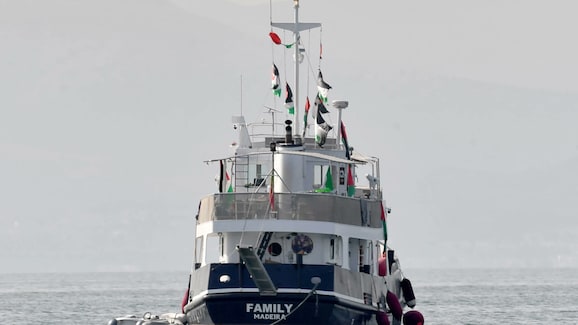
The Global Sumud Flotilla, which on October 1, 2025 was intercepted by the Israeli Navy, was not the first expedition to try to break the naval block to bring humanitarian aid to Gaza. The first attempt dates back to 2010 with Freedom Flotilla I, intercepted by Israeli forces in international waters. In the clashes during bordering, the soldiers killed nine activists. Other attempts have taken place in the following years and, although they have always been blocked by the Navy of Israel, no fire clashes have occurred.
Since 2007, Israel has imposed the Earth and Maritime Block on the Gaza Strip, then preventing access by sea since 2009 and checking the goods and people at the entrance by land. The blockade received strong criticisms for its lack of legitimacy according to international law and because it has caused heavy consequences from a social and economic point of view. According to the Israeli authorities, this measure is necessary to prevent Hamas from supplying weapons, but the Jewish state has been repeatedly accused of having used it also to grasp the civilian population. For this reason, on several occasions, international activists have tried to force the naval blockade and deliver humanitarian aid to the population.
The Israeli block of the Gaza Strip
Israel has imposed a block at the Gaza strip starting from 2007, when Hamas took political control of the territory after a dispute with the Al-Fatah party.
It should be remembered that Israel occupied the Gaza strip in 1967, during the six -day war, and surrendered control over the territory to the Palestinian National Authority with the Oslo agreements of 1993, while retaining some settlements within the Strip. In 2005 the government led by Ariel Sharon decided to dismantle all the settlements (the decision caused the resignation of the then Minister of Finance and current Prime Minister, Benjamin Netanyahu). Two years later, following Hamas’s ascent, Israel imposed the total blockade of the strip, with the motivation to want to prevent the Islamist movement from supplying weapons and materials. In Gaza, since then, only goods and people pass through the passes controlled by Israel can enter. A single pass, that of Rafah, is controlled by Egypt, which in turn requires strong restrictions on the transit of goods. In addition, no goods can arrive in the strip by sea, because Israeli military ships patrol the area in front of the coasts, imposing on any boat to pass.
The blockade is criticized by numerous international jurists and organizations, who have pointed out, first of all, as from the point of view of international law, legitimacy is doubtful, since the blockade is considered an act of war and there is no formal war between Israel and the Palestinian national authority. In addition, the blockade made the social and economic crisis of the strip much more serious, transforming it into a sort of open -air prison. The influx of goods has decreased strongly, with consequent increase in poverty and unemployment, which, moreover, creates fertile ground for the development of extremist movements. Israel, however, replies to criticism by supporting the legitimacy of the block.
Freedom Flotilla of 2010
On several occasions international activists have organized shipments to break Gaza’s blockade and bring goods and materials to the population. The purpose of these missions is humanitarian, aiming to open a corridor that allows you to bring relief to the citizens of Gaza, but also political, because it wants to attract attention to the effects of the Israeli block.
The first attempt took place in 2010, when a fleet of six ships, the Freedom Flotilla Coalition, sailed from Cyprus to reach the Gazane coast. On board there were 610 activists, of whom 380 Turks and the others belonging to numerous nationalities, including six Italians. The ships transported humanitarian aid and building materials, necessary to reconstruct the buildings destroyed in the 2008-09 war. The Israeli authorities declared that they would not allow any violation of the naval blockade, to prevent Gaza from gaza to arrive, they considered dangerous, such as concrete (which, according to Israel, served in Hamas to build bunkers). For this reason, on May 31, 2010, the Shayetet 13 soldiers, the special unit of raids of the Navy, have appointed the flotilla ships in international waters. Out of five boats, accidents did not occur, but on the largest, Mavi Marmara, the soldiers opened fire on activists.
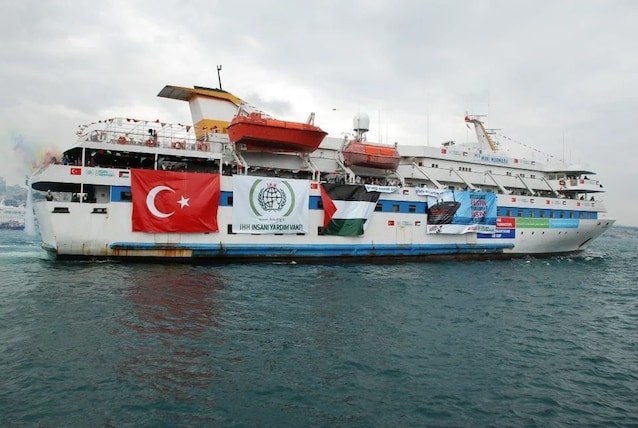
The exact dynamics of the event has never been clarified because the discordant versions. According to the authorities of Israel, activists tried to resist with iron knives and bars; According to the organizers of the mission, the soldiers opened the fire without having been caused. What is certain is that nine activists were killed: 8 Turks and an American; Some soldiers suffered injuries. The accident aroused strong reactions all over the world and the governments of many countries, including western ones, criticized Israel, also underlining that he had no right to intercept ships in international waters, in which all boats have the right to navigate. The reaction of Türkiye was very hard, which accused the government of Tel Aviv of “State Terrorism”. The relationships between the two countries deteriorate strongly and still have not restored today.
Other attempts to break the block
The 2010 episode has not discouraged other activists to try similar missions, to the point that an organization was born, the Freedom Flotilla Coalition, to promote them. On several occasions, coalition and other organizations have promoted shipments to bring humanitarian aid to Gaza and, although in no case the ships have reached the destination, have turned on the spotlight on the naval block and on the conditions of the strip. Among the main attempts we mention the following:
- Freedom Flotilla II “Stay Human”. Composed of 10 ships, it should have sailed in 2011 but, due to some accidents (or sabotages, according to the organizers) and international pressures, did not start. Only a ship tried to reach Gaza and was intercepted by the Israeli forces.
- Freedom Flotilla III, consisting of 4 ships, a Swedish (Marianne) and three Greek, which started in 2015. More precisely, Marianne left Sweden on May 10 and, after touching the ports of some cities, reached Athens and joined with Greek ships. On board the flotilla there were activists and politicians from numerous countries, including the former Tunisian president Moncef Marzouki. The expedition was intercepted on June 30 by the Israeli Navy, who arrested the activists and, after bringing them to Israel, expelled them. Armed clashes were not occurred.
- Women Boat to Gaza, a ship with 26 activists on board, sailed in 2016 and intercepted by the Israeli forces.
Other attempts to break the blockage took place after the attacks of 7 October 2023 and the beginning of the genocide. One of the initiatives, promoted in June 2025, planned to reach Gaza by land from Egypt, but was blocked by the Egyptian government. No attempt has obtained the same media visibility as the Global Sumud Flotilla.