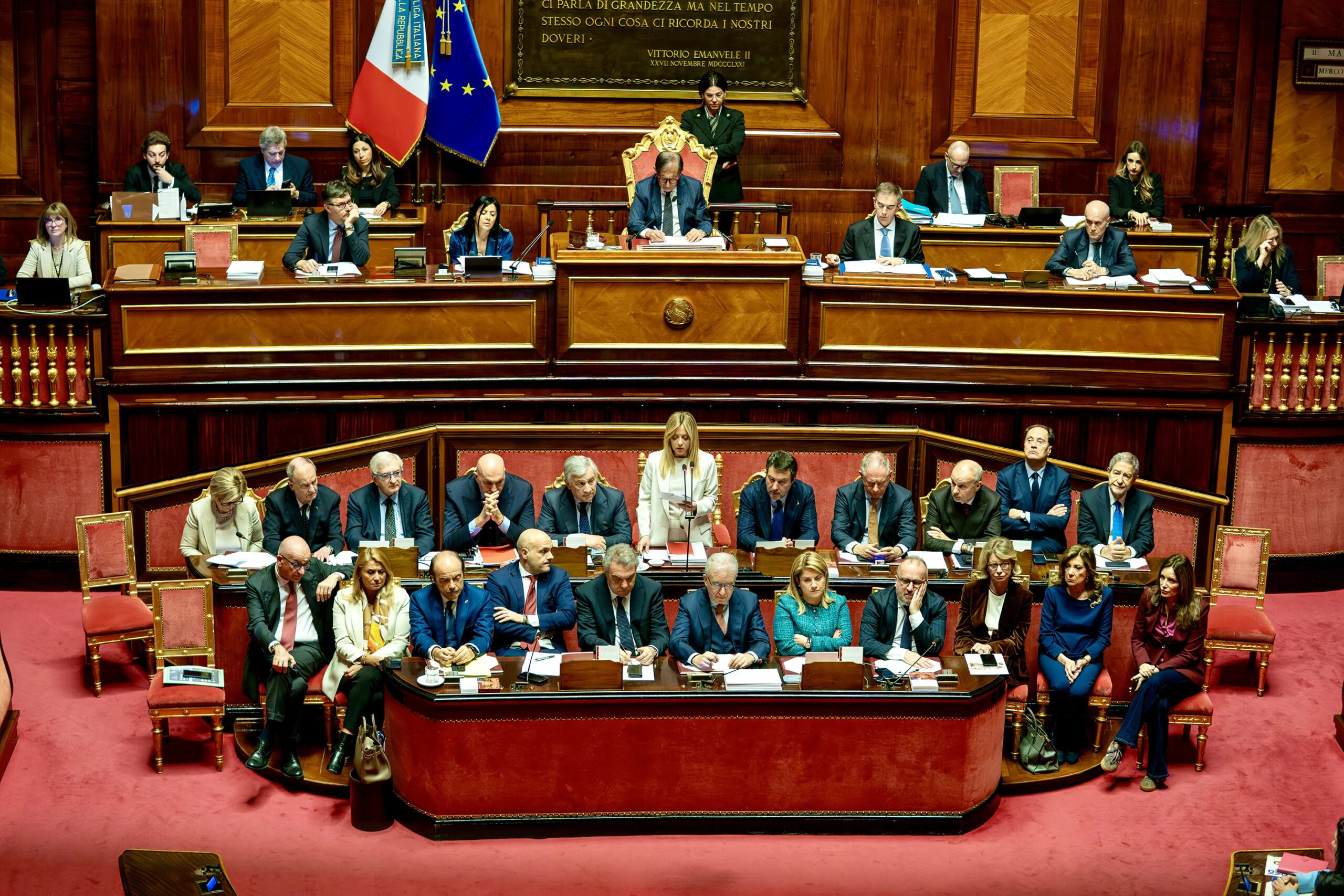
The Council of Ministers has approved the 2027 budget bill. The text will reach Parliament which is called to examine and vote on it by 31 December. The main lines of the maneuver were illustrated in a press conference which saw a large part of the government’s leaders taking part, including Prime Minister Giorgia Meloni, Deputy Prime Ministers Matteo Salvini and Antonio Tajani, Economy Minister Giancarlo Giorgetti and Deputy Minister Maurizio Leo.
As the Prime Minister explained, it is a budget law worth a total of around 26 billion euros, resources that have been concentrated on families, birth rates, tax reductions, protection of purchasing power, work incentives, business incentives and citizens’ health.
A third of the figure is actually used to ensure that existing measures do not expire, without introducing particular innovations. In fact, all the measures introduced with the previous budget law, explained Meloni, are extended, for a package which alone is worth around 9 billion euros. This includes the tax credit for those who invest in the Single SEZ of the South, the 1% taxation of productivity bonuses, the bonus for working mothers and the 120% super-deduction of labor costs, the measure renamed the more you hire, the less you pay which rewards those who create new jobs.
The elimination of IRPEF for farmers, the allocation for Agriculture 4.0, the salary replacement treatment for fishermen and the concessions on agricultural diesel remain in force. The 5% preferential tax rate on increases resulting from contract renewals also continues.
The news on IRPEF
As regards the new measures, the most important spending measure concerns the IRPEF. The Government recalls that it has already made the cut in the tax wedge for medium-low incomes permanent, merging the first two brackets and raising the rate between 28,000 and 50,000 euros to 33%. With the new measure, the ceiling of the second bracket, the 33% one, rises to 55 thousand euros, with a maximum advantage of around 500 euros per year. The maneuver also affects the flat-rate VAT regime, raising the access threshold from 85 to 100,000 euros. VAT exemption requires authorization from the European Commission and the Government has one year to negotiate it.
The car tax up to 80 kW
The Government had already suspended the car tax for motorcycles and petrol, diesel or hybrid cars with power up to 80 kW, and with the budget law it makes the exemption structural and definitive. The benefit covers only one vehicle per owner. At the same time, the maneuver also provides for the possibility of having personalized license plates, an option accessible by incurring a cost.
Young people and work: bonus of 2,500 euros for under 30s
A chapter of the maneuver is dedicated to young people, in which a bonus is introduced for young workers under 30, i.e. 2,500 euros taxed at 1%, which can be received either in 12 months or in a single payment. Another point is dedicated to the house and provides that, on rentals at an agreed rent, the rate of the flat rate tax (the fixed rate substitute tax that owners can choose instead of the ordinary IRPEF) drops from 10% to 5%, and for those who rent at an agreed rent to a young person up to 35 years of age the flat rate tax is 1%. The Government, still remaining on the topic of young people, has decided to use part of the resources of the National Escape Clause to equip all Italian schools with air conditioners and heat pumps, resources which will also finance the energy efficiency of universities and hospitals.
Healthcare and the elderly
As regards healthcare, the government wants to allocate 3.4 billion euros to the fund for the National Health Service, and a portion will be tied to strengthening the salaries of emergency room doctors. Furthermore, with this budget law, a social voucher of 300 euros is introduced for Italians over 75 with a pension of up to 28 thousand euros per year, a voucher that can be used for health expenses that are not covered by the National Health Service, for pharmaceutical expenses, for specialist visits. On the social security front, the measure allocates a fund of 850 million euros intended to expand the margins of exit flexibility for workers who access their pension with the contributory system.
Family and birth rate
In the text there is a measure dedicated to each new born, i.e. for each child born the INPS will open a social security position in which the State will pay a quota of 100 euros which parents and family members will be able to continue to support. The sum will not be taxable, cannot be seized and cannot be used until the age of 18.
And for those who have children we are talking about paid parental leave at 80% which is extended from three to four months, while for the second child the months at 80% become five, from the third child six. For self-employed people, excluded from parental leave, there is a voucher of up to 500 euros for a maximum of three months.