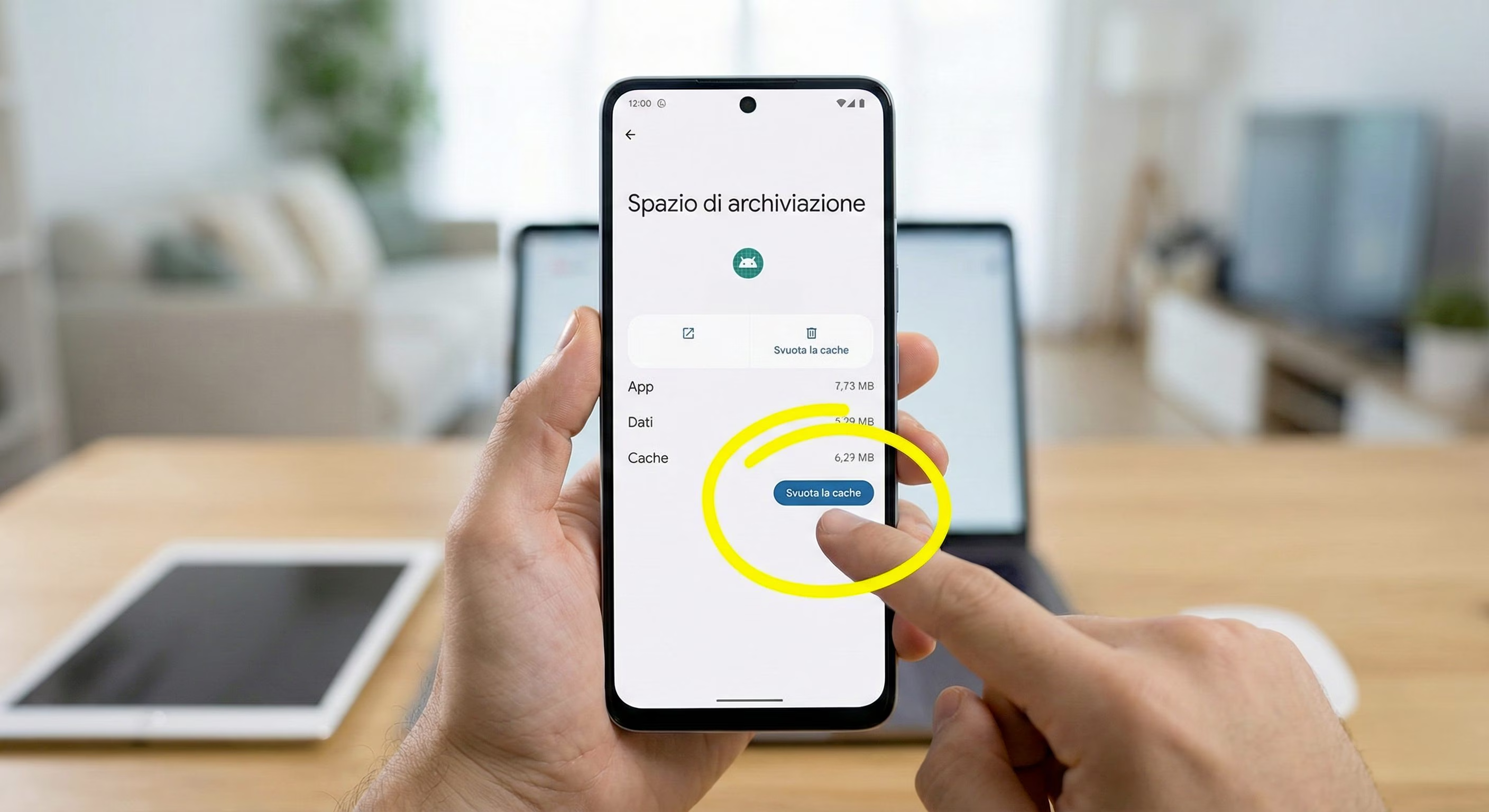
It is one of the simplest operations to do and also one of the most effective for improving the responsiveness of your Android smartphone. We are referring to clearing the cache. When we browse the web or use apps, the system automatically saves a large amount of temporary files, which are useful for faster reloading of content already viewed and used previously. In the short term this mechanism is advantageous, but as the months pass this data can become obsolete, corrupt or simply too numerous, taking up space and slowing down some operations. Intervening on the cache is not the same as “resetting” the phone, but nevertheless it allows the system to start from a cleaner base. In this in-depth analysis we will see how to clear the cache on Android and why doing so can speed up your smartphone.
Because clearing cache and cookies can make a difference
Let’s start from the meaning of cache. This term indicates an area of memory in which the operating system (in this case Android) and applications store temporary files to reduce future loading times. Let’s take a practical example to help you understand the point better: by opening the same site or the same social app several times, images and videos are saved locally so you don’t have to re-download them each time. Cookies, on the other hand, are small text files used mainly by websites to store preferences, access sessions and browsing information. When these elements accumulate or are no longer consistent with updated versions of apps or sites, they can cause slowness, display errors or strange behavior. Clearing cache and cookies from Android browsers, such as Chrome, is often the first step to solving browsing problems.
How to clear Google Chrome cache on Android
To clear the cache on Chrome, we access the menu with the three dots and tap on Delete browsing data. At this point we can press on Other options, select the desired time interval (from 15 minutes to “From the beginning”), indicate what to delete (for example Cookies and site data and Cached images and files) and confirm the deletion of the data with a touch on the appropriate button.
How to clear the cache of individual apps
An even more targeted approach is to clear the cache of a single app. Android allows you to do this from the settings, by entering the section dedicated to applications, selecting the one that causes problems (better not to choose one of the system ones) and accessing the storage space. Here we find the Clear cache option, not to be confused with “Clear data” or “Clear storage space”, which instead completely resets the app.
In the case of the device we used to write this article, on the Android smartphone available in the editorial office we followed the path App > Manage app > (app name) > Delete data > Clear cache. Keep in mind, however, that the procedure varies from device to device, based on the version of Android installed.
This is useful if an app quits abnormally, takes too long to load, or takes up too much temporary memory, as is often the case with social networks and streaming services.
The effects of clearing the cache
After cleaning the cache we can notice some immediate effects: on first launch, sites and apps may seem slightly slower because they have to recreate temporary files, but this is a physiological step. Overall, however, the system tends to be more responsive and stable. This is because eliminating the cache will have helped mitigate inefficiencies related to data no longer needed. A good rule is to intervene only when we notice slowdowns or anomalies, generally every few months, avoiding excessive interventions which, on balance, would not bring further benefits.