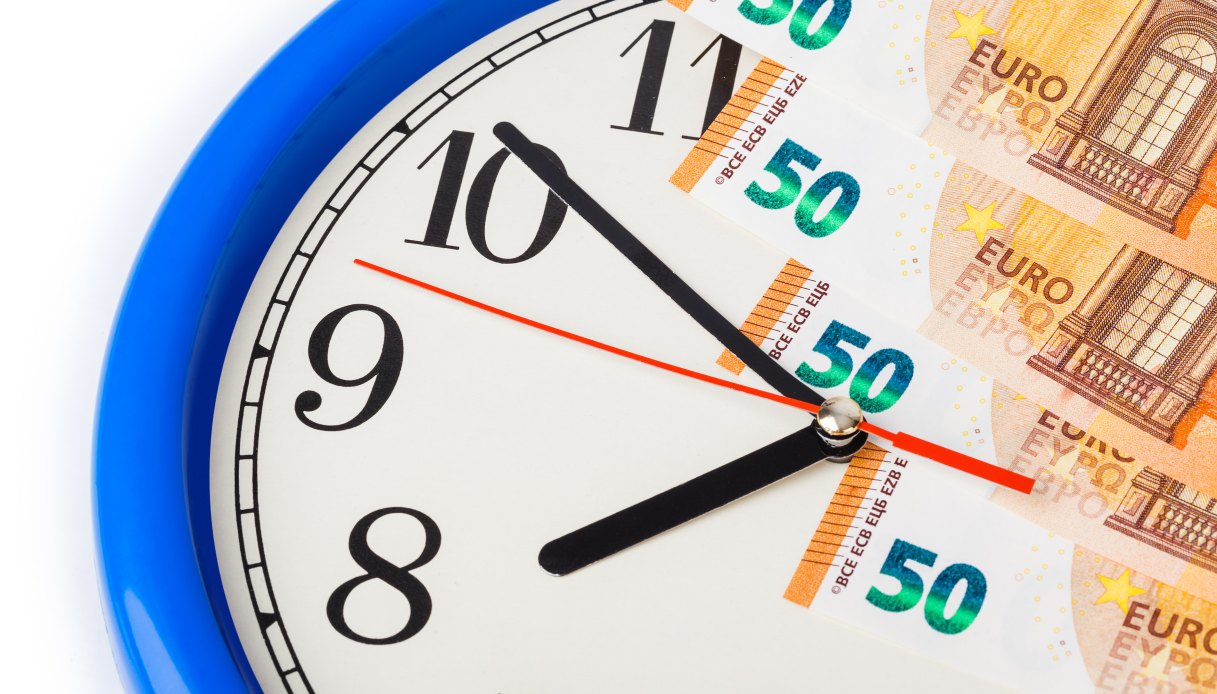
An annual saving of 180 million euros on Italians’ electricity bills is the economic driver of the proposal to make summer time permanent. It is supported by 352,000 citizen signatures and a fact-finding survey that will be illustrated on Monday 17 November, in the Chamber, promoted by the Italian Society of Environmental Medicine (Sima), Non-Profit Consumerism and by MP Andrea Barabotti (Lega).
The objective is to start the parliamentary process to say goodbye to moving the clock twice a year. If everything proceeds according to schedule, the work could be concluded with a concrete legislative proposal by 30 June 2026.
The numbers of the economic advantage
The promoters underline the positive impact already recorded: from 2004 to 2025, summer time has allowed savings of 2.3 billion euros, with a drop in energy consumption of over 12 billion kWh (Terna data). Maintaining summer time all year round could save another 720 million kWh, or 180 million euros.
In addition to the cut in bills, an annual CO2 reduction of between 160,000 and 200,000 tonnes is estimated, equivalent to planting up to 6 million new trees. Retail trade, catering, tourism (with a wider season) and public safety would also benefit, without forgetting the health benefits, put at risk by the alteration of the circadian rhythm due to the time change.
The health benefits
But there are not only savings on the bill. Sima points out that the transition to standard time “alters the circadian rhythm”, affecting sleep, mood, concentration, heart rate and even blood pressure.
The studies cited record an increase in road and workplace accidents in the week following the autumn time change, as well as an effect on crime: more hours of darkness in the evening coincide with an increase in predatory crimes. Longer evening light would also favor commerce, catering and tourism, effectively extending the revenue season for many activities.
A European process that has never ended
Already in 2018 the European Commission had launched a public consultation: out of 4.6 million participants, 84% supported the abolition of the exchange rate. In 2019 the European Parliament approved a proposal to leave the choice to the States, but since then the issue has remained pending.
In Spain they are already further ahead: already in October Prime Minister Pedro Sanchez obtained that the issue be brought into Brussels so as to get the discussion going again. The European Commissioner for Energy, Dan Jørgensen, also opened up to the possibility, explaining that a new study on summer time will be launched: “It is a topic that concerns millions of European citizens, even though it is not an absolute priority on the community agenda”. Now the topic has also arrived in Italy.
When daylight saving time was adopted
Daylight saving time in Italy was first adopted in 1916, during the First World War, as a measure to save energy. Subsequently it was abolished and reintroduced several times, even during the Second World War, until it became a stable practice thanks to the 1966 law, which regulated its annual alternation with solar time.
The system has remained active ever since, with adjustments in the calendar over the years and, more recently, with the European debate on the possibility of abolishing the time change and choosing a permanent time.