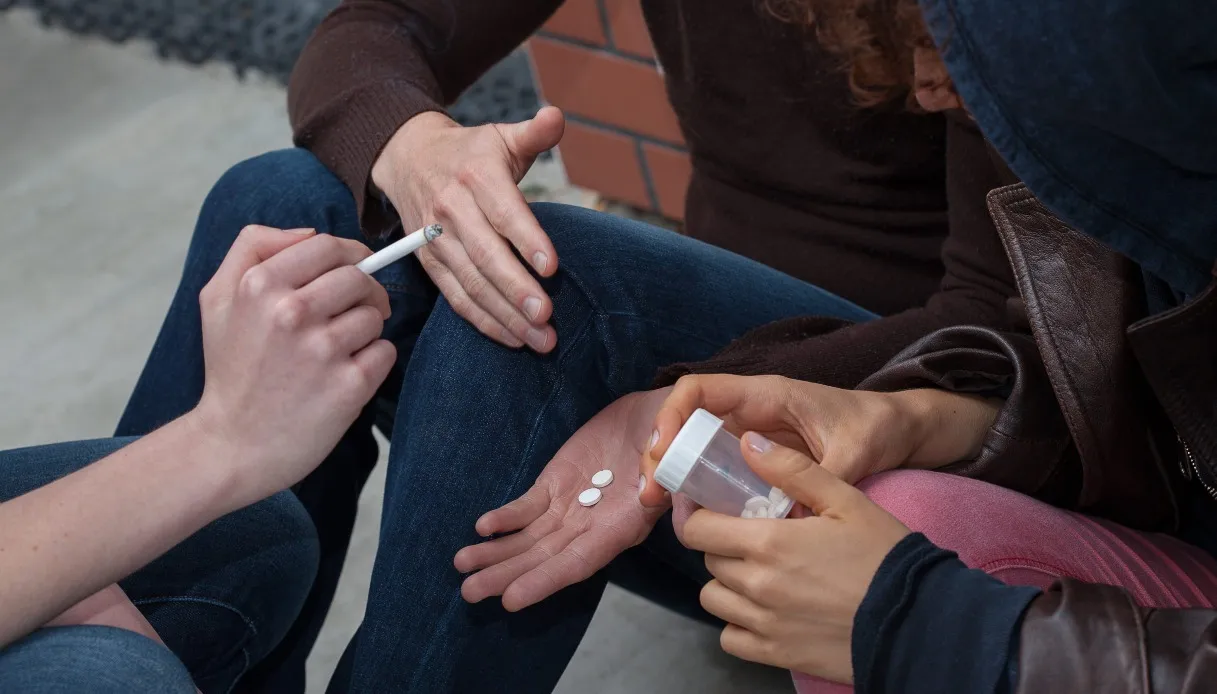
More and more young people are consuming hard drugs. Cannabis is still the most consumed substance, but it is in slight decline compared to the increase in cocaine and new and more powerful psychoactive substances such as synthetic opioids.
The Department of Policies against Drugs and Other Addiction presented the 2026 Report and from this emerge the phenomena of substance consumption, but also behavioral addictions such as the use of digital technologies and gambling.
Drugs and behavior: the department changes name
Before going into the details of substance use by young people, it is important to understand the change present in the 2026 analysis. It is a profound change that starts from the name of the department which from “anti-drug policies” becomes “Department of policies against drugs and other addictions”.
This passage is included in the introduction of the report, underlining the importance of a change not only of name, but of a multidisciplinary look in the approach that aims to understand the complexity of vulnerabilities in a broader sense, connecting forms of drug addiction and behavioral addictions.
These include:
- the use of digital technologies;
- gambling;
- cyberbullying;
- social isolation.
These addictions work alongside substances, feeding each other and contributing to creating complex situations that are often difficult to resolve.
Young people and substances: 26% between 15 and 19 years old
Out of 950,000 students between 15 and 19 years old (39% of the total), 26%, equal to 640 thousand, confirmed having consumed at least one illegal psychoactive substance in the last year. A phenomenon that affects a greater number of boys (30%) than girls (22%).
In particular, while cannabis is decreasing slightly, consumption of:
- cocaine
- hallucinogens
- opiates
- synthetic opioids
- ketamine.
Compared to the decline observed between 2022 and 2024, the trend appears to be increasing especially for stimulant substances and substances other than cannabis.
Cannabis consumption
Cannabis remains the most widespread substance among young people. Of more than 950,000 students, nearly 600,000 have tried it at least once in their lives and just under 450,000 report using it in the past year. Around 56,000 instead report frequent consumption, i.e. 20 or more times a month.
Consumer identikit
The increase in consumption grows with age and prevails especially among boys. 6 out of 10 consumers first used it between the ages of 15 and 17, while 34% did so at age 14 or younger. The share of those who have used cannabis at least once in their life is decreasing, and the number of students who report frequent use is also decreasing.
Instead, almost 170,000 students consumed more than one illegal substance together and in many cases it was cannabis and a new substance, particularly synthetic cannabis, or inhalers, stimulants, hallucinogens and cocaine.
It is in this group that higher rates of risky behavior are observed such as episodes of violence, for example hitting a teacher or using a weapon, acts of vandalism and problems with the police.
Illegal substances
Alongside cannabis, which is the most consumed substance, the consumption of cocaine, hallucinogens, opiates, synthetic opioids and ketamine is growing.
Cocaine, for example, is among the substances with the greatest health and social impact and also represents a third of drug-related deaths, over 32% of hospital admissions and 28% of SerD users.
Nps consumption
Then there is the consumption of Nps. By “NPS” we mean new psychoactive substances, such as synthetic drugs, in which, unlike narcotic substances of natural origin, the active ingredients are not extracted from plants as happens with cocaine or cannabis.
During 2025, 140,000 students used them, particularly cannabinoids and synthetic opioids (3.6% and 1.6% respectively) and ketamine (1.2%).
The consumption of stimulants
6.3% of the student population, equal to 160,000 minors, reported having used stimulants such as amphetamines, ecstasy, GHB, MD and MDMA at least once in their life.
Compared to last year there has been an increase in consumption, especially among young people.
The consumption of hallucinogens
Approximately 110,000 students have used hallucinogens at least once in their lives, and by 2025, nearly 48,000 (1.9%) had used them. However, this is not a habitual use: just 0.7% declared use 10 or more times a month.
It is a stable figure especially among minors, while it grows up to 2.3% among students who have reached the age of majority. Also in this case the highest consumption is among boys.
Opioid use
If over 70,000 students have used opioids at least once in their lives, by 2025 almost 38,000 have done so. Also in this case, as with hallucinogens, habitual consumption is less frequent.
However, there is an unusual peak among 17-year-olds, who have been highlighted as the group at greatest risk.
More tobacco and alcohol among girls
Alongside illegal substances, consumption and abuse of altering substances such as tobacco and alcohol are widespread. Nearly 500,000 underage students smoked tobacco during 2025, and an equally high share consumed alcohol.
A worrying figure is that of episodes of drunkenness, admitted by approximately 380,000 minor students. The greatest diffusion is among girls.
There is also data on psychotropic drugs used without a medical prescription by almost 180,000 minors, and even in this case the prevalence is almost double among girls.
Behavioral addictions: gambling is growing
The report also analyzes behavioral addictions such as those from social media, gaming and gambling. This section looked at a wider age range, between 11 and 17 years old, and the results highlight an increase in these addictions.
Of the total student population between 11 and 13 years old, the following are estimated:
- approximately 15,000 students (1%) involved in behaviors attributable to social media addiction;
- approximately 111,000 (7%, down compared to 11% in 2022) involved in the risk of internet gaming disorder;
- over 87,000 students (11%) involved in gambling behaviour.
The analysis therefore highlights an increase in risk for very young people linked to the use of digital technologies, together with video games, gambling and, at the same time, social isolation.
In concrete terms, what does this mean? Which for almost 370,000 students, the Internet represents a risk of neglecting relationships, sacrificing sleep to stay connected and irritability when they cannot access the internet.
Inevitably, the abuse of Internet access has also increased the rates of victims of cyberbullying. In 2025, 1,120,000 students report having been victims of insults, threats and unauthorized dissemination of personal content online; while 740,000 people admitted to having behaved like cyberbullies.
Anti-drug policies in schools
When you think of interventions against substance abuse, you immediately imagine the Public Addiction Services (SerD) which in 2025 took care of 131,328 people. But alongside this there is also an entire system of care and assistance strengthened by prevention interventions such as those implemented by regional administrations, local authorities, third sector activities and schools.
A significant part of the prevention activities has been developed in the school context, considered one of the main contexts in which to promote early interventions for the young population. Over the course of the year, 380 prevention projects were carried out starting from middle schools.
It is precisely in these spaces that debates have arisen on the need to intervene also on risky behaviors with initiatives against bullying and cyberbullying, against activities linked to gambling and social isolation.