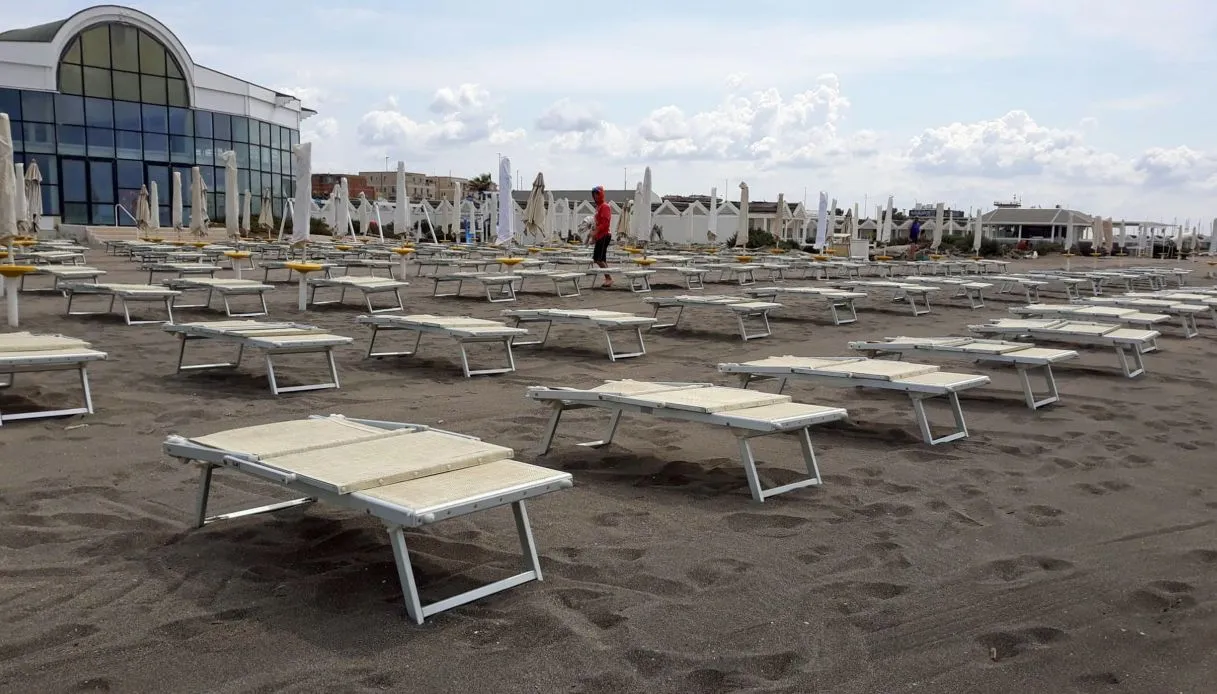
Summer 2026 is not easy for Italian seaside tourism. The images of Gabicce Mare, with dozens of empty sunbeds in high season, are not an isolated case. Between rows of empty umbrellas, double-digit price increases and a shortage of lifeguards, in some seaside resorts there is the risk of leaving the establishments closed. These are three phenomena that intertwine and are redesigning the relationship between Italians and seaside holidays.
Deserted beaches, a change already underway
On the Romagna Riviera, from Ravenna to Cervia up to Rimini and Riccione, managers report a July with attendance 15-20% lower than in 2025, while hotels in the area remain full thanks to sporting events, foreign tourism and last minute bookings concentrated at the end of August.
There is therefore no shortage of guests, but they spend less time on the beach. Many prefer the hotel swimming pool, excursions into the hinterland or food and wine experiences, while foreigners prefer different destinations, also thanks to the growth of short stays and last minute bookings.
This change in habits is accompanied by the advance of free beaches. Chiavari has introduced parking meters for the controlled rental of umbrellas and sunbeds, Rimini has expanded public spaces, Jesolo has reduced the number of umbrellas and Spotorno aims to bring the free coast to 40% by 2027.
The ranking of the most expensive beaches
On the price front, the Altroconsumo survey confirms the trend of price increases. In 2026, establishment rates increased an average of 6% compared to 2025 and 24% over the past five years. In some places increases are as high as 16%. The association monitored 222 beaches in 10 locations, recording the rates for the first week of August.
| Location | Average price for the first 4 rows (week 2-8 August) | Change vs 2025 |
|---|---|---|
| Alassio | 340 euros | 0% |
| Gallipoli | 324 euros | +10% |
| Alghero | 274 euros | +14% |
| Taormina-Giardini Naxos | 237 euros | +16% |
| Viareggio | 232 euros | nd |
| Palinuro | 188 euros | +0.5% |
| Anzio | 179 euros | nd |
| Senigallia | 159 euros | +0.6% |
| Rimini | 158 euros | nd |
| Lignano | 157 euros | nd |
Alassio confirms itself as the most expensive location, with a week in the front rows (umbrella and two sunbeds) reaching an average of 340 euros, compared to 157 euros in Lignano, the cheapest. Taormina-Giardini Naxos, although not the most expensive overall, are those with the most marked percentage increase.
According to Altroconsumo, 80% of those who choose the establishment do so for the services offered, while those who prefer the free beach above all indicate that it is free (79%) and the freedom to choose where to go every day (63%). The association has also launched a petition, with over 91,000 signatures, to ask for a reform of concessions that provides for more free beaches and transparent tenders.
The lifeguard emergency
Complicating the picture is the lack of lifeguards, a “fundamental figure” without whom, as Antonio Capacchione, president of Sib-Confcommercio, recalls, “you can’t even open” an establishment. Capacchione explains:
There are fewer and fewer young people, who tend to prefer continuous employment. Working in the summer, while others of the same age perhaps go out to have fun, certainly doesn’t help
But according to Capacchione it is not a salary problem, because lifeguards are generally paid well, but “state incentives would be needed”, such as a title of preference in public competitions.
The reform of the sector, Ministerial Decree 85 of 2024, criticized by Assobalneari Italia, also weighs heavily. According to the association, the provision has concentrated the training and authorization system, drastically reducing the number of new patents and increasing training costs. The raising of the minimum age to carry out the activity to 18 has further reduced the pool of available candidates, often forcing exemptions for minors. The sector is also looking at foreign workers, but between bureaucratic obstacles and the risk of irregularities the solution remains partial.