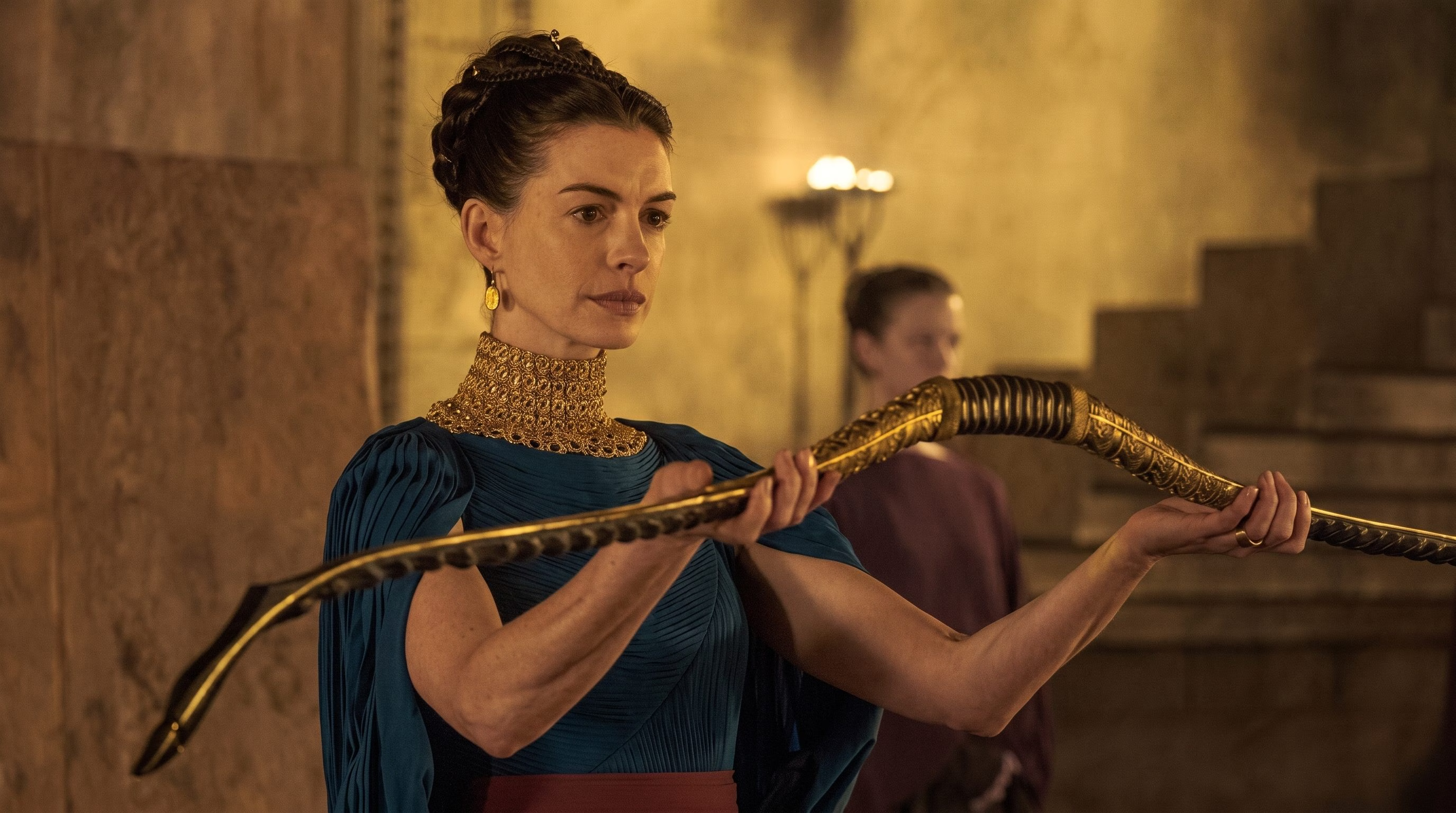
In Greek mythology, Penelope is Odysseus’ wife, queen of Ithacamother of Telemachus. Waits for twenty years the return of her husband, who during this period of time fought in the Trojan War – won by the Greeks thanks to the horse stratagem he designed – and traveled in the Mediterranean in an attempt to reach Ithaca. Penelope’s story has returned to the limelight thanks to movie Odyssey by Christopher Nolanplayed by Anne Hathaway.
The most famous episode related to the queen of Ithaca is the deception of the canvasa ploy that highlights his wit. Penelope – due to Ulysses’ long absence – suffers pressure from multiple suitors, the suitors, who ask for her hand. The queen tells them that she will get married as soon as she finishes weaving, but every night he undoes his work so as not to have to keep the promise. When Ulysses actually returns home, the two meet again, but she initially does not recognize her husband. To dispel any doubt, he then subjects Ulysses to a series of tests to verify his identity. Ulysses surpasses them all, managing to be recognized and accepted by his wife.
The story of Penelope and the meaning of the name
According to the most widespread version, Penelope is the daughter of the king of SpartaIcarius, and of the naiad – a freshwater nymph – Peribea: Penelope is therefore Elena’s cousinthe one for whom the Trojan War broke out. In another declination of his story, his mother is Policaste, human, daughter of the king of Arcadia.
Also about the circumstances of the marriage between Penelope and Ulysses there are two versions: according to the first, Tyndareus convinced his brother Icarius to give his daughter Penelope in marriage to Ulysses to thank him for the good advice he received. In the second version, however, Penelope is the prize of a running race won by Ulysses.
Its name may derive from the term πηνέλοψ (pinèlops)that is to say “wild duck“: a legend has it that, at birth, the little girl had another name, but when she was thrown into the sea by her mother to protect her from the wrath of her father who wanted a son, she was saved by a group of wild ducks. The little girl then took her name, which became for her a symbol of protection and good luck.
According to other studies, however, the name Penelope is the union of ἐλόπτω (elòpto) that is to say “rip” And πήνη (pēnē) which is exactly the canvas thread. This second hypothesis has a direct connection with his actions inOdyssey. The action of spinning, in the ancient Greek world, was specific to women, expression of femininity, constancy and presence.
The deception of the web: the queen of Ithaca waits 20 years for Ulysses to return home
The story of Penelope weaving and unweaving the web it is among the most famous in Greek mythology: an episode with a highly symbolic value, it demonstrates strength and firmness of this woman, convinced that her husband is not dead and will somehow return.
Given the long absence of Ulysses, the palace of Ithaca is occupied by the Suitors108 members of the nobility who usurp the power and riches of the absent sovereign, claiming Queen Penelope in marriage to one of their own.
Penelope, astute, knows that refusing would only bring disorder and turmoil, putting the peace of Ithaca at risk. He therefore decides to take his time, ed elaborates the stratagem of the canvas: begins to weave a shroud for Laertes, father of Odysseus, and says that he will marry as soon as he finishes it. But every night he undoes his work so he never has to keep his promise.
But Penelope comes betrayed by one of her handmaidswho reveals the deception to the Suitors. This time too, the sovereign does not give up and develops a new trick: she launches a challenge of skill to her suitors, telling them that she will marry who will be able to bend Ulysses’ bow and shoot an arrow through 12 ringed axes.
None of them succeed: however, a beggar (which others are not Ulysses in disguise) who accomplishes the feat and reveals his true identity, then eliminating the Suitors with the help of his son Telemachus.
Ulysses returns and Penelope doesn’t believe him: the challenge of the wedding bed
When Ulysses reveals himselfPenelope initially doesn’t believe him: they’ve passed twenty years – ten spent by Ulysses in Troy and ten spent at sea, looking for the way home – her husband is unrecognizable and she has already suffered many deceptions and abuses. Precisely for this reason, he decides to put it to the test: asks the man who claims to be Ulysses to move their nuptial bed.
Ulysses says it is impossible: the thalamus was built by himself in a centuries-old olive tree trunk, therefore it cannot be moved.
Penelope thus recognizes her husband. This is the passage ofOdysseyin translation by Rosa Calzecchi Onesti:
«Woman, you said something that hurts me deeply. Who moved my bed? It would be difficult even for a very experienced man: a god, if he wanted, could easily move it; but no mortal could move it without difficulty. There was in fact a large olive tree with a sturdy trunk… Around that olive tree I built the bridal room and made the bed.»
«Then her knees and her heart melted, since she had recognized the sure signs that Ulysses had told her; she ran crying towards him, threw her arms around his neck and kissed his head.”
According to Homer’s work, Penelope and Ulysses – during the first night after twenty years – they share everything that happened during their distance.
There are numerous critical readings on the character of Penelope: what emerges is that next to a cunning man like Ulysses there could only be a woman like her, who puts cunning and intelligence at the service of a project fidelity towards her husband e protection towards his homeland, without ever giving up his own personality, strength and dignity.