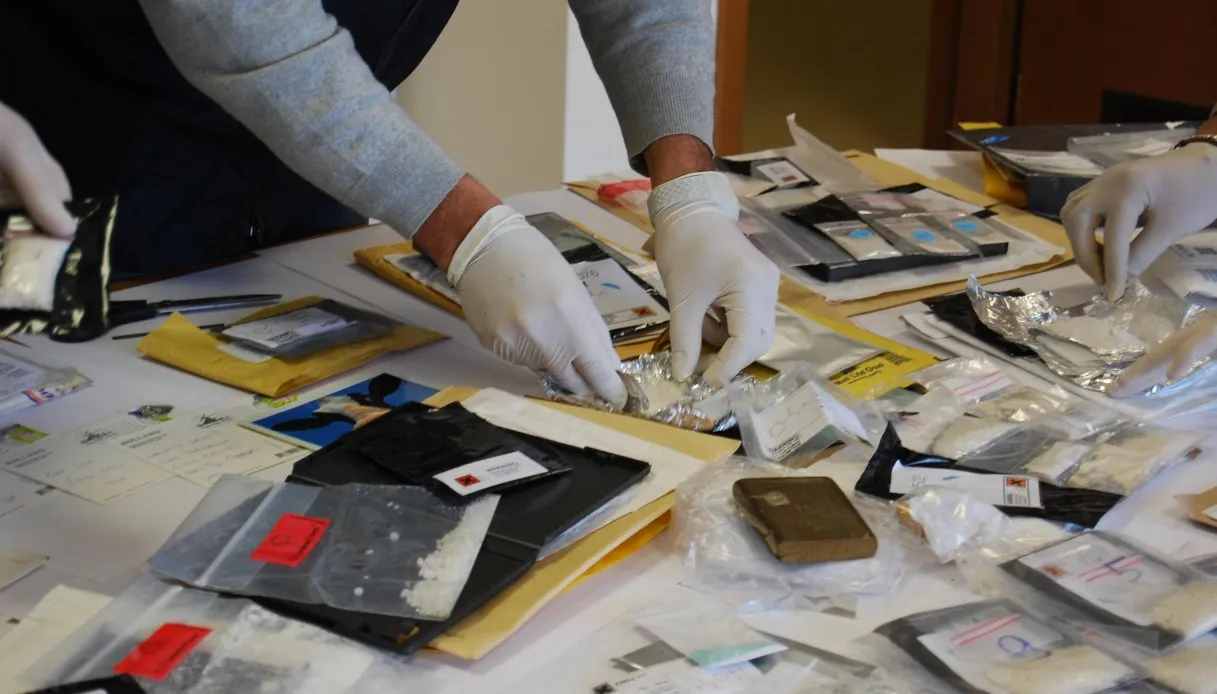
Among the unthinkable places where to find psychoactive substances, one never, or almost never, thinks of air and waste water. If you look at the Italy of addictions from another point of view, going down into the sewers or raising your eyes to the sky, you can discover that there is cocaine in the air and heroin in the waste water. This is what emerges from the annual report to Parliament of the Anti-Drug Department.
A different look, but which also tells the geography of consumption of the main substances in Italy. And what was discovered is an increase in cocaine use compared to previous years. Among the cities where the greatest heroin consumption occurs are Terni and Florence, but every Italian city has its own substance that is the most popular.
Substances in wastewater: daily consumption
The “Wastewater-Based Epidemiology” methodology (presented in the Parliamentary Report on the phenomenon of addictions 2026) is used to monitor the consumption of the main narcotic substances in the Italian population. As a secondary objective there is also that of identifying the emergence of new substances and consumption behaviours.
The data comes exactly from where you can imagine, that is, from the metabolic residues of substances in urban wastewater that flow into purification plants. This type of analysis made it possible to verify daily consumption in 38 Italian cities from March to May 2025.
From the average consumption, which is reported in “doses-day-1000 people”, emerges:
- cannabis approximately 45 doses per day per 1000 people, a decrease compared to 51-52 doses;
- heroin approximately 11 doses per day per 1000 people;
- methamphetamine approximately 0.16 doses per day per 1000 people.
Cannabis: the ranking by city
The most consumed substance in 2025 is confirmed to be cannabis, with consumption varying between the lowest figure of 10 doses per day in Vibo Valentia and the peak use of 97-98 doses in Bologna and Turin.
An increase in consumption was found in:
A decrease instead in the cities of:
- Ancona;
- Catanzaro;
- Perugia;
- Power;
- Trent;
- Olbia;
- Parma;
- Pescara;
- Salerno.
Cocaine: the ranking by city
The second drug for consumption in Italy is cocaine. Also in this case, consumption (also confirmed by the Euda report) is highly variable, with the lowest peak of 2-3 doses per day in Vibo Valentia, Trapani and Salerno and peak consumption of up to 27 doses per day in Venice.
Comparing 2024 data there was an increase in consumption in cities such as:
- Campobasso;
- Catanzaro;
- Genoa;
- L’Aquila;
- Rome;
- Venice;
- Biella.
However, there is a decrease in:
- Perugia;
- Belluno;
- Olbia;
- Pescara;
- Salerno;
- Trapani.
Heroin and ecstasy: the ranking by city
Unlike other substances, heroin consumption appears to be decreasing in all the cities monitored and is much lower than in previous years. (although for a time it tried to spread more than cocaine). We are talking about percentages lower than one dose per day per 1000 inhabitants, in stark contrast to the two-year period 2020-2022 when consumption of up to eight doses per day was observed.
Even in this case, however, it is possible to create a sort of ranking of the highest consumption and Terni emerges with 0.98 doses per day and Florence with 0.8 doses.
Alongside the decrease in heroin consumption, there is another figure, namely the monitoring of methadone, which is also observed decreasing from 1.84 doses per day per 1000 inhabitants in 2024 to 1.31 doses per day per 1000 inhabitants in 2025.
On the other hand, ecstasy consumption is very limited, although slightly increasing with higher rates at:
New substances: where they are consumed
The analysis of wastewater also allows us to discover the use of new narcotic substances that belong to seven different classes, including synthetic opioids, tryptamines and synthetic cathinones. Consumption is still very low when compared to the rest of the best-known substances, but going into detail we discover an increase in methcathinone consumption in almost all cities, with peaks at the weekend.
In the case of new substances, the data is often highly variable over the years. Sometimes, for example, they disappear in some cities or at a national level, only to reappear after a few years. For example, in 2025, after years of absence, phenethylamine PMA returned, albeit in only 2 cities.
For the first time in 2025, the presence of synthetic cannabinoids and fentanyl were also detected, which was detected in 34 cities with a maximum load of 0.68 mg in Florence.
Drugs in the air
Another type of monitoring analyzed is that of psychotropic substances in atmospheric particulate matter PM10. It is analyzed in the context of the PSICO project (acronym for “Presence of Illicit Substances in Urban Aerosol as a possible marker for consumption and traffic”).
The first monitoring campaign started in spring 2025 and ended in winter 2025-2026. 10 urban centers were chosen for the analysis, so it has a smaller sample size than wastewater.
In any case, this analysis revealed that cocaine is the most pervasive substance, having been detected in 100% of the samples analyzed with a national average concentration of 190 pg m⁻³. To understand the data, a comparison can be made with ketamine which was instead identified in 77% of the samples, but with an average of just 4 pg m⁻³.
The ranking by city: cocaine and ketamine
However, there is a marked variability in concentrations, although present in 100% of the samples. The highest value was recorded at the Rome Bufalotta site (1,174 pg m⁻³), followed by Pescara with 565 pg m⁻³ and Florence with 528 pg m⁻³.
Furthermore, in the case of Rome, it is also possible to underline another particular fact, namely how the highest concentration is found during the working week, from Monday to Friday. In contrast, THC, a psychotropic substance produced by cannabis flowers, saw higher concentrations over the weekend.
As regards ketamine, however, the city with the highest concentration is Florence. This was recorded homogeneously every day of the week.
How much drug do we breathe involuntarily?
Particulate analysis also allows us to answer this question. Considering the value that emerged in the site with the maximum concentration, i.e. Rome Bufalotta, it can be calculated:
a value of 0.0235 mg, which corresponds to 0.016% of an average dose for personal use estimated at 150 mg.
This therefore allows us to state that the quantity breathed involuntarily is significantly lower than any dose for personal use. And these data were also obtained for THC and ketamine, considering the values with the highest concentration also in the other cities.