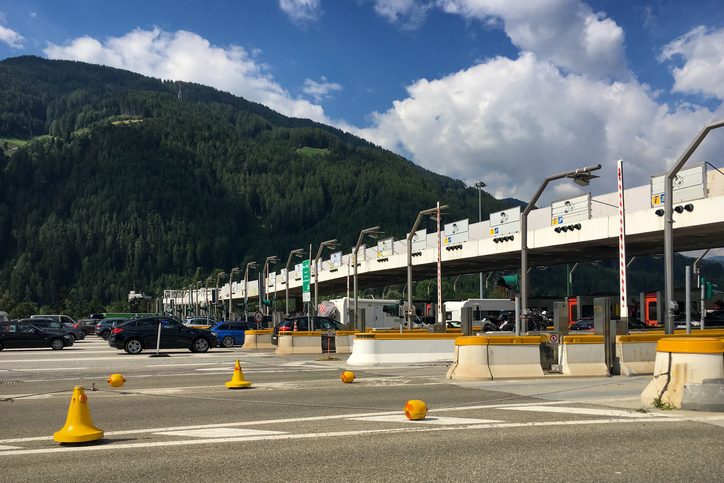
Starting from January 2026, the cost of motorway tolls in Italy should decrease: to confirm it was the president of the transport regulation authority, Nicola Zaccheo, who has communicated the next entry into force of a new unitary calculation method, which will depend on the investments actually made.
But, in practice, how is the cost of the motorway toll in Italy calculate? Today the figure, calculated by the transport adjustment authority, is obtained by multiplying a unitary tariff (which depends on the vehicle class, type of stretch and concessionary company) for the kilometers crossed by the vehicle on the motorway section. To this, then, there is also VAT to 22% and a rounding for excess and defect.
The new system must be approved in the coming weeks: according to Zaccheo, however, the real effects of this reduction will begin to see between 2027 and 2028: these new measures aim to balance “the sustainability of investments and the sustainability of the costs of the user”, also introducing a right of reimbursement in the case of road construction sites.
What is the unitary rate and how much the highway in Italy costs
The motorway toll is nothing more than the amount that drivers are required to pay for the use of the motorway: the proceeds of these tolls are then intended for the recovery of investments (already made or to be made), but also to the costs of modernization, management and maintenance of the motorway network.
As reported by Autostrade per l’Italia, the cost of the toll is established by theTransport adjustment authority Based on the state regulations and resolutions of the CIPE (Interministerial Committee for economic programming): to calculate the final amount of the toll, the so -called “unitary rate” must multiply by the kilometers actually traveled on the highways.
This unitary rate, therefore, is a variable coefficient applied to the motorway toll and which depends on:
- Vehicle class (A, B, 3, 4, 5), which depends on the shape (i.e. the height of the vehicle on the perpendicular of the front axis) and the number of axes for vehicles with more than two axes. To be clear, a classic car is class A, while a truck with trailer can be class 4 or 5. In general, the higher the vehicle class is the higher the cost of the unitary rate.
- Characteristics of the motorway routes, on which the construction, management and maintenance of the sections affect. This is why the mountain motorway stretches cost more, having a greater number of tunnels and viaducts than the flat ones.
- Dealer of the section: in the event that the motorway routes are managed by several companies, it is necessary to calculate the kilometers and unitary rates of each of these separately.
Specifically, in the plain stretches the unitary rate varies from 7 (class A) to 18 cents (class 5), while in the mountain stretches it starts from 8 up to 21 cents of euros.
To get an idea, take into consideration the Milan-Bologna and Milan-Aosta motorway section, both of about 200 km: in the first case, the cost of the toll for a class A vehicle is around 16 euros, in the second you can instead reach around 35 euros (more than 40 euros if you travel the tunnel of Mont Bianco).
To this calculation, then, the VAT must be added to 22% and the rounding, by excess or by defect, to 10 cents of euros. An additional amount is also intended for Anas (Autonomous National Company of the Roads), as required by laws 102/2009 and 122/2010. It is important to underline that in the final count of the kilometers, the junctions, the adduction braces and motorway sections are also included, and before and after the toll booth.
According to a study conducted by the Tollwayr company, Italy is, together with France, among the European states with the most expensive motorway tolls: it must be said, however, that the high cost also depends on the morphology of the territory. In countries like ours, mainly mountainous or hilly, greater investments are necessary for the construction of the highways (which must include numerous galleries or viaducts), with inevitable repercussions on the cost paid by the drivers.
What could change from next January
According to the president of the transport authority authority, Nicola Zaccheo, starting from January 2026, the cost of the motorway tolls will be linked “to the actual investments made”. This new unitary calculation system, which will apply to both new concessions and in force, must be definitively approved in the coming weeks, and then enter into force starting next year. In other words, the unitary rate will be abolished, with the amount of the toll that will mainly depend on the investments actually made for the construction and management of that highway.
According to Zaccheo, the change will have “a benefit for users”, with a lower cost of tolls, even if “the real effects will begin to see each other between 2027 and 2028”. At the same time, the right to reimbursement for drivers was introduced (calculated as a reduction in the toll itself) in the event of limitations to the use of the network due to road works.