Italian banks confirm themselves among the most robust in the Old Continent, consolidating a record that has acquired growing importance in recent years. Especially in an economic context characterized by geopolitical uncertainties, financial volatility and increasingly rapid technological transformations.
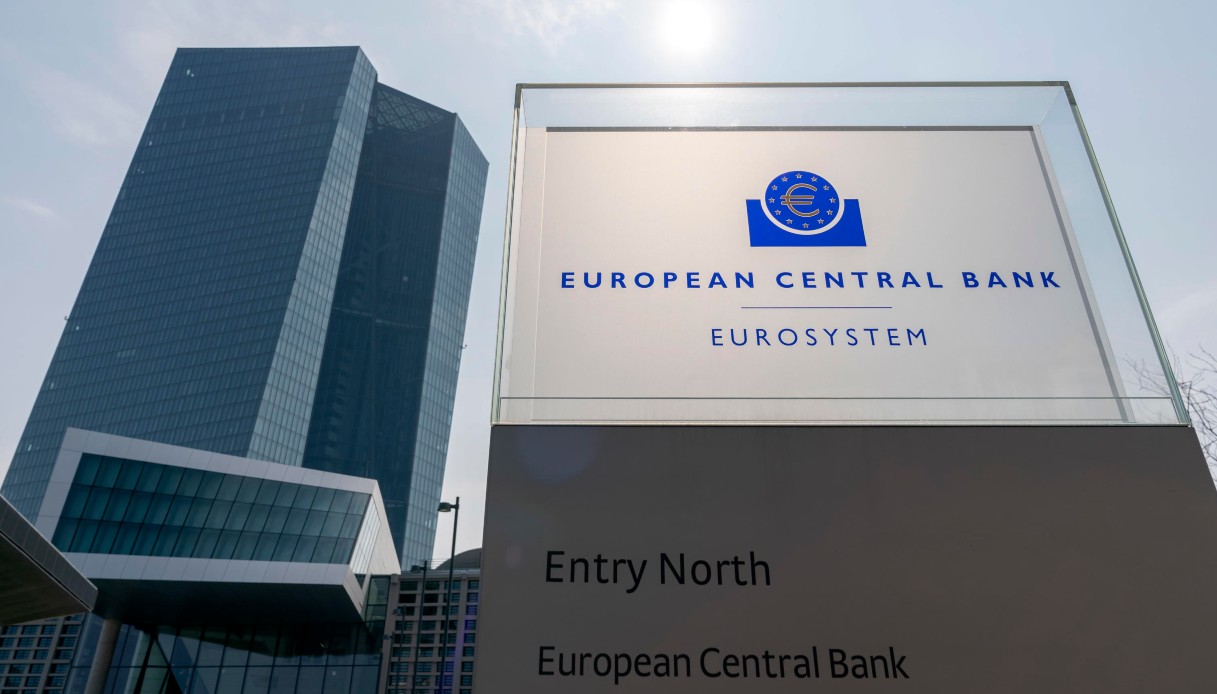
The European Central Bank has in fact published the results of the now awaited SREP (the prudential review and evaluation process that every year measures the solidity of European credit institutions) and the balance for Italy is once again positive.
Leading the national ranking is the Credem group, which not only takes first place among Italian institutions, but also manages to place itself on the European podium of the most solid banks, confirming itself as a model of balanced and prudential management.
The numbers of Italian banks
The key parameter underlying the assessment is the Pillar 2 Requirement (P2R), the additional capital requirement requested by the European Central Bank from each bank to cover specific risks not fully incorporated into the minimum requirements.
The lower the value, the lower the risk perceived by supervision, and therefore the higher the ECB’s level of confidence in the institution’s ability to deal with any shocks.
Here is the ranking of Italian banks:
- Credito Emiliano Holding 1.25%;
- Banca Mediolanum 1.50%;
- Intesa Sanpaolo 1.65%;
- FinecoBank 2.00%;
- UniCredit 2.00%;
- Banco BPM 2.25%;
- Credito Cooperativo Italiano SpA 2.25%;
- Iccrea Banca 2.25%;
- Bper 2.40%;
- Monte dei Paschi di Siena 2.40%.
These results place the main entities of our credit system at the top of the European ranking for capital solidity.
The European scenario: stable capital and less “homework”
The general picture that emerges from the ECB’s analysis for 2025 is of a healthy European banking system, characterized by
robust capital and liquidity positions and strong earnings generation.
The overall numbers leave little doubt about the strength of the sector. According to the latest ECB supervisory report, in the second quarter of 2025 the average level of CET1 capital – the primary solidity indicator – stood at 16.1%, well above the minimum requirement established for 2026, which remains stable at 11.2%. Total capitalization also reached 20.2%.
System liquidity remains abundant, with an aggregate coverage ratio of 158%, significantly higher than the minimum threshold of 100%. To complete the positive picture, profitability: the return on capital (RoC) grew from 9.5% at the end of 2024 to 10.1% in the second quarter of 2025.
The ECB’s future priorities
Looking at the three-year period 2026-2028, the European Central Bank indicates clear priorities for banks. Attention will increasingly shift to resilience to geopolitical risks and macro-financial uncertainties, without neglecting the operational solidity and security of IT systems, factors that have become crucial in the digital age.
The SREP examination involved 105 institutions directly supervised by the ECB, tracing an updated map of the financial stability of the Eurozone, in which Italian banks play a leading role.