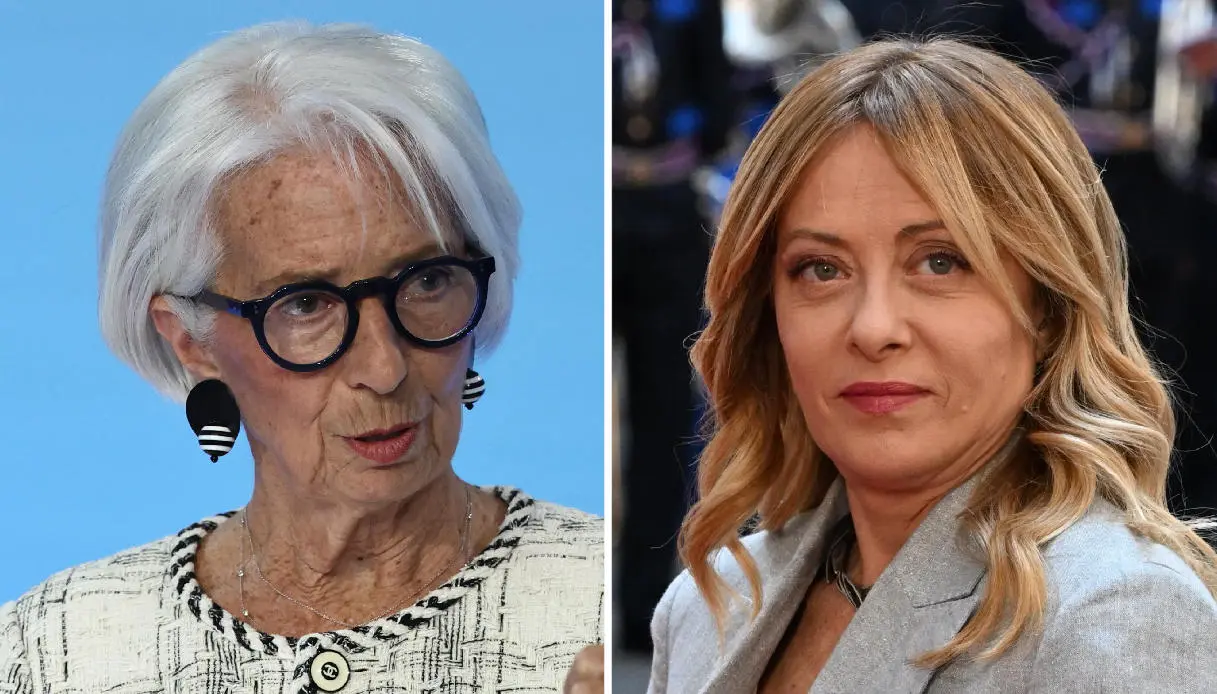
From Christine Lagarde, number one of the ECB, comes the cold shower that extinguishes the hopes of the Meloni Government: there will be no advances on interest rates or openings to exceptions on the Stability Pact.
This is the line indicated by Lagarde who intervened in the studies of What’s the weather like? by Fabio Fazio, on Canale Nove. The head of the ECB also commented on the hypothesis of a rate hike and also a call for European unity in this phase marked by inflation, skyrocketing energy costs and weak growth.
Rate hike in June? Lagarde’s response
When asked about the possibility that the European Central Bank could intervene with a new rate increase in the next monetary policy meeting in June 2026, Lagarde chose the path of reserve.
Fazio wanted to know if the Hormuz crisis would affect rates.
This is Lagarde’s response, which cut it short:
You will know on June 11th. We will keep inflation at 2% in the medium term, this will not change.
Chrristine Lagarde’s hermetic response is due to this:
The current situation is one of maximum uncertainty.
In addition to the issue of inflation, the EU will have to deal with growth with the handbrake on:
Growth throughout Europe will be below 1%. The European Commission just published a forecast of 0.9% due to energy prices and huge uncertainty.
In summary, given the context, the ECB today navigates by sight. At the moment there is still room for optimism, but if the Strait of Hormuz crisis does not resolve itself in a relatively short time, then the repercussions on the energy market would worsen and, as a result, the rise in prices would trigger a spiral of inflation.
No exceptions to the Stability Pact
As mentioned, a message arrived from Lagarde to the Meloni Government, which called for greater flexibility with respect to the Stability Pact. The head of the ECB ruled out particular openings, reiterating the need to respect the common European framework:
I think that what is important now is, first of all, that we all act together as Europeans, rather than looking for different paths, because our enemies would be enthusiastic about fragmentation. Instead we absolutely must work together. Secondly, we must stick to the rules. We have rules in terms of the budget, in terms of debt, in terms of deficit. We have processes that work and we need to operate within those rules.
And again:
If the rules apply to all of Europe and if the rules are followed correctly, then the markets will automatically appreciate and understand that this or that country is a country in which to invest because the risk does not exist.
Lagarde’s recipe for European growth
Christine Lagarde also explained to host Fabio Fazio what, in her opinion, the path to economic recovery in the European Union should be:
We need to spend where we can generate growth. We must make the reforms that will lead to growth, that will help us be more productive in Europe, that will guarantee greater income for European citizens. Here’s what needs to happen.