The new commercial agreement between the United States and the European Union, announced with stretched tones but full of latent tension by the president of the Ursula von der Leyen Commission and by the American president Donald Trump, marks a turning point that is anything but painless in the transatlantic relationships.
Brussels tries to present the compromise achieved as a diplomatic success that has avoided a real commercial war. But the reality is that it is, for many European economic sectors, a defeat masked by Vittoria. And Italy, despite the proclamations of Palazzo Chigi, risks coming out particularly weakened.
US-EU agreement: what provides and what changes
The new agreement reached between the EU and the United States includes 15% duties on a long list of European goods exported to the USA.
Among these, there are key sectors of the Italian and European economy:
- semiconductors;
- cars;
- drugs.
If for cars the new rate represents a reduction compared to the previous 25%, for drugs it is an absolute novelty: they were so far exempt. In an increasingly ferocious market, it translates into a potential blow to the competitiveness of Made in Europe, and in particular of Made in Italy.
For steel and aluminum, the 50% duty will be replaced by a system of contingent shares, which in practice will however limit the exportable volumes without rates.
On the opposite front, the European Union has obtained zero-for-zero duties on a series of strategic products-aircraft, hi-tech components, some chemists and agricultural-and the suspension of counter-dotists out of 93 billion euros in US goods.
But the political and economic price paid by Brussels is high: 600 billion dollars in direct investments in the USA and European purchases for 750 billion between energy and American armaments. An agreement that reflects more a relationship of strength than a real negotiating balance.
The government promises aid but from Brussels no confirmation
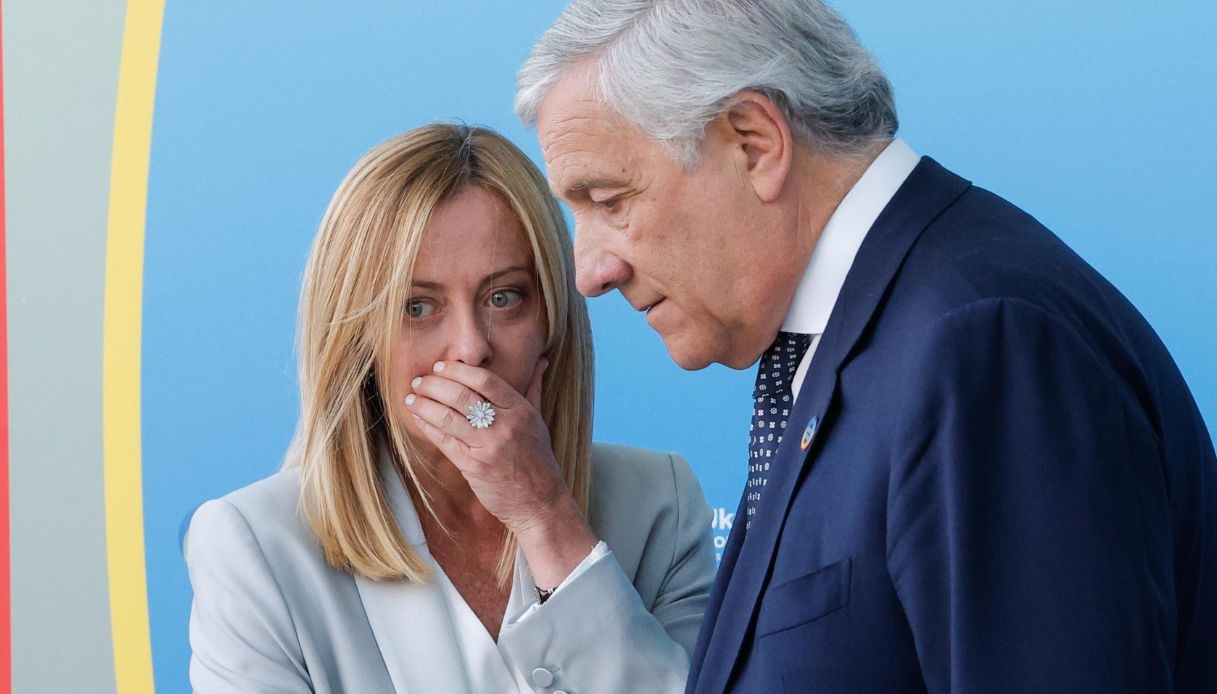
In this scenario, the Italian government reacted with an official note with which Giorgia Meloni says he was satisfied with the agreement achieved. The premier, flanked by the vice -presidents Antonio Tajani and Matteo Salvini, also highlighted the merit of having avoided one
commercial war within the West.
The line is: better an imperfect compromise than an escalation harmful to everyone. And so far, the location is understandable. But the optimism of the government note screeches with the absence of concrete measures by the European Commission to compensate for the losses of the most affected sectors.
The Italian government has in fact announced the intention of activating national support bonuses and measures, to help exporting companies damaged by the new rates.
We are ready to activate support measures at national level, but we ask that they are also activated at European level, for those sectors that will be particularly affected by the US tariff measures.
However, not only are detached details on how and when these bonuses will be activated, but above all – and here is the political node – there is no confirmation of similar measures at the EU level.
Despite the Italian announcement, to date the European Commission has not foreseen refreshments for the penalized sectors.
It is a significant contradiction, which opens up to a series of questions. Will Italy be left alone to face the effects of the new rates? Or is there a European plan in the definition phase, but still not made official? At the moment, everything is silent from Brussels.
What are the most at risk sectors
According to an estimate of the ISPI (Institute for International Political Studies), the impact of the agreement could translate into a contraction in Italian GDP equal to 0.2%.
A fact that, although not dramatic in itself, must be read in light of the general economic slowdown and the difficulties of some sectors already experienced by inflation, energy costs and geopolitical instability.
There are at least three sectors at risk in Italy:
- Automotive, even if the duty goes from 25% to 15%, the blow remains significant for a sector that lives on exports and is already facing the electrical transition with difficulties;
- pharmaceutical, with the introduction for the first time of duties on a sector exempt so far represents a serious blow, especially for the regions of northern Italy where the industry is more developed.
- Electronic components and semiconductors, an sector in which Italy is investing to relaunch themselves, but which now risks being held back by an unfavorable commercial climate.
The agreement reveals an increasingly evident dynamic, the European Union plays in defense, while the United States dictate the times and contents of bilateral economic relations.
And the numbers are clear, because in the face of some tariff concessions, the EU has engaged hundreds of billions in favor of the American economy. Without a community response, every national effort risks turning into a badly sewn patch.









