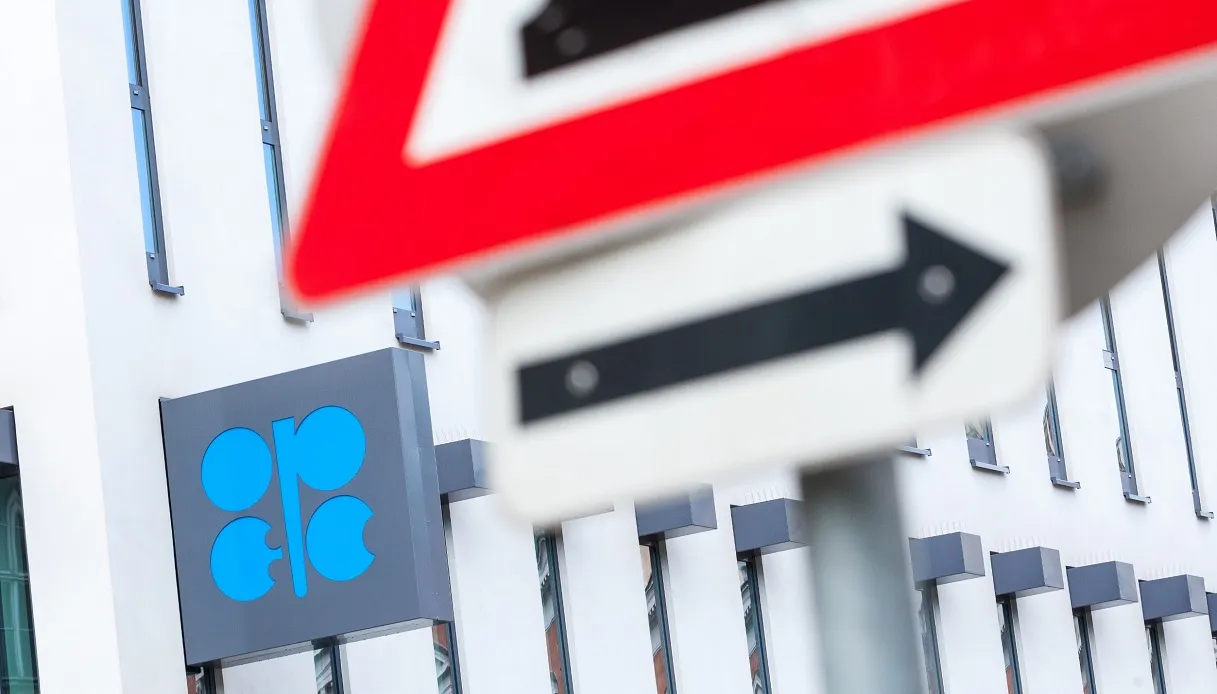
The seven leading countries of the OPEC Plus alliance – excluding the United Arab Emirates which have now left the alliance – decided in Sunday’s virtual meeting for a new increase in production quotas. The seven members agreed to increase targets by 188,000 bpd pro rata starting from July, the same value already set for June and reduced from the 206,000 bpd of May and April to take into account the exit of the United Arab Emirates. This is the fourth production increase in as many months, decided as the war between the United States and Iran continues to prevent some members of the group from pumping more.
The market context
The increase is part of a planned path. The seven countries are ramping up production as part of the phasing out of the 1.65 million bpd cut agreed in 2023, when Abu Dhabi was still part of the group. From July, approximately 567,000 bpd of the original cut remains to be returned to the market, and the entire volume could be reabsorbed by the end of September if the alliance maintains monthly increases of around 188,000 bpd for August and September. In a separate meeting with all twenty-one members, ministers made no changes to the group’s overall production policy, in place until the end of 2026.
The reasons for the increase
The framework remains that of the geopolitical crisis in the Gulf. The seven core countries – Saudi Arabia, Russia, Iraq, Kuwait, Kazakhstan, Algeria and Oman – reaffirmed their commitment to supporting market stability and the importance of taking a prudent approach, maintaining full flexibility to increase, suspend or reverse the elimination of voluntary cuts. In terms of real volumes, however, the increase has an almost symbolic value: the group’s production actually collapsed due to the export cuts of the Gulf members, reaching an average of 33.19 million bpd in April, compared to 42.77 million in February. The structural shock of the Emirates’ farewell is also having an impact: the UAE, the seventh largest producer in the world, left the group complaining of a growing misalignment between the increasing production capacity and the quotas allowed by the framework OPEC+.
Analysts’ comments
Experts downplay the operational scope of the move. “An increase in production by OPEC+ means little as long as the Strait of Hormuz remains closed,” noted Jorge Leon, a Rystad analyst and former OPEC official, warning that when the strait reopens the market could quickly shift from fear of a shortage to fear of a surplus. The International Energy Agency highlights the erosion of safety margins: spare capacity in the Middle East fell in March to its lowest level on record, with overall OPEC+ capacity still estimated to be well above 5 million bpd.
The reaction of the markets
On the oil prices front, tension remains high but lower than the war peaks. On Friday the futures market closed 2% lower, thanks to an improvement in the crisis in Iran, while today the resumption of raids by Israel is expected. The Brent contract for August delivery trades at 94.64 dollars a barrel, up 1.7%, while the US WTI trades at 91.81 dollars a barrel, up 1.4%.