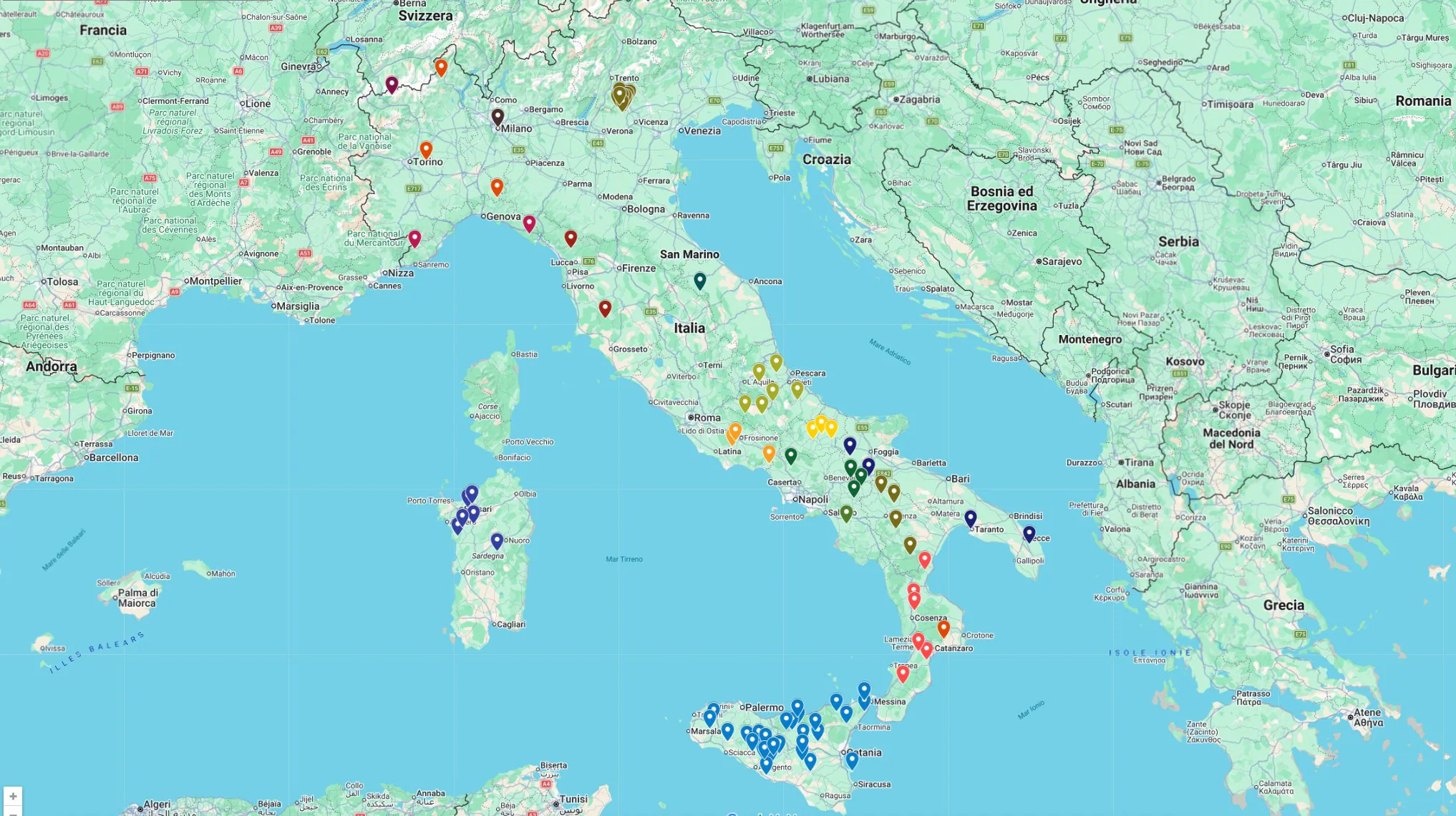
The project Houses for €1 it is the urban regeneration initiative to contrast the depopulation of small villages. It was born in Italy in 2008, drawing example from the pioneering strategies of the Municipality of Salemi, in Sicily, the first official experimenter of the project. Today this model of territorial development is replicated in dozens of small villages, from north to south, with a dual objective: to save dilapidated buildings from collapse and to revive local communities at risk of disappearing. The first step for those who want to buy a house for 1 euro is to identify a municipality participating in the project and directly contact the relevant municipal administration, which manages the tenders and provides all the information on the available properties. Behind the symbolic price of a coffee, however, lies a precise bureaucratic process and a package of stringent duties for the buyer. Let’s find out how it really works.
How the €1 Houses Project works
The investment project is developed through the involvement of three actors. There are the old owners, often heirs living elsewhere and owners of now dilapidated properties: between maintenance taxes and the risk of collapse due to age, owning a property of this type can represent more of a burden than an advantage, which is why it is sold free of charge to the Municipality. The latter collects the availability, draws up a public tender, evaluates the necessary technical documentation and promotes the properties on the market. Finally, buyers, whether private citizens or companies, participate in the tender by committing to renovate the property.
The Municipality is therefore not the owner of the properties, but acts as intermediary and guarantor of the operation inside the machine set in motion. If multiple requests are registered for the same house, the Municipality draws up one merit ranking. The winner is not whoever offers the most (in fact, in some villages the symbolic figure of €1 represents an upward auction base), but whoever presents the best project according to the following criteria.
- Intended use: priority to those who establish residence or create commercial/tourist activities (B&Bs, shops).
- Sustainability: wide scope for projects involving green building and energy efficiency.
- Local economy: commitment to using local companies and artisans, a highly rewarding criterion.
- Timings: promise to complete the works in a shorter time than the limits of the tender. This aspect also offers an additional score, albeit with a smaller impact than previously described.
Where to find houses for 1 euro
To date, over 70 Italian municipalities have activated projects for the sale of properties at a symbolic price, distributed across 14 regions with a strong concentration in the South. The list is constantly updated: some tenders may have already concluded, others are published periodically on the institutional websites of the individual Municipalities. To check the actual availability of the properties and the status of the tenders, it is always advisable to contact the municipality of interest directly.
Here is the list of the main participating municipalities, divided by region:
- Aosta Valley: Oyace
- Piedmont: Albugnano, Borgomezzavalle, Carrega Ligure, Rive
- Lombardy: Milan (in specific peripheral neighborhoods)
- Veneto: Unione Montana Pasubio Piccole Dolomiti (Vicenza)
- Liguria: Pignone, Triora
- Emilia-Romagna: Casteldelci, Farini
- Tuscany: Factories of Vergemoli, Montieri
- Marche: Cantiano, Monte Urbano
- Lazio: Maenza, Patrica, Santi Cosma e Damiano, Graffignano
- Abruzzo: Canistro, Casoli, Lecce nei Marsi, Penne, Pratola Peligna, Santo Stefano di Sessanio
- Molise: Castropignano, Petrella Tifernina, Sant’Elia a Pianisi
- Campania: Altavilla Silentina, Bisaccia, Guardia Sanframondi, Pietramelara, Teora, Torre Annunziata, Zungoli
- Puglia: Biccari, Candela, Caprarica di Lecce, Taranto
- Basilicata: Acerenza, Chiaromonte, Laurenzana, Ripacandida
- Calabria: Albidona, Belcastro, Bisignano, Cinquefrondi, Gasperina, Maida, Platania, Rose
- Sardinia: Bonnanaro, Montresta, Nulvi, Ollolai, Romana, Sedini
- Sicily: Augusta, Bivona, Butera, Calanna, Calatafimi Segesta, Caltagirone, Cammarata, Canicattì, Castel di Lucio, Castiglione di Sicilia, Corleone, Delia, Gangi, Grotte, Itala, Leonforte, Mussomeli, Palma di Montechiaro, Petralia Soprana, Pettineo, Piazza Armerina, Racalmuto, Regalbuto, Salemi, Sambuca di Sicilia, San Biagio Platani, San Cataldo, San Piero Patti, Saponara, Serradifalco, Termini Imerese, Troina, Valguarnera Caropepe
For updated information you can consult the website casea1euro.it or contact the relevant municipality directly.
Hidden costs and bureaucratic constraints
Buying for €1 does not mean that the operation is practically free. Whoever wins the property signs a contract with the Municipality bound to rigid deadlines and precise commitments.
- Bank guarantee: it is necessary to take out a suretyship policy in favor of the Municipality, generally between €2,000 and €5,000. The amount is a guarantee for the Municipality of the effective execution of the works: it is returned at the end of the renovation.
- Design times: the renovation project for the property must be filed within a predetermined time from purchase. Depending on the state in which this is located, the bureaucratic process changes: standard cases can be managed via SCIA (Certified Report of Start of Activity), while more complex situations require a real PDC (Building Permit). From the SCIA to the PDC the bureaucratic commitment becomes substantially more complicated, and with it also the minimum project requirements to be respected for approval.
- Execution times: the works must almost always be completed by 3 years given the green light, a significant challenge if we consider the cases in which we are fighting against significant levels of dilapidation of the initial building.
- Ancillary costs: these are entirely the responsibility of the buyer. We are talking about notary costs, transfers, various taxes and any inheritance or amnesty taxes present. Charges which, alone, can easily exceed thousands of euros.
Benefits and risks
While on the one hand the investment eliminates the purchase cost of the property and often allows access to building bonuses currently in force, on the other hand the economic impact of the restructuring is significant and must be considered analytically, perhaps with the help of a professional. Due to the current cost of materials and labor, renovation interventions have significant specific prices. We start from approximately 800 – 1,000 €/m² for partial renovations or those with little structural-system impact; while you can overcome the 2,000 – 2,500 €/m² in cases of serious structural impairment and extensive dilapidation.
These expenses, for a medium-sized house, outline an overall investment in the order of hundreds of thousands of eurosin many cases approaching the cost of a new construction. The “Houses for €1” project is therefore not a gift, but rather a social pact: the Municipality sells a zero-value asset in exchange for an economic and human investment in the area. For the buyer, however, it is an interesting opportunity, both to start a new life path and to enhance real estate assets, provided they have the necessary liquidity for the renovation and the patience to deal with the bureaucratic process that will be faced.









