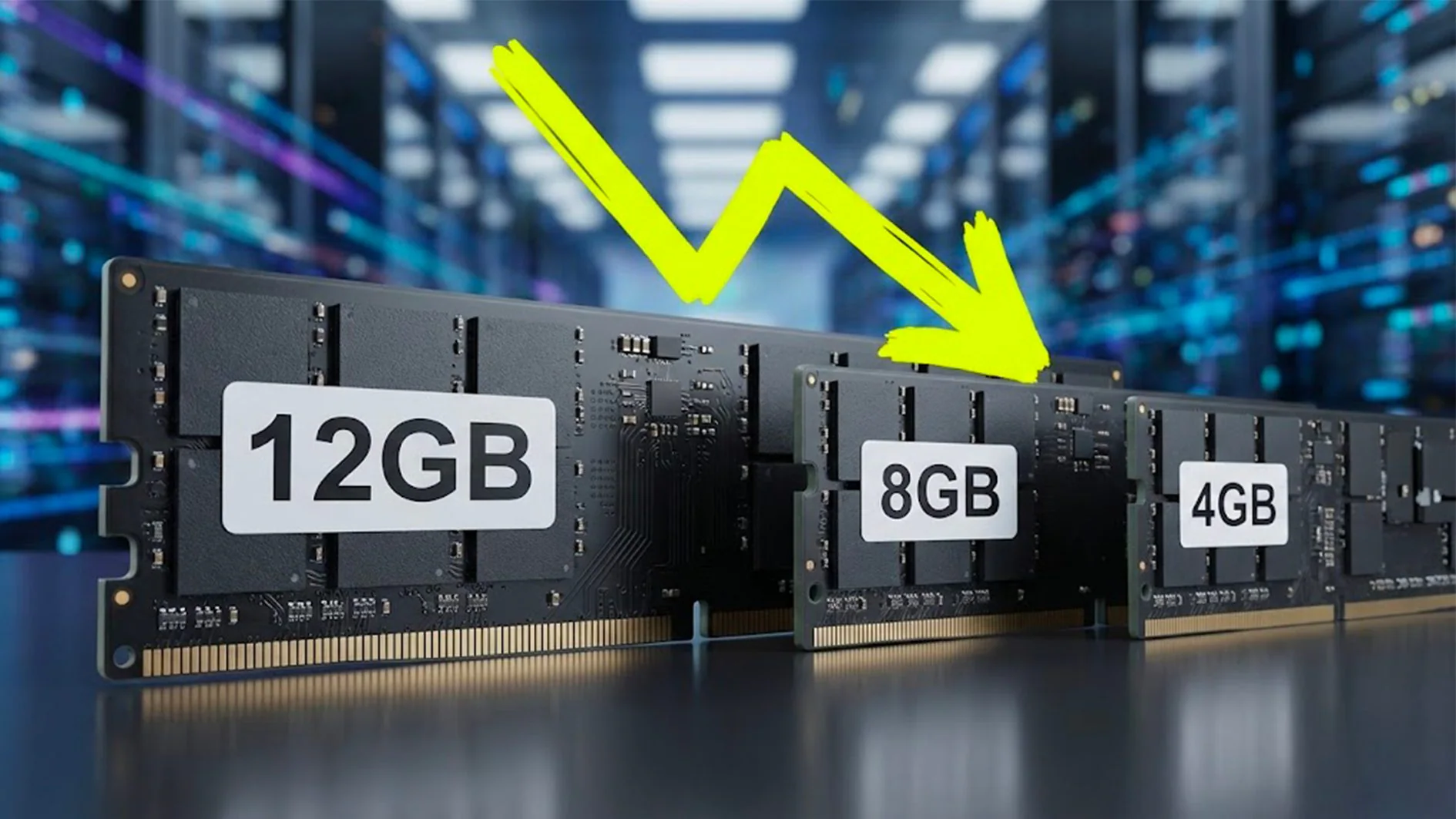
In 2026, the RAM memory market for mobile devices could undergo a significant evolution, with clear repercussions on both the costs and the technical specifications of smartphones. In response to rising memory prices, which is already impacting several industries, manufacturers may be forced to reduce the amount of RAM present in devices, leading to a scenario where high-end models will see no improvements in their configurations, while mid- and low-range ones may have to take a step back in terms of performance. This could be the result of a growing demand for RAM in data centers, where artificial intelligence is driving the adoption of increasingly powerful and expensive memory. In such a scenario, manufacturers will have to balance the increase in costs with the need to maintain the competitiveness of their devices, at the expense of some technical characteristics.
A new analysis drawn up by the research company paints the picture we have just shown you TrendForce. The analysis in question suggests that, in the high-end smartphone segment, the transition to configurations with 16 GB of RAM may be slow. This means that, for example, the successors of top-of-the-range models such as the iPhone 17 Pro Max or the Samsung Galaxy S25, which currently have 12 GB of RAM, may not receive significant updates in subsequent generations, remaining stuck at this memory cut. In parallel, mid-range devices could suffer a downgradereducing their RAM from 12GB to 8GB, while budget models could go back to having just 4GB of RAM, further reducing performance compared to current standards. All of this would occur in response to cost pressure, which will directly affect BOM (Bill of Materials) of the producers, i.e. the set of components necessary to produce a device and which, in general, represent the “bulk” of its production cost.
RAM crisis: AI is the cause
The RAM industry is experiencing increasing pressure due to high demand for memory in data centers, where it is used in large quantities to power artificial intelligence systems. This phenomenon has contributed to increasing memory prices, influencing not only the smartphone segment, but also the PC and notebook market. Just to give an example, a giant like Apple could be faced with the need to review its pricing strategies for new iPhone models in 2026, considering a significant increase in memory costs in the BOM. Android smartphone makers, particularly in the low-to-mid-range segment, may also be forced to increase device prices or change the lifecycle of existing models to mitigate losses.
In addition to smartphones, the notebook market could also be affected by this situation. High-end models, such as ultra-thin ones with mobile DRAM soldered directly onto the motherboard, are particularly vulnerable, as they cannot reduce costs by lowering memory quality without compromising overall performance. In this case, the only option for manufacturers will be to change procurement strategies, perhaps focusing on less expensive, but consequently also less performing, configurations. Regarding the notebook segment, in the analysis carried out by TrendForce it reads:
Current finished product inventory levels and economic memories help safeguard short-term profits. While prices may remain stable for now, medium- and long-term adjustments, such as reducing specifications or increasing prices, are inevitable. TrendForce expects more significant price fluctuations in the PC market by the second quarter of 2026.
A precarious balance between costs and performance
The future of RAM for mobile devices and PCs therefore seems oriented towards a precarious balance between costs and performance. While on the one hand the increase in memory costs could push manufacturers to reduce the technical specifications of smartphones and notebooks, on the other hand, the growing demand for memory for artificial intelligence could push investments in new technologies to reduce the gap between mobile devices and high-end machines. In any case, changes in price and specifications seem inevitable, although it remains to be seen whether these predictions will materialize in the coming months of 2026, which promises to be a complex year for the tech sector.









