A company announces record earnings and its stock drops. For those who follow the markets, perhaps through a fund or some securities in their portfolio, it seems like a contradiction. Yet it is precisely the distance between results and expectations that explains what happens to Samsung.
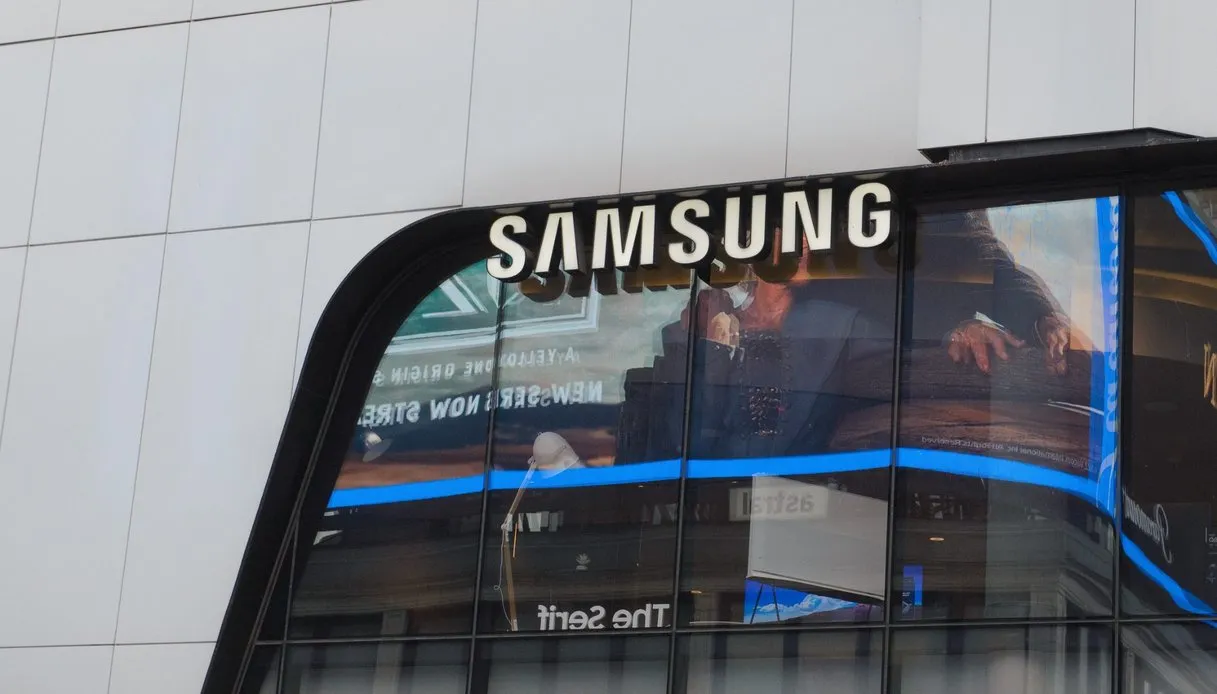
This morning, October 29, the South Korean group’s stock lost 6.2% during trading. The absence of immediate new details on shareholder remuneration and a less optimistic outlook compared to competitor SK Hynix weighed heavily. The data photographs an intraday movement, not the closing of the session.
For European stock exchanges, the case deserves attention: behind the Asian chips there are suppliers, investments and expectations that also involve Amsterdam and Piazza Affari.
Because record profits are not enough for the stock market
Samsung closed the third quarter with 195.3 trillion won in revenue and 107.4 trillion won in operating profit. The semiconductor division produced 106,500 billion in operating profit, concentrating almost all of the group’s profit.
Impressive numbers, but the price of a share mainly looks forward. If investors have already bought expecting exceptional results, those results can be largely incorporated into the stock price.
Let’s imagine, with a purely illustrative example, a company that increases profit from 100 to 130. It has grown by 30%, but if the market was expecting 150 it may, however, disappoint. Business growth and stock return measure different things.
This is the issue that has already emerged in the discussion on TSMC and the sustainability of investments in artificial intelligence: how much of the future growth has already been paid for by shareholders?
Dividends and investments: two destinations for the same liquidity
Samsung announced a total quarterly dividend of 30 trillion won. The next compensation policy, along with the final amount of distributions for 2026 and executive details yet to be finalized, will be finalized at the board meeting scheduled for late January 2027.
For investors, it matters how much money will return to their pockets and when. The dividend is a distribution to shareholders; the buyback consists of the company repurchasing its shares. They are different tools, both relevant for evaluating how a company uses liquidity.
At the same time, Samsung expects total investments of around 84,400 billion won for 2026, of which 76,800 billion won for the semiconductor division. They are programs for the entire year, not all sums already spent.
How much capital is needed, therefore, to support growth and how much can be returned without weakening it? Investing prepares future revenues, but requires liquidity today and carries the risk that demand does not follow expectations.
ASML, the concrete connection with Europe
The transition from Korea to Europe is particularly clear for ASML, the Dutch group that provides systems for producing semiconductors.
On September 8, Samsung and ASML announced an expansion of the collaboration. The project includes the use of High NA EUV lithography technology in the future production of DRAM memories, with introduction planned by 2028.
If manufacturers build or upgrade plants, they can feed orders from machinery suppliers.
This explains why a drop in Samsung does not automatically lead to a worsening of ASML’s prospects. A company can disappoint on the cash distributed to shareholders and continue to invest in production. To evaluate the supplier, you need to understand how much of that spending will actually translate into orders and revenue.
STMicroelectronics, what to observe in Piazza Affari
For STMicroelectronics a separate reading is needed. In its second quarter results, the group had indicated growth in demand and raised its data center revenue target to over one billion dollars for 2026. These are previous indications, to be compared with the new corporate update.
The calendar makes the comparison particularly timely: ST has set the publication of its quarterly results for today. His accounts and forecasts are, therefore, essential to interpret the title, without attributing every movement to Korean news.
| Society | The point to follow |
|---|---|
| Samsung | Balance between results, investments and shareholder remuneration |
| ASML | Translation of customers’ industrial programs into orders |
| STMicroelectronics | Own results, margins and updated outlook |
These links help to understand the European session, but they do not demonstrate that any movement in Milan or Amsterdam is caused by Samsung: the news of the individual companies and the general picture of the markets must also be considered.
The message for investors
The Korean news offers a key to reading our stock markets too: it’s not enough to ask if a company earns, you need to understand how much the market expected it to earn.
For those who own technology stocks or funds, distinguishing memory manufacturers, machinery suppliers and other semiconductors helps understand different exposures. The same race for artificial intelligence can generate different industrial opportunities and financial pressures, even within the same portfolio.