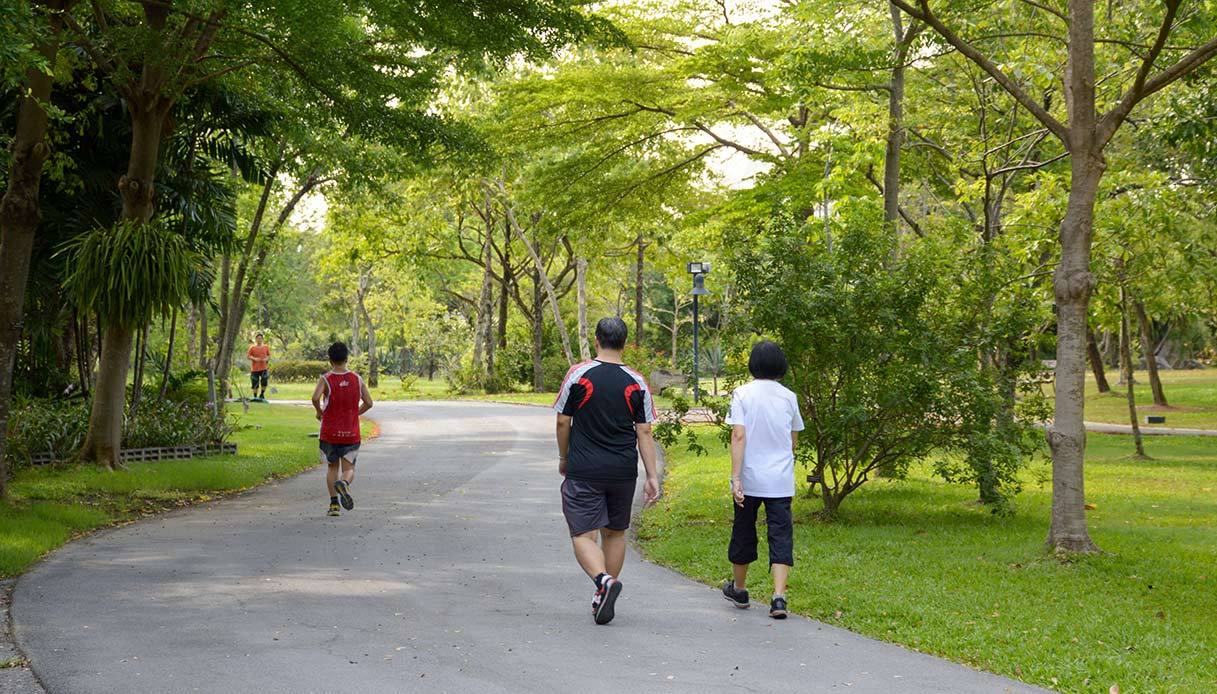
Put on your boots, put on your tracksuit and go. Running, stretching, routes with physical exercises become a real viaticum for well-being, taking advantage of the greenery of the cities. Because urban parks can become a public health tool. And science says that they are able to help in cardiovascular and cardiometabolic prevention.
This was said by the experts present in recent days for the First National Conference on Natural Health Presidia, promoted by the IRCCS MultiMedica and Parco Nord Milano and held at the Oxy.gen Space in Bresso, near Milan, with the aim of opening a discussion between the scientific community, local institutions, the world of healthcare and green policy scholars. And a shared proposal emerged from the assembled experts: to implement in Italy in a structured way the prescribing of physical exercise in urban parks and natural oases, as already happens in several countries around the world, where “nature prescribing” is already a consolidated and regulated practice.
How much is it worth to move in the green
Numerous population studies and international meta-analyses highlight the added value of physical activity carried out in nature, even compared to the same exercise practiced indoors. Regularly frequenting green spaces reduces psychophysical stress by 40% compared to urban environments, the incidence of depression and anxiety by 25% and the risk of type 2 diabetes by 28%. 150 minutes a week of exercise in nature reduces the cardiovascular risk by 30% while at least 2.5 hours a week of walking in the greenery reduces the risk of dementia by 35-45%. There are many reasons: insulin sensitivity, glycemic and lipid profiles improve, chronic inflammation decreases, the anti-tumor immune response is enhanced, as are memory and neuroplasticity.
“The most recent scientific evidence confirms that nature constitutes a fundamental determinant of health, capable of significantly contributing to the primary and secondary prevention of cardiovascular, respiratory and metabolic diseases, as well as to psychological well-being”
is the comment of Paola Muti, Scientific Director of IRCCS MultiMedica.
What matters, in any case, is to remember that movement in the countryside is a real therapy: it is not enough to recommend going to the park, a structured prescription makes prevention more concrete. Finally, it must be said that there are also advantages for children: outside the home there is plenty of space to run and jump, therefore less risk of becoming overweight and a natural workout for the body. Not only that: being outdoors helps them meet other children, make friends and learn to play together and, as if that wasn’t enough, the fresh air trains their natural defenses, which are activated to adapt to lower temperatures.
What improves with green sport
A better mood. A more effective action on stress and heart rate control. Those who play sports regularly know how much and how this simple, zero-cost measure is useful for health. But some time ago research said even more. The positive aspects would be more significant if you move in a park or in any case in greenery, rather than running on the side of city streets or training indoors. The study was conducted by experts from the University of Copenhagen and the University of Verona and appeared on Psychology of Sport and Exercise.
The analysis considered twenty-five young people. Everyone had to walk at the same pace but in three different environments: a natural area, an urban route and an indoor fitness environment. After each walk, their mood, stress levels and physical exertion were measured. And it was seen that the participants felt significantly more relaxed and showed lower levels of cortisol, the stress hormone, after walking in nature. At the same time, they reported greater joy and less fatigue.
The study therefore demonstrates how much and how physical exercise in a natural environment offers much greater mental benefits than urban and indoor environments. Participants rated nature as more regenerating and also felt, in general terms, a more significant impact on emotions after the walk in the countryside. In general, joy, satisfaction and optimism increased compared to urban and indoor environments, while negative emotions such as anxiety, irritation and boredom proved to be lower.
Let’s be clear. The study was not limited to evaluating psychological parameters, but was also based on measurements of the participants’ physiology. In this sense, the findings fully confirm the value of physical activity in greenery. For example, considering an indirect index of stress such as the increase in the number of heartbeats, the participants’ heart rate lowered more rapidly after a walk in nature. Not only that. Even heart rate variability, which indicates how well the body activates the parasympathetic nervous system which promotes calm and recovery, was 20-30% higher than the same walk in a closed environment, which also has the value of putting people in contact with others and promotes human interaction.