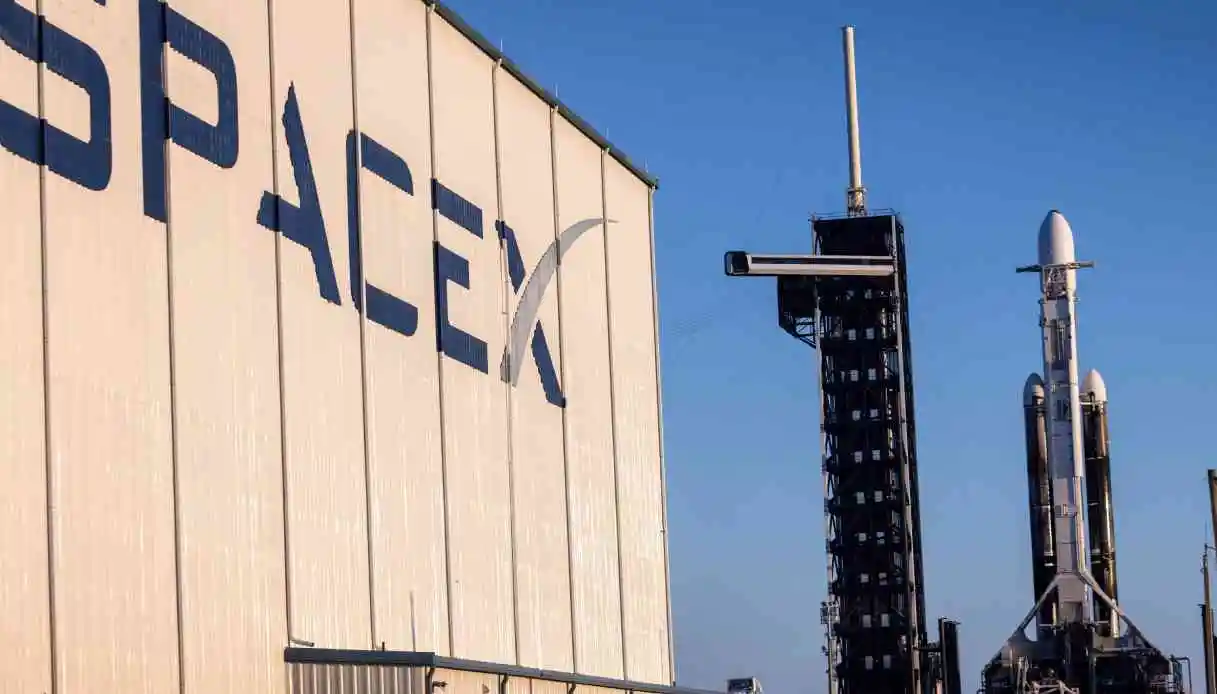
SpaceX’s initial public offering is on track to become the largest stock offering ever. The company filed its S-1 prospectus with the SEC on May 20, 2026, with an expected debut on the Nasdaq on June 12, 2026 under the ticker SPCX. According to Reuters, the company founded by Elon Musk aims to raise up to 75 billion dollars by placing around 3% of the capital.
The numbers of the operation
SpaceX is targeting a valuation of at least $1.8 trillion, more than double its previous record. Saudi Aramco, the current record holder among IPOs, debuted in 2019 with a capitalization of around 1,700 billion. Leaked estimates place the range between 1,750 and 2,000 billion dollars, while Reuters indicates a price of 135 dollars per share.
The offering is structured as all-primary: the proceeds flow to the company and not to the selling shareholders, with a possible greenshoe option that allows the placers to sell additional shares of up to 15% in the event of excess demand. The placement syndicate is led by Goldman Sachs, Morgan Stanley, BofA Securities, Citigroup and JP Morgan.
The accounts and balance sheet issues
In 2025 revenues rose to 18.67 billion dollars from 14.02 the previous year, but the group swung to a net loss of 4.94 billion compared to a profit of 791 million. Of these revenues, 11.4 billion (61%) come from Starlink.
The picture highlights a clear internal divide: in the first quarter of 2026 the connectivity segment generated an operating profit of 1.19 billion, while the group recorded a revenue of 4.69 billion and an operating loss of 1.94 billion. The new artificial intelligence area reported losses of 2.47 billion on 818 million in revenues, absorbing a decisive portion of the 10.1 billion in capex. The push on AI comes from the merger with xAI completed in February 2026; in this context Anthropic would have agreed to pay $1.25 billion per month until May 2029 for access to data center capacity connected to SpaceX.
Governance and retail placement
A dual-class share structure concentrates voting power in the hands of Musk and a small group of insiders. On the distribution front, 30% of the shares will go to small investors via Robinhood, Fidelity and Charles Schwab, a share with no recent precedent for an IPO of this size.
This is why there is no shortage of warnings. Morningstar analysts value the group at around $780 billion, half of its stock price target, highlighting governance risks and economic uncertainty in the AI division. More broadly, the deal is expected to usher in a wave of mega-IPOs that, together with OpenAI and Anthropic, could add nearly $4 trillion in capitalization to public markets.