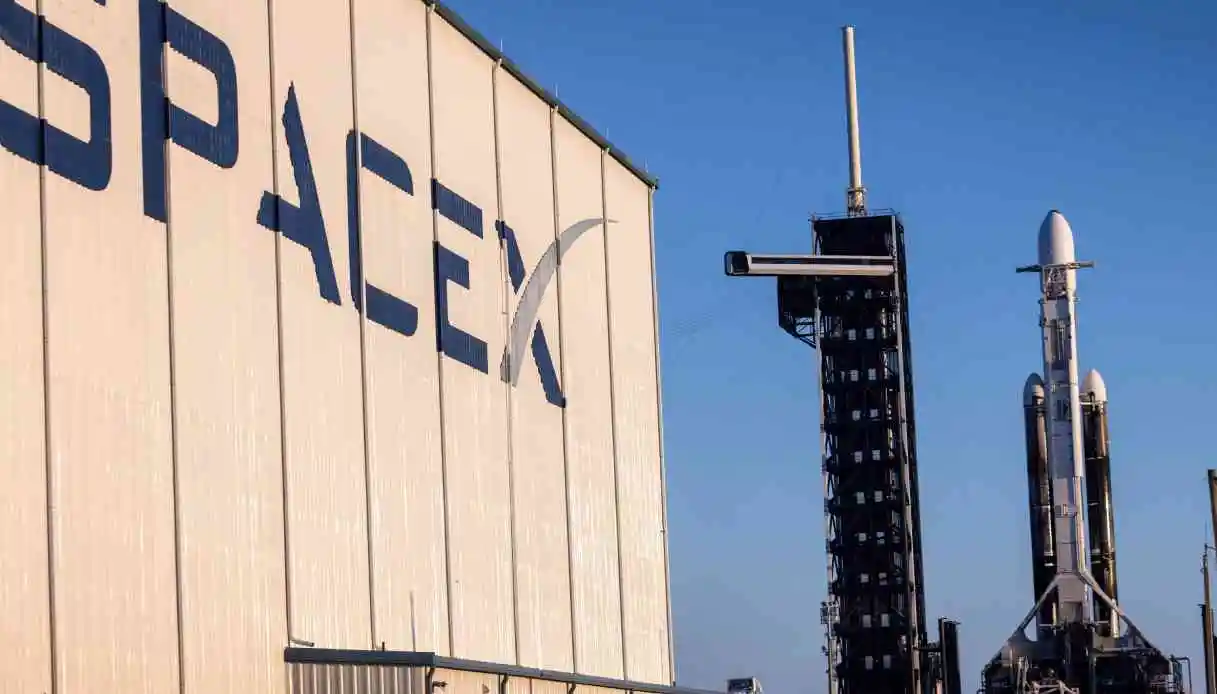
SpaceX’s IPO is already largely oversubscribed before book building closes. According to Bloomberg, the coordinating banks – a consortium of 23 institutions led by Goldman Sachs, Morgan Stanley, Bank of America, Citigroup and JPMorgan – will close the collection of institutional orders early, probably on the evening of Wednesday 11 June, a few hours earlier than expected, and then start trading on the Nasdaq on 12 June with the ticker SPCX.
Investor interest is supported by historical activities in space launches and Starlink – which in 2025 generated revenues of 11.4 billion (+49.8%) and operating profit of 4.4 billion – as well as the growing exposure to AI: SpaceX has signed agreements with Alphabet for payments of up to 920 million dollars per month for services linked to the Gemini ecosystem and with Anthropic. Up to 30% of the shares could be allocated to retail investors, an exceptionally high share for an operation of this size.
The risks associated with investing
However, fundamental analysis presents significant critical issues. In 2025 SpaceX recorded a net loss of 4.94 billion dollars against revenues of 18.67 billion (+33%), with an operating loss of 2.59 billion. In the first quarter of 2026 alone the net loss was 4.28 billion. The accumulated deficit as of March 31, 2026 amounts to 41.3 billion. The prospectus explicitly warns: “We may not achieve or – if we achieve – maintain profitability in the future.” Meanwhile, S&P Dow Jones Indices has confirmed that it will not waive the access requirements to the S&P 500, which require GAAP profitability: SpaceX is therefore excluded. On the governance front, after the IPO Musk will hold approximately 82.4% of the voting rights thanks to the Class B shares (10 votes each), with the possibility of electing 51% of the board and not being able to be removed against his will. “Enthusiasm must always be accompanied by discipline,” commented Professor Stefano Mengoli of the University of Bologna.
Strategic objectives
SpaceX presents itself as “the only company building the integrated hardware and software infrastructure of the future in space, connectivity and artificial intelligence”. Since 2023, it has launched more than 80% of the world’s mass of satellites into orbit each year, with a success rate of more than 99%. Starlink serves millions of customers in 164 countries with approximately 9,600 satellites. The acquisition of xAI in 2026 adds the Grok model and a rapidly expanding AI computing infrastructure, with the aim of extending it into space. The Starship program absorbs huge investments in R&D (3 billion in 2025) to revolutionize launches in terms of reusability and payload capacity.
Price and evaluation
SpaceX places 555.6 million shares at a fixed price of 135 dollars each: an almost unprecedented choice for an IPO of this size, which normally involves a forklift, and testifies to the confidence of the management and the placing banks on the consistency of the demand. The collection stands at 75 billion dollars, while the capitalization is approximately 1,770 billion. If the consortium fully exercises the greenshoe option on a further 83.3 million shares within 30 days, the collection would rise to 86.2 billion and the valuation to 2,000 billion, surpassing the previous records set by Saudi Aramco (29.4 billion in 2019) and Alibaba (22 billion in 2014) and becoming the largest IPO in history.