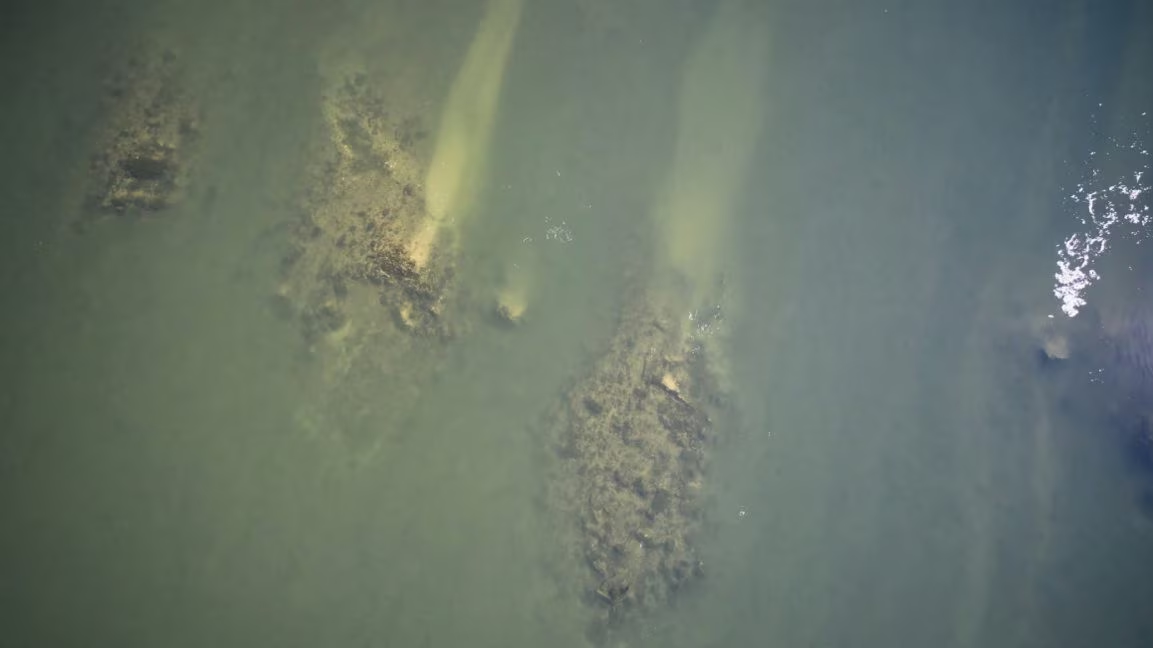
The exceptionally low level of the Danube continues to yield historical vestiges. After boats and even mammoth fossils, the drought has allowed us to once again observe the remains of an imposing Roman bridge near the village of Gigen, in the area of the ancient city of Oescusin Bulgaria. The structure is the so-called Constantine Bridge, built in 328 AD during the reign of Emperor Constantine I (306-337 AD). The bridge, 2334 m long – of which 1137 m crossed the Danube riverbed – it is considered one of the longest river bridges of antiquity and connected Oescuson the southern bank of the Danube, with He committed suicide (today’s Corabia, in Romania), on the opposite bank, in present-day Romania.
According to Pavel Popov, archaeologist at the Pleven Regional Museum, a team from the museum recently carried out a reconnaissance of the area, also using drones to photograph and document what has re-emerged from the waters. The images allow us to observe parts of the structure that normally remain submerged. The bridge had considerable dimensions: in fact it extended for over two kilometres. Its construction represented a major engineering feat and facilitated connections across the lower Danube during the late Roman era. The structure remained in use for approximately four decades. Probably, the bridge was destroyed around 367 AD, in the context of the wars between the Romans and the Goths.
The lowering of the Danube’s level is therefore offering archaeologists a rare opportunity to directly observe portions of the monument normally hidden by water. The documentation created by the Pleven museum will allow the current conditions of the remains to be recorded and compared with what is already known about the structure. The extreme climatic phenomenon, on the other hand, represents a further opportunity to study an infrastructure that for centuries had a strategic role in the connections between the two banks of the Danube and in the relations of the Roman Empire with the territories located north of the great river.