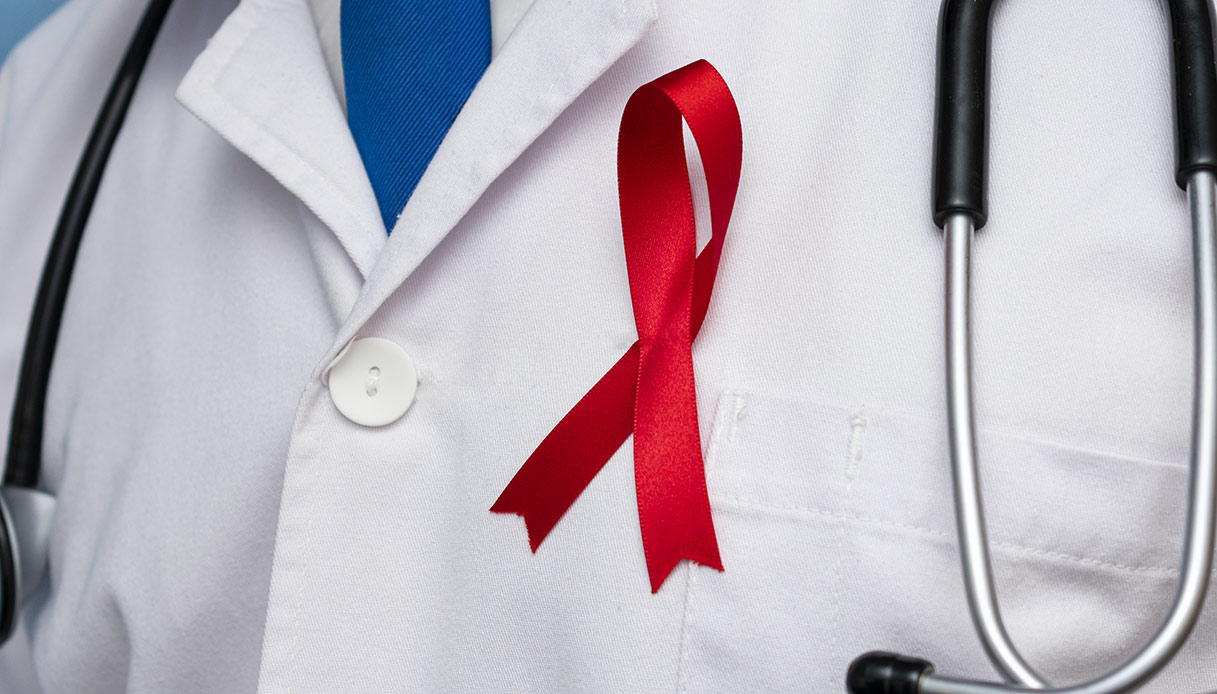
December 1st, World AIDS Day. In the face of figures that show how much and how in Italy we are witnessing a substantial stabilization of new diagnoses, a problem remains that highlights how much and how much there is a need to talk more about this infection, creating awareness and knowledge. Just think: the number of new diagnoses remains essentially stable in 2024 compared to 2023 (2,379 versus 2,507 respectively). But unfortunately there is another element that is worrying. More and more often we discover that we have contracted the virus very late, when Cd4 lymphocytes are particularly low (basic parameter for monitoring the progress of the infection) or we are even already suffering from AIDS: the experts at the AIDS Operations Center of the Istituto Superiore di Sanità report this situation.
The diagnostic delay
More attention needs to be paid to prevention. But above all, we need earlier use of tests to identify the infection. Unfortunately, the numbers that come from the analysis of the Istituto Superiore di Sanità say that in the past year, as many as two thirds of heterosexual subjects (just under half of the total number of new diagnoses and more than one MSM (males who have sex with other men, more or less just over 41% of new diagnoses) out of two discover their positivity with an immunological problem linked to the virus that is already advanced or even with a full-blown disease. Therefore, with a significant compromise of the body’s defense system. These numbers highlight the importance of the dissemination of information on prevention, also and above all among young people but not only.
Over forty years of illness
The virus appeared in the 1980s. We began to know it precisely in March 1981, when the Centers for Disease Control (CDC) in Atlanta, United States, had reports of at least eight young homosexuals suffering from an aggressive form of Kaposi’s sarcoma in New York. On June 5, the CDC epidemiological bulletin MMWR Weekly published the article “Pneumocystis Pneumonia – Los Angeles“, which marks the official debut of the AIDS epidemic. In May 1983 Luc Montagnier, of the Institut Pasteur in Paris, reported having isolated the new virus and called it LAV (lymphadenopathy-associated virus). In 1986 the new virus was officially “baptized” with its current name: HIV virus (Human Immunodeficiency Virus).
Learn about the infection and treatments
Drugs today are able to target the virus’s replication process at different points. And they can be combined with more effective therapies, based on the doctor’s indications and the person’s choices. Simple treatments to follow are becoming more and more widespread, as happens in the case of the so-called “Long-acting” drugs. The regime no longer involves daily treatments, but rather injections to be repeated at pre-established periods, for example after months. It is essential to regularly check, following the instructions of the treatment centre, how the situation is evolving.
In this sense it is essential to know the so-called “Viral Load” or rather the viral load. this is the index used to verify the effects of therapies. In practice it measures the quantity of virus present in the blood of people with HIV, allowing the initial conditions of the subject and the effectiveness of treatments to be assessed. All this while remembering that the attention in monitoring focuses on a particular surface protein, called Cd4. It is a protein found on specific lymphocytes (T-Helper, often called Cd4+), as well as on other cells. Cd4 are molecules that come into play in the signaling processes between T lymphocytes and other cells that enter the immune response.
Returning to the numbers from the Istituto Superiore di Sanità, in 2024, 40.3% of people with a new diagnosis of HIV infection were diagnosed late with a number of Cd4 lymphocytes lower than 200 cells per milliliter. In a healthy person, the average value is between 500 and 1,200. In people with HIV, this number can drop dramatically, the data shows. This is why recognizing the infection early is essential.