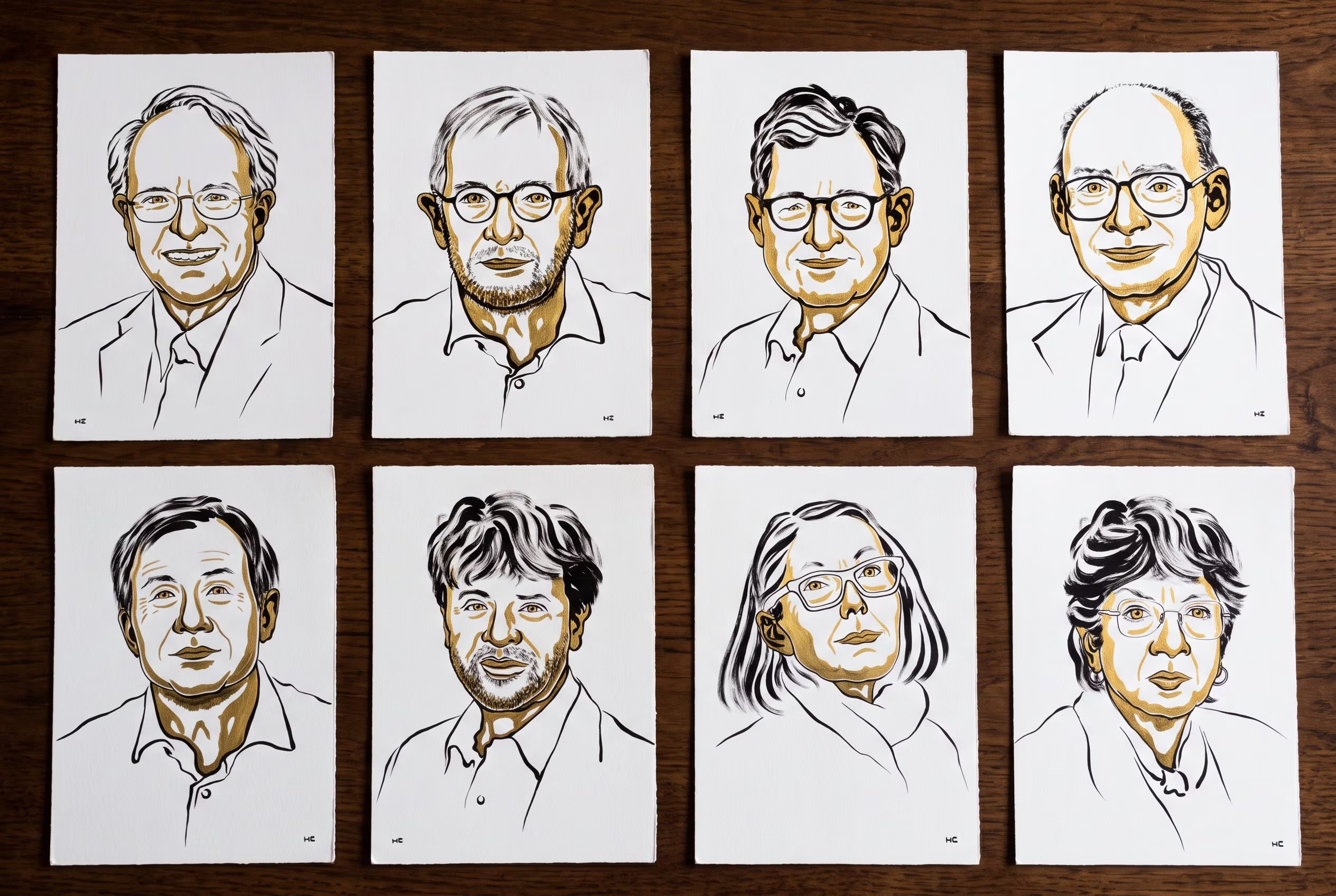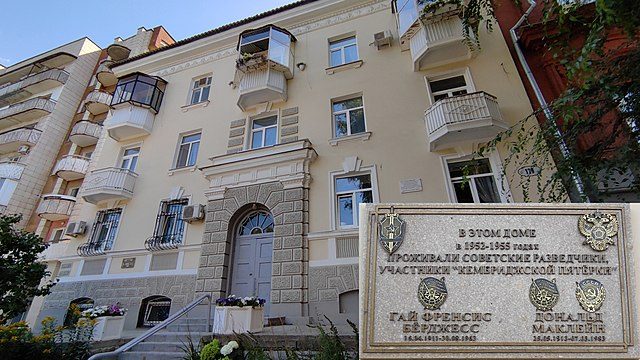
The “Five of Cambridge“, Also known as” The Magnificent Five “were a group of double -scale British spies that ended up writing one of the most surprising pages of the Cold War. Kim Philby, Anthony Blunt, Donald Maclean, Guy Burgess and John Cairncross They were idealists, fascinated by communism and convinced that they were fighting for a more right world: for this reason they decided to put their talent at the service of the Soviet Union, Not to betray the homeland, but out of loyalty to an ideology that promised equality.
In England they all made impeccable careers between diplomacy and intelligence, and right there, in the ganglia of power, crucial information began to go to Moscow, even on the plans for The atomic bomb. For over fifteen years the “magnificent five” were double -level duplication, until the net shirts began to tighten: Philby, Maclean and Burgess were unmasked between the 1950s and 60s, Blunt was revealed only in 1979, while Cairncross always denied all involvement. Today in Russia they are remembered almost as heroeswith Philby transformed into a real national icon.
The University of Cambridge and the beginning of the “magnificent five”
In the turbulent years between the two wars, England lives a season of contrasts: the collapse of 1929 shakes the economy and Cambridge spreads the attraction for communism, seen as an alternative to the snobbery of the conservative elite and to mount fascisms. It is here that Professor Maurice Dobb founds the first university communist cell and collects bright young people ready to marry their ideas around him. Among these is Kim Philby, who landed in ’29 and immediately close to Anthony Blunt, who entered the secret society of the Apostles, where Marxist theories and libertarian ideals circulate. Shortly afterwards Guy Burgess and Donald Maclean arrive, son of a baronet but already politically engaged, and finally John Cairncross, a student of humble origins, destined to become the “fifth man”.
This is how the future magnificent five are born, ready to put their talent at the Moscow service. After the university, Philby moves to Vienna and binds to communism not only for conviction, but also for love: marries Alice “Litzi” Friedmann, KGB agent, who introduces him to the Soviet network. Transferred to London, he maintains a low profile, but thanks to Litzi’s contacts he meets the agent Arnold Deutsch, called “Otto”, a reference point of the Russians.
Here he meets Burgess, who then enters the BBC in Em6 (the United Kingdom’s essential essential service), also bringing Philby into the World War II. Maclean, finds perfect coverage at the Ministry of Foreign Affairs, while Blunt manages to go unnoticed because he never exposes himself openly as a communist: he will make a career as an officer and art historian, to become even a conservative of the real collections and knight of the Victorian order. Blunt will introduce Cairncross to the right environments, connecting it to Burgess and finally to Otto: a decisive step that also transforms him into a spy at the Moscow service.
Spying during the Second World War and the Cold War
During the Second World War, the magnificent five move as invisible pawns between fronts and governments, with strategic roles that allow Russians to access world secrets. Kim Philby, sent as a correspondent in France, uses contacts with the supreme commander Lord Gort to stole confidential documents and pass them in Moscow. John Cairncross becomes a personal secretary of Lord Hankey, Minister of the War Cabinet, thus being in contact with the first information on the Manhattan project: according to many historians, he was one of the very first Soviet agents to know the details on the construction of the atomic bomb. Then move to the Department of Decipheration of the codes, another key place to feed the espionage network. Meanwhile, Donald Maclean, in service of the British Embassy of Washington, also manages to intercept materials on the American nuclear project, proving to be very precious for the Soviets. Anthony Blunt, on the other hand, enrolled in the army, is appointed captain of the military police and then recruited by the Em5: he also contributes to filtering dossiers of great value. In the meantime, Guy Burgess deals with the “sowing operation”, a British plan to set the German wheat fields and cause famines, and to the finite war becomes the assistant of the Foreign Minister: at night he photographed hundreds of documents to pass them to the Russians.
With the end of the conflict, however, the scenario changes. Two members defy: Blunt is dedicated to art and becomes a fame historic and conservative, while Cairncross falls into more marginal roles to the ministry.
It is the beginning of the Cold War, an era in which the world is divided into two blocks and the tension between the USA and the USSR redesigns the global balance. In this context, Burgess, crushed by stress, slips into alcoholism, as well as Maclean, which in Washington sits in the Anglo-American committee on nuclear armaments, perfect location to deliver material of the highest level to Moscow. And then there is Philby, the most skilled: he continues his career in Mi6, he is awarded the order of the British Empire in 1946 and, a few years later, he is in Washington as a connection point between British intelligence, Cia and FBI. A perfect duplication, at the center of the world power network.
The five of Cambridge are discovered
In the early 1950s, the Venona project entered the scene, with which the Americans manage to decipher the cifted messages of the USSR: just as Kim Philby arrives in Washington, a communication is intercepted that reveals the existence of a Soviet light infiltrated in British diplomacy. His code name is Homer, and is actually Donald Maclean. The news generates messy and a list of suspicions is born that includes both Maclean and Philby himself. At that time, Guy Burgess also arrives in Washington, and the three of Cambridge understand that they have to cover each other to prevent the circle from closing. But in 1951 the pressure is unsustainable: Maclean, Burgess and Philby organize a spectacular escape to Moscow, just before Maclean is questioned. Philby manages to return to England without being formally stuck, but his career in secret services is compromised: they send it to Lebanon as a correspondent, until in 1963 the truth explodes and the world discovers that Philby (Code Code Stanley), Burgess (Hicks) and Maclean (Homer) were Russian Russian of the highest level.
Since then they will live in the USSR, treated as heroes: Philby will even become a national legend, also celebrated with a stamp in 1990.
Meanwhile, Anthony Blunt, who had built a brilliant career as an art historian and even obtained the title of Knight, is betrayed by an agent that he himself had recruited: to save himself from the accusation of high treason, he makes the names of other accomplices, including John Cairncross, who will continue to deny until death. But when, in the late 1970s, a book definitively reveals the names of the five of Cambridge, Blunt is also unmasked: at home he remains a traitor, in Russia a hero, and he himself, disenchanted, will only commemorate that making the spy for Moscow had been “a serious mistake”.