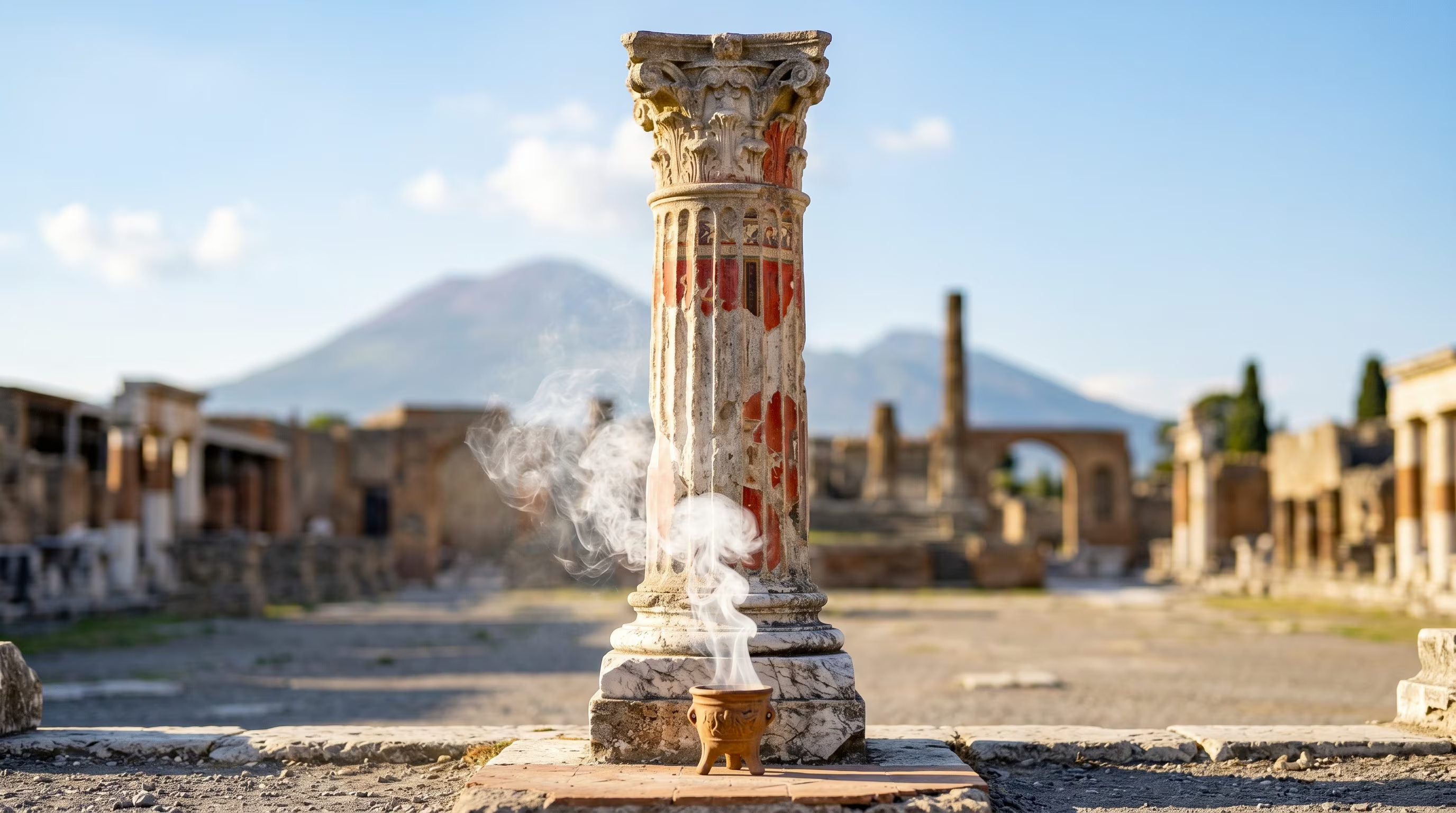
Due to the eruption of Vesuvius in 79 AD, and the volcanic ash that covered everything and everyone, we know many things about Pompeii, its inhabitants and their daily lives. Now we even know what scent there must have been in the ancient Roman city: five international researchers examined the ash from two incense burners for the first time, obtaining the original smell that must have spread through the air during rituals and celebrations.
Published in the specialized magazine Antiquitiesthe research group’s studies analyze for the first time these residues, found inside two containers: the first censer is technically an “incense bowl”, found in 1954 in the Officina di Sabbatino, which the study describes as a residence that was being transformed into an inn around the middle of the 1st century AD. At the time of the eruption, this conversion of use was probably incomplete and the building was still in the construction site state: the smoke offerings and the Domestic sacrifices on building sites were not uncommon in Pompeii.
The second censer is a “hemispherical cup”, found in 1986 inside a small furnished domestic altar on a farm in Boscoreale, north-west of Pompeii. The vessel features three female figures, both whole and partial: this fact tells us that it was used in funeral rites.
The discovery and purpose of these containers, however, are nothing new: what has changed? The very analysis of the samples inside them. Paradoxically, although excavation reports from the 18th, 19th and 20th centuries mention many such remains within altars and burners, none of the samples have ever been analyzed and no material has survived. The nature of the burned materials therefore remained uncertain, until today.
The authors of the study, led by Johannes Eber of the University of Zurich, collected samples from the edge and center of the first and second incense burners, digging just below the surface to minimize the risk of contamination: these samples were analyzed using microscopy and spectrometry, contributing to the new discipline of sensory archaeology.
Here’s what they found: First of all, there was frankincense, a powder made from the sap of Boswellia trees. This genus of plants (belonging to the Burseraceae family) includes around twenty species distributed in sub-Saharan Africa, the Arabian Peninsula and even India. In addition to being an important indicator of the commercial traffic of the time, we have a first perfume, which actually many of us are used to.
But it doesn’t end here. In the first censer, charred fragments of woody plants such as oak and laurel were also found (respectively a tribute to Jupiter and Apollo), used as fuel but also as offerings: the scent would therefore have been more woody and rich.
The ash from the second censer also contained the same plants, as well as material probably derived from grapes, an element that suggests the possible presence of vinegar or wine: the Romans actually combined wine with incense in a ritual called praefatio. Which is why we also have a third, more acrid scent that would have spread through the air during these domestic celebrations.