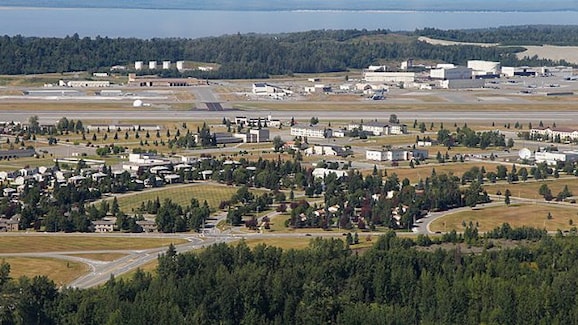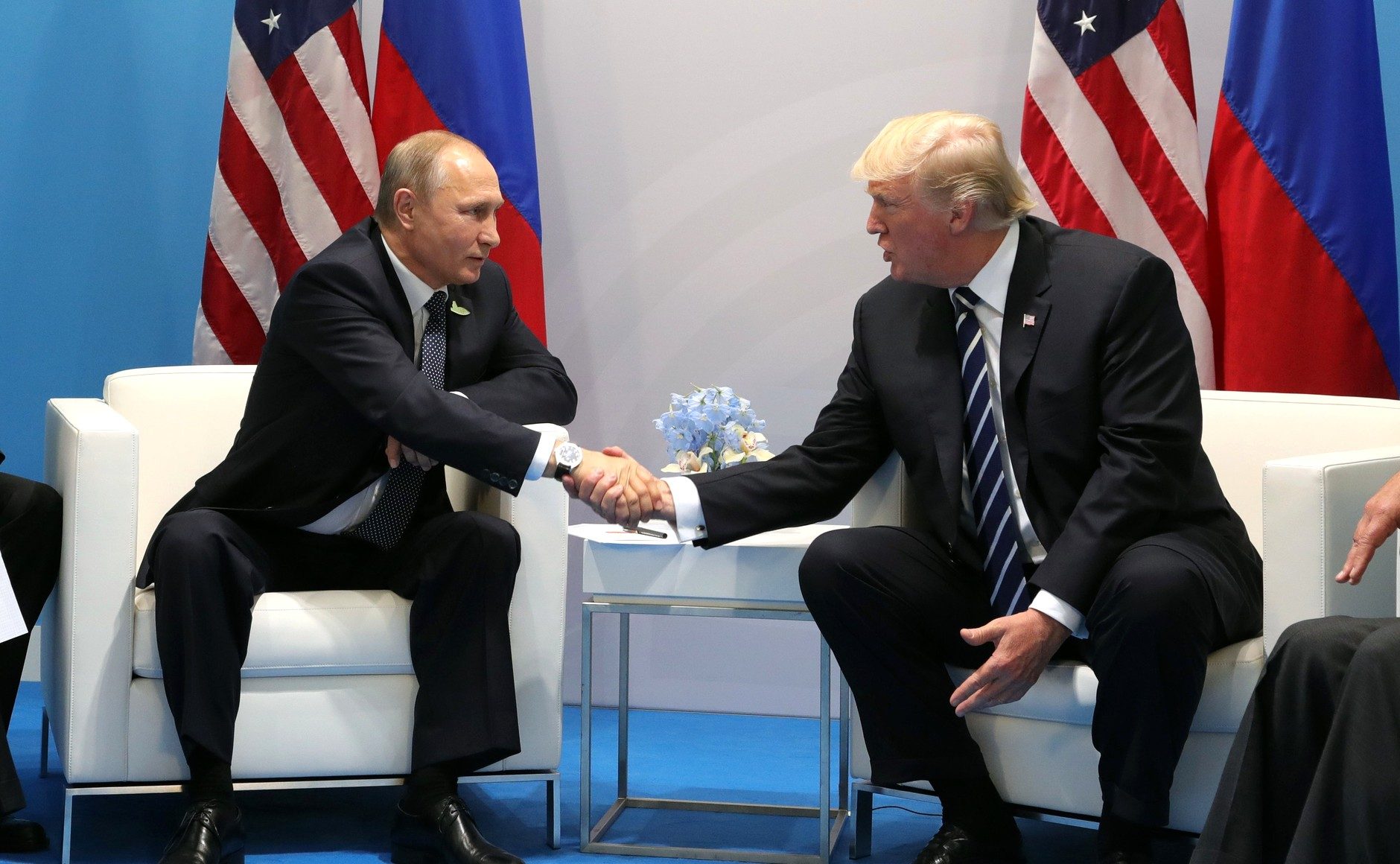
Donald Trump and Vladimir Putin will meet in the US military base of Anchorage, Alaska, Friday 15 August with the main objective of starting a hypothetical plan to arrive at a respite for the war in Ukraine, in which it is fought since 2014, when the Russian troops illegally occupied the Crimea peninsula and favored the proclamation of the separatist republics of Donetsk and Luhansk (in the Donbass region). At the meeting, which will also be discussed of duties and sanctions, the Ukrainian president Volodymyr Zelensky will not be present.
Russia currently controls 19% of the Ukrainian territory, counting crimea an illegally annexed and the Donetsk, Luhansk (occupied almost entirely), Zaporizhzhya and Kherson. According to analysts’ calculations, with the exception of Luhansk, 30% of the other three Oblasts are still disputed among the forces on the pitch. From this situation on the field the meeting between Trump and Putin moves: at the moment they are not known what the plans of the US delegation or the Russian delegation are, even if Trump has already mentioned the possibility that between Russia and Ukrainian there could be an agreement for the ceased also thanks to the exchange of some territories (even if Trump did not clarify what it would be deceived).
Low expectations on the Trump-Putin summit in Alaska: the reasons for skepticism
Trump’s entire diplomatic initiative is welcomed with great skepticism by many observers, with the suspicion that Putin has accepted the meeting just to take time and avoid the expiry of the U.S. ultimate ultimatums and the arrival of the economic sanctions threatened by Trump. In fact, the countdown seems to have frozen pending the top in Alaska.
This fear is now filtered also in the US administration. According to the newspaper Politicalfor example, the White House would be “moderating expectations in view of Friday’s summit between the presidents Donald Trump and Vladimir Putin, presenting it as a step towards a peaceful solution to the war in Ukraine and avoiding promises to cease fire or any other type of important agreement. The goal, said an official of the White House, is that Trump simply evaluate Putin, finds out if the Russian leader is serious and works for a trilateral meeting with the Ukrainian president Volodymyr Zelensky ».
The political and military consequences for Ukraine of a hypothetical transfer of Donbass to Russia
Among the causes of widespread skepticism, despite Trump’s canonical triumphal tones, there is the fact that Ukraine leadership does not want and cannot accept the sale of its territories for numerous reasons. First of all, the same constitution of the country prevents its government from violating its territorial unit centing the parties. Staying on a political level, according to recent surveys, more than 70% of Ukrainians would not support an agreement that provides for the sale of parties of the national territory, a percentage that is even more within the armed forces, in particular among the officers. Also for this reason, although in crisis of consensus, the Ukrainian president Volodymyr Zelensky has communicated decisively his refusal a priori of any exchange of territories with Russia.
The sale of the territories is also outside the purely military level, in particular as regards the Donetsk Oblast. Here is the one that has been nicknamed the fortress belt, a defense line that runs along four main and intensely industrialized inhabited centers (Slovyansk, Kramatorsk, Druzhkivka and KostyTyNIVKA) connected by the H-20 Kostyannivka-Slovyansk motorway. Reinforced with an expense of tens of millions of dollars, this series of fortifications prevents the total conquest of the Donetsk Oblast since 2014. Given this territory would deprive Ukraine of a fundamental element for its future defense, even if a truce was actually declared. It is evident that the Russian commitment to maintain the diplomatic agreements does not suffice to convince Kiev that they will not be violated in the short term, as soon as the Russian military and economic machine has recovered from the most intense fights of recent years.
Ukraine’s economic survival is also at stake
In addition to the political, symbolic and military reasons, selling the regions disputed or already occupied by the Russians would be a serious compromise for Ukraine also from an economic point of view. For example, the Donbass (i.e. the region made up mainly of the Donetsk and Luhansk Oblasts) is one of the most rich mining basins in Europe, with large coal reserves and above all minerals such as Manganese, Titanium, Uranium, graphite and Caolino – a sedimentary rock composed mainly of caolinite and with uses in multiple industrial sectors. Precisely this wealth of raw materials also allowed Donbass to become one of the most densely industrialized regions of the former Soviet Union and the most important for independent Ukraine, at least until 2014. Living it out definitively would mean greatly reducing the country’s production capabilities on the medium and long term, flying over the necessary reconstruction expenses after more than ten years of conflict.
The situation for the Kherson region is different, the Oblast that borders on the south with Crimea and which for centuries has been substantially contributed to making Ukraine one of the major cereal producers in the world. Losing this Oblast would also mean giving up one of the most important water basins in the country. According to the data collected by Rai News, in fact, “Kherson with the mouth of Dnipro is the most important hydroelectric basin in the country. Just think that the collapse of the Kakhovka hydroelectric power plant in 2024 in fact left 94% of the irrigation systems in Kherson without water, 74% in Zaporizhzhya and 30% in the Dnipropetrovsk region ».