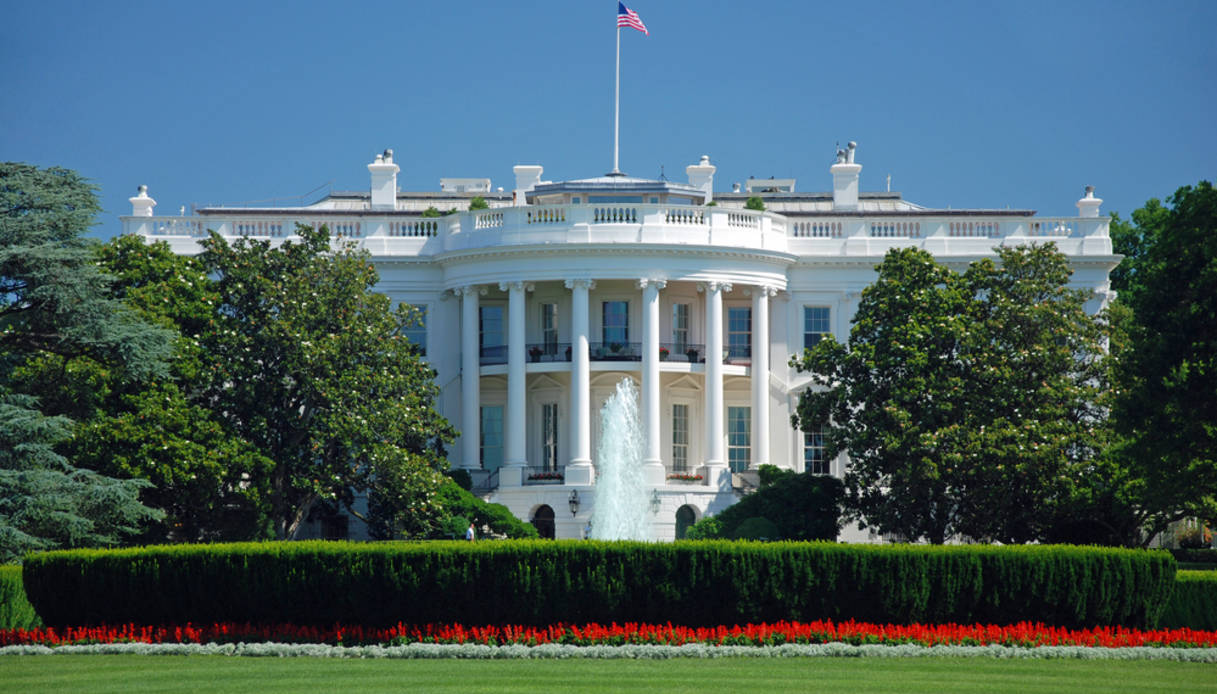
The now continuous statements from the White House consolidate the belief according to which the American government led by Donald Trump is unprecedented in an unprecedented way its direct presence in the economy.
USA, Government relaunches the shareholder state
After the hypothesis of a sovereign fund launched by the councilor Kevin Hasset, the secretary of commerce Howard Lutnick said that the executive evaluates the possibility of acquiring shares in large defense contractors such as Lockheed Martin, Boeing and Palantir.
Direct entrances are evaluated in Lockheed, Boeing and Palantir
These moves are part of a broader program that has already seen direct interventions in the capital of strategic companies. Among the most relevant examples: the purchase of almost 10% of Intel, the decisive role in the sale of Us Steel to Nippon Steel with the introduction of a Golden Share in favor of Washington, as well as the entry into the American MP Materials, active in the rare lands. In parallel, ties have been imposed on the giants of the Nvidia and AMD semiconductors, obliged to recognize the US treasure a 15% of the revenues generated in China to the US Treasury. A set of interventions that redesign the border line between public and private in the American economy.
After operations on Intel, US Steel and MP Materials
The paradox of this strategy clearly emerges in the contradiction between state interventionism and the opening towards cryptocurrencies. Trump, in fact, explicitly supported the digital token industry, promoting legislative initiatives such as the Genius Act. A position that winks at an anarcho-capitalist and technological electorate, which is in net antithesis to the growing centralization of state control on strategic sectors.
Added to this is the progressive taking of power on traditionally independent institutions and agencies, as shown by the replacement of Gary Gens Gensler at the helm of the century with Paul Atkins and the tensions with the Federal Reserve. For Trump supporters, the background logic justifies the vehicle: in a world where the safety of the supply chains is threatened by complex geopolitical scenarios, ensuring that the factories remain in America is seen as a priority objective.
The question, for analysts and markets, is no longer if the “Trumponomics” is only a passing anomaly, but if it has the strength to consolidate in a structural way, redefining the relationship between the state and the market in the United States in the long term.









