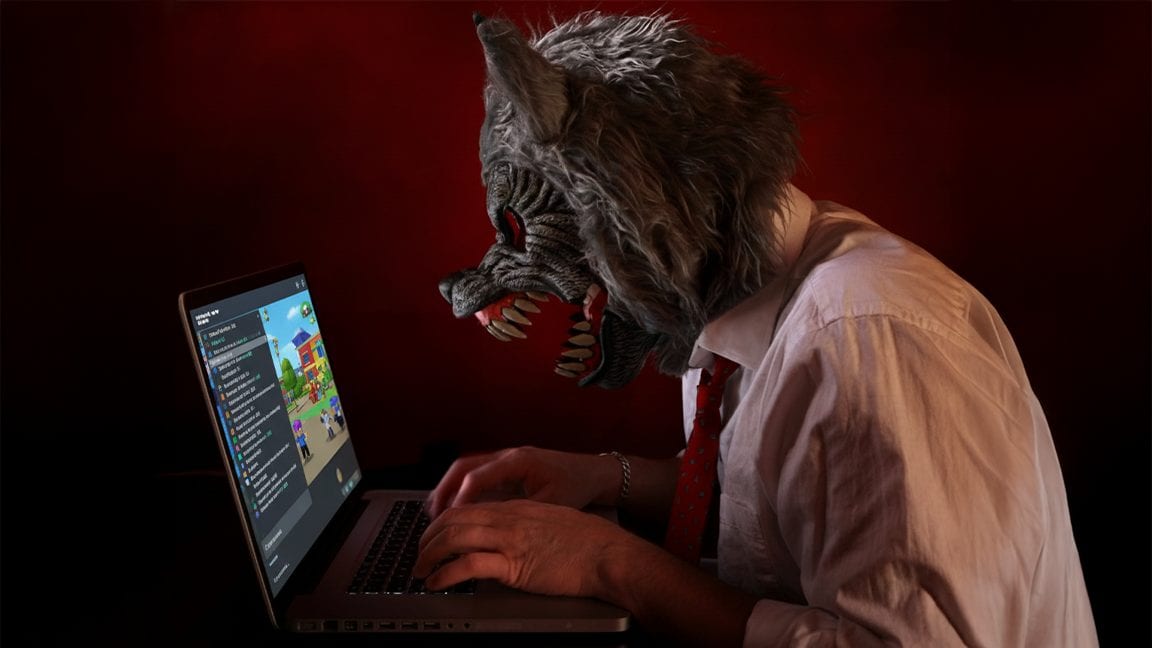
The term “groomer” (from the English “to groom” i.e. to cure, arrange, prepare) to indicate sexual predators has been circulating online for years, but in recent days it has bounced around social media thanks to the Texan Youtuber Schlep, who pretended to be a minor on the Roblox gaming platform in order to deceive and arrest some pedophiles who were luring very young online players. In fact, “groomers” are nothing other than this: pedophiles who try to manipulate minors, gain their trust, isolate them and then exploit them, almost always for sexual purposes.
In online gaming, the phenomenon is very widespread, and the issue is hot, because it especially attracts parents regarding the issue of digital safety for their children.
What does “grooming” mean and why it’s not just online
Grooming, as the Ministry of Justice also makes clear, is a process of gradual manipulation that the groomer uses towards a minor to lure him, gain his trust and emotional dependence and, finally, exploit him.
Online grooming develops mainly through social media chats and video games, where the groomer can hide his real identity, age and intentions and pretend to be a peer of the minor he plans to groom, from whom he learns the “youthful” language to imitate in order to get closer. Usually, it identifies vulnerable minors with little parental supervision, to act undisturbed.
The groomer knows what he is doing, and moves nimbly: once he has identified his prey he fills them with attention and affection, compliments, sharing their interests and actively listening to their problems. But above all, he orders the minor involved not to tell their parents about their relationship: it must remain secret. By doing so, he can isolate him as much as possible, continuing his manipulation work. In the meantime, try to move towards increasingly private chats (e.g. Whatsapp and Telegram).
Once the groomer manages to make inroads, he begins a gradual introduction of sexual themes, until he ends up sending and requesting sexual photographs of the victim and proposals for live meetings. If the minor then wanted to interrupt the relationship, he would find himself in difficulty, because the groomer can initiate blackmail by threatening to circulate the intimate photos received online (sextortion).
This phenomenon, however, does not only happen online.
In fact, groomers are also offline. They are usually found within the context of school and extra-school, the church or an extended family. In this case, however, the soliciter is a known, trusted person, and for this very reason he is more difficult to identify. The offline groomer has much more difficulty than the online one in building a relationship with the victim: it usually takes more time for the minor to trust, and to do this the groomer fills him with attention and gifts, but also with favoritism and roles of authority. This creates a relationship made of affection and manipulation, in which it is difficult to understand what is happening.
The offline groomer starts with harmless physical contacts: simple hugs, a touch of the arm “in sympathy”. Gradually, however, the touch becomes more and more invasive, reaching intimate parts of the body. To create situations of this kind, the groomer physically isolates the victim, and to do so creates random private opportunities.
Both types of groomers have in common that they create an exclusive bond with their victims, seducing and subtly manipulating them.
What are the warning signs and how to prevent or protect victims of grooming
The very young, having an incomplete emotional and worldly intelligence, are unaware of the risk they run. It is therefore easy for a person who shows him signs of approval and affection (and who therefore fills in the gaps) to quickly creep into his mind and daily life. For this reason, adult supervision is important to ensure healthy use of devices. If there hasn’t been a check but you notice serious emotional changes (anxiety and irritability first and foremost), use of the phone only behind closed doors or at night, nervousness when online or reduced communication with family, it might be time to take action. In this case it is very important not to blame the minor, but rather to save all possible digital evidence, report the profile of the groomer to the platforms and contact the competent authorities.
Device control by parents and educators is essential especially in cases similar to that of Roblox. Around 150 million people use this online gaming platform every day, and more than a third of these are not even thirteen years old (the minimum age allowed to register is just five years old). Very young people can play and chat with each other here, but the risk that a groomer could appear in their chats is high, given that the platform for a long time did not require age verification or parental permission to create an account. YouTuber Schlep, acting as a vigilante and bringing to justice the groomers detected on the platform, brought this huge problem to light again, forcing Roblox to use facial age estimation to limit chats to similar age groups.
Legal aspects in Italy
In Italy, grooming – defined as “solicitation of a minor” – is a crime (the main rules in this regard are contained in the Criminal Code, amended with Law 172/2012 which implemented the Lanzarote Convention) even if no physical encounter takes place with the minor involved (under 16 years of age). Grooming, in fact, occurs when the adult contacts his victim with the aim of committing sexual crimes, and imprisonment can range from 1 to 3 years.
In any case, grooming is very often accompanied by other aggravating crimes, such as possession of child pornography or child pornography, corruption of a minor and sexual violence.