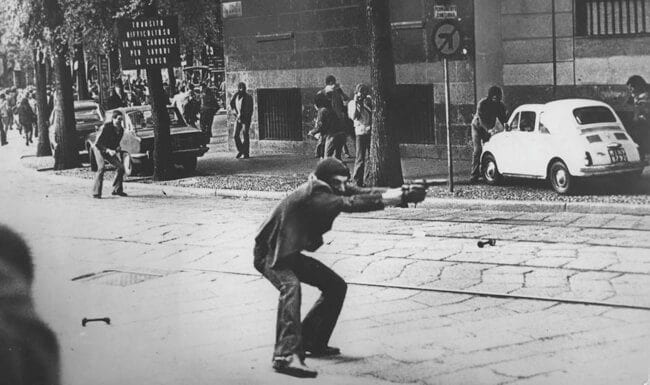
What are defined as the “Years of Lead” are between the end of the 1960s and the beginning of the 1980s, when phenomena of political terrorism of both neo-fascist and far-left origins developed in Italy. More specifically, far-right terrorists, associated with “deviant” sectors of the secret services, carried out massacres with the aim of promoting the restoration of a fascist dictatorship, as part of the so-called strategy of tension. Far-left terrorists, in turn, carried out targeted assassinations of politicians and others to destabilize institutions. The total victims of the Years of Lead were around 400. In the 1980s terrorism decreased until it almost disappeared.
Why are they called “Years of Lead”
The definition “Years of Lead” comes from the 1981 film of the same name directed by Margareth von Trotta, about terrorism in West Germany: the lead in question is, naturally, that of the bullets. In Italy the years of lead are approximately between the end of the 1960s and the beginning of the 1980s. The period was characterized by the presence of terrorist movements, which carried out both massacres and targeted killings. The terrorist groups had different ideological origins. Far-right terrorism, linked to sectors of the state apparatus, implemented a strategy of tension: it carried out bomb attacks, killing dozens and dozens of people, with the aim of destabilizing the country, making the democratic government appear weak and thus encouraging the restoration of an authoritarian fascist government. Far-left terrorist groups, on the other hand, generally did not carry out bomb attacks, but targeted individuals: company executives, law enforcement officers, political figures. The overall victims of the Years of Lead were around 400, to which must be added numerous people injured and left disabled, including those who were hit with firearms in the legs.
The national and international context
The Years of Lead period was a time of growing political tensions. The economic boom of the 1950s had ended, but had produced lasting consequences: Italy had become an advanced country, in which agriculture no longer represented the main occupation, and the population enjoyed a fair amount of well-being, from which, however, the poorest groups were excluded. At the end of the 1960s the movement of ’68 had developed, i.e. the vast youth protest, which in 1969 was linked to the workers’ protests of the “hot autumn”.
1968 had favored the politicization of the population and, in particular, of the youth. Many young people joined extremist movements, both right and left, not recognizing themselves in traditional parties. During the 1970s various extra-parliamentary groups were therefore born: on the left Lotta Continua, Potere Operaio, Autonomia Operaia; on the right New Order, Third Position and others. On an institutional level, the Christian Democrats continued to dominate the political scene, remaining in power without interruption since the end of the Second World War. Meanwhile, Enrico Berlinguer’s Communist Party grew steadily and, during the 1970s, tried in vain to enter government through the so-called historic compromise with the Christian Democrats.
The international context was also full of tensions. The Cold War had entered a phase of relative détente, but in many countries the political conflict had become more heated. The two superpowers (USSR and United States), for their part, had no scruples in intervening in the internal affairs of individual states: the United States operated in various countries, especially in Latin America, favoring the rise of right-wing dictatorships to counter the advance of left-wing parties; the Soviet Union in turn tightened its grip on the allied countries and in 1968 promoted the invasion of Czechoslovakia. Furthermore, during the 1970s terrorist phenomena also occurred in other European countries, such as Western Germany and, for different reasons, Spain and the United Kingdom.
Right-wing terrorism: the strategy of tension
Far-right terrorism developed through a series of bomb attacks. The first is considered to be that of Piazza Fontana: on 12 December 1969 a bomb placed at the Banca Nazionale dell’Agriculture in Milan killed 16 people (although we cite this as the first attack, some scholars also consider previous episodes to belong to the strategy of tension).
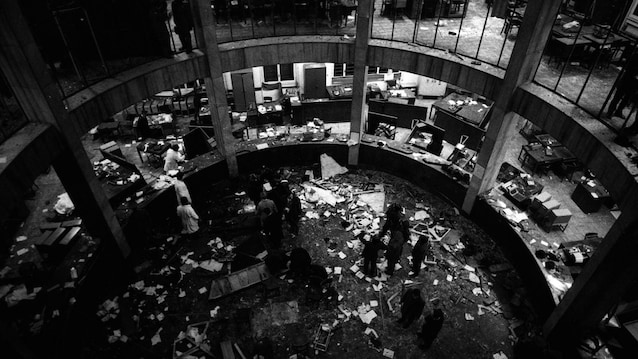
The extreme groups included the Revolutionary Armed Nuclei, Ordine Nuovo, Terza Position and others. The right-wing terrorists found the support of some “deviant” sectors of the secret services, who shared the aim of favoring the establishment of an authoritarian government and countering the left-wing parties. Some neo-fascist coup attempts also took place, the best known of which – excluding the Piano Solo of 1964 – was the 1970 coup led by Junio Valerio Borghese, a former soldier of the Italian Social Republic.
As part of the strategy of tension, several massacres were carried out. Among the main ones:
- The Gioia Tauro massacre, which occurred on 22 July 1970, when a bomb exploded on the tracks as the Syracuse-Turin train passed, killing 6 people;
- The Piazza della Loggia massacre in Brescia in 1974, with the death of 9 people;
- The Italicus train massacre, i.e. the explosion of a bomb on a carriage of the Rome-Brennero train, in a tunnel in the province of Bologna, on 4 August 1974, with 12 victims;
- The Bologna massacre of 2 August 1980, when a bomb exploded at the station causing 85 victims: it was the most serious massacre to occur in Italy after the Second World War.
Some scholars also consider the Rapido 904 massacre, which occurred on 23 December 1984 in the same area as the Italicus massacre, which caused the death of 17 people, to be part of the strategy. Furthermore, far-right groups also committed murders, armed robberies and other crimes.
Left-wing terrorism: the Red Brigades and other armed groups
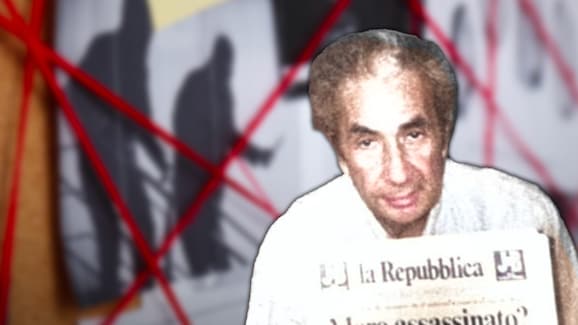
Parallel to right-wing terrorism, far-left terrorism developed, which generally did not carry out indiscriminate massacres, but targeted murders and woundings. The best-known group was that of the Red Brigades, born in the early 1970s. After carrying out demonstrative actions against company executives, from the middle of the decade the Red Brigades began killing. The best-known victim was Aldo Moro, kidnapped on March 16, 1978, after the murder of five escort agents, and killed after 55 days of captivity.
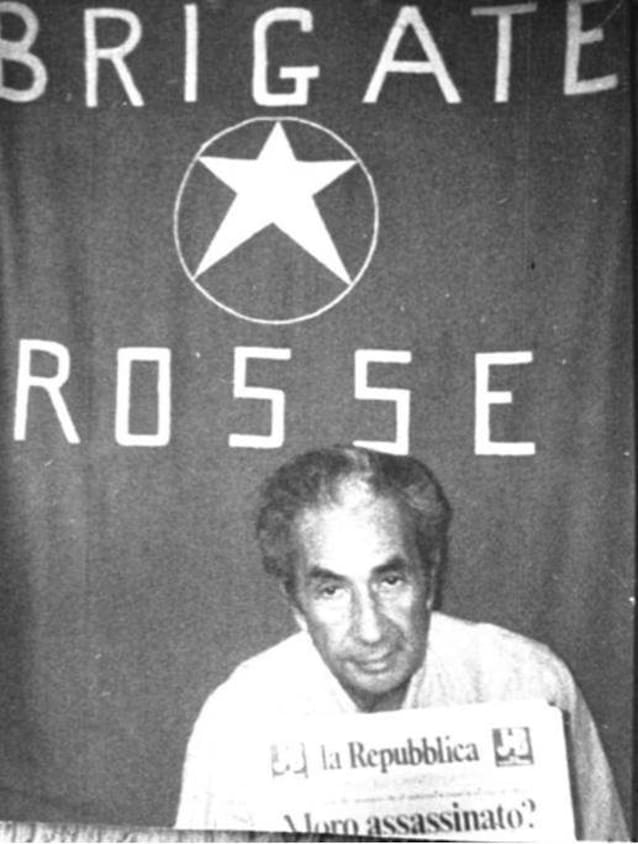
The other people killed included numerous policemen and carabinieri, journalists such as Carlo Casalegno and Walter Tobagi, judges such as Francesco Coco, intellectuals such as Vittorio Bachelet, even a worker such as Guido Rossa.
Other far-left terrorist groups were Prima Linea, itself responsible for numerous murders, and the Nuclei armed proletarians. The armed groups were not linked to deviant state apparatus, but sought a connection with the broader protest movement that developed in those years, particularly in 1977, finding the solidarity of some sectors.
The reaction of the State and the return to the private sector
Republican democracy managed to resist terrorism without resorting to special laws. During the 1970s, some measures were enacted to toughen penalties and control the territory more effectively, such as the Royal Law of 1975, but no laws were passed that limited the freedom of citizens, as some political leaders requested. In the 1980s, after the Bologna massacre, the attacks progressively decreased, until they disappeared. During the decade, moreover, the so-called “return to the private” took place, that is, a sort of depoliticization of Italian society and young people. The Years of Lead ended definitively.