The term “Arab Spring” is a definition that includes all those revolutionary insurrections that have affected the so -called “Arab world” with different degrees of intensity, since 2011. Although in some cases these protests have been simple acts of civil disobedience, in others they have instead given life to real armed insurrections, then resulted in very bloody civil wars, some of which are still in progress. Almost 15 years after the beginning of those protests, and although the events are still ongoing, it must be bitterly noted that, despite the fact that the good intentions were, after the “Arab spring” the overall geopolitical situation remains more critical than ever.
The Arab spring and the beginning of the protests in Tunisia
Without a doubt, the triggering event of the Arab Spring was the autoimmulation and the subsequent death, which took place respectively on December 17, 2010 and January 4, 2011, by Tarek El-Tayeb Mohamed Bouazizi, a poor street vendor of fruit which, not yet twenty-seventh, decided to set fire to the town of Sidi Bouzid in Tunisia, after the local police, who had already targeted him, had already targeted him. The cart has seized with which he moved and showed his goods and the electronic scales necessary to make it weigh.
The death of Bouazizi, amplified and relaunched outdated by social media, had on the Arab world the effect in retrospective fuse on the dynamite, causing over the following months the explosion of an infinite series of mass protests that immediately put the regimes that ruled those countries in crisis; Starting with Tunisia where ten days after Bouazizi’s death the dictator Zine El Abidine Ben Ali was forced to escape, after over 23 years of undisputed government.
The next escalation and the countries involved
The success of the revolution in Tunisia galvanized the squares of the rest of the Arab world, starting with Egypt, always a political and ideological engine of the Middle Eastern area. On February 11, 2011, pressed by square protests and abandoned by the armed forces, Muhammad Hosni El Sayed Mubarak, absolute leader of Egypt for almost thirty years, was forced to resign and was arrested.
Under the push of the squares, the governments in Kuwait, Lebanon and Oman were forced to resign or suffered substantial replacements. In Morocco, Algeria and Jordan despite the absence of dramatic political evolutions, constitutional reforms were still implemented to meet the complaints, especially of a political nature, expressed by activists. Variable intensity protests, culminating in success, also took place in the United Arab Emirates, Iraq, Saudi Arabia, Mauritania, Sudan and Palestinian territories. In these cases, however, the authorities generally responded with economic concessions, especially expanding the welfare welfare programs having as their purpose to appease above all youth discontent.
Arab winter
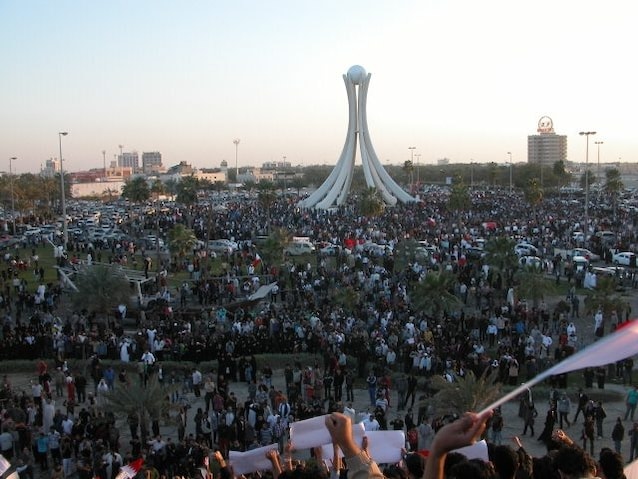
Unfortunately, things did not have a positive outcome everywhere: in Bahrain, the generalized discontent soon emerged in a civil revolt by the then Shiite majority of the population against the monarchical regime of the Khalifa family belonging instead to the Sunni branch of the Islamic religion. Thanks to the armed intervention of Saudi Arabia, the king of Bahrain, Hamad Bin Isa Bin Salman at Khalifa, managed not only to suppress the revolt but in the following five lusters he vigorously carried out a demographic and migratory policy that facilitated the Sunnis, to the detriment of the Shiites, so much so as to completely overthrow the demographic strength between the two communities (if in 2009 the Sciiti were over 70% of the Sciiti Bahreinita population, today their share dropped to 45% making them become a minority for the first time).
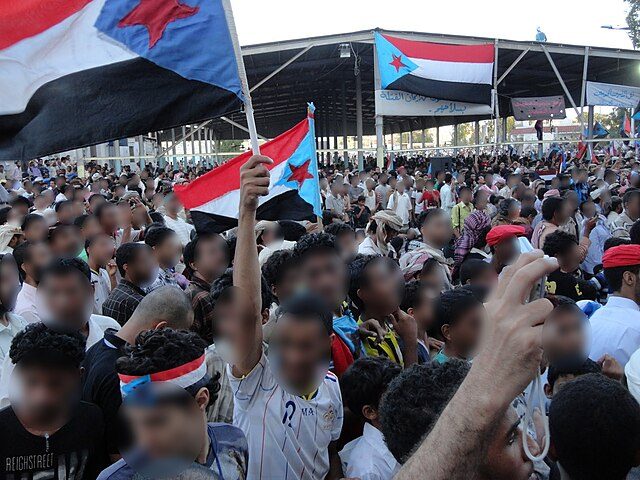
Even worse situations occurred in Libya, Syria and Yemen, countries that sink into dramatic and bloody civil wars still in progress. Although the regimes that had governed those countries with iron fist, such as those of Muammar Muhammad Abu Minar Gaddafi in Libya, Ali Abdullah Saleh in Yemen and Bashar al-Assad in Syria, were overturned for decades, the three countries are literally imploded by creating as many “geopolitical black holes” that the international community has not yet managed to stabilize. The end, or the decrease, of progressive inspiration protests and the subsequent degeneration of civil wars even led to the coinage of the term “Arab winter” to describe the events following 2012.
The legacy of the Arab spring
Making the necessary premise that in reality the Arab spring has not yet ended and that only when this historical season has really ended in all respects will it be possible to analyze it in the round, what we can say limited to the period between 2010 and 2025 is that the three lusters just ended have been a period full of lights and shadows, but with a clear prevalence of the latter.
The Arab Spring has gone through the entire territory of the “Great Middle East enlarged” as an unstoppable tsunami, helping to cause the fall of authoritarian regimes, inheritance of the past, but while creating a void of power that has been filled now by the rise of old and new political subjects inspired by the ideology of extremist and militant Islamic integralism, such as Ha’yat Tahrir Al-Siria and the still more heinous and famous ISIS.
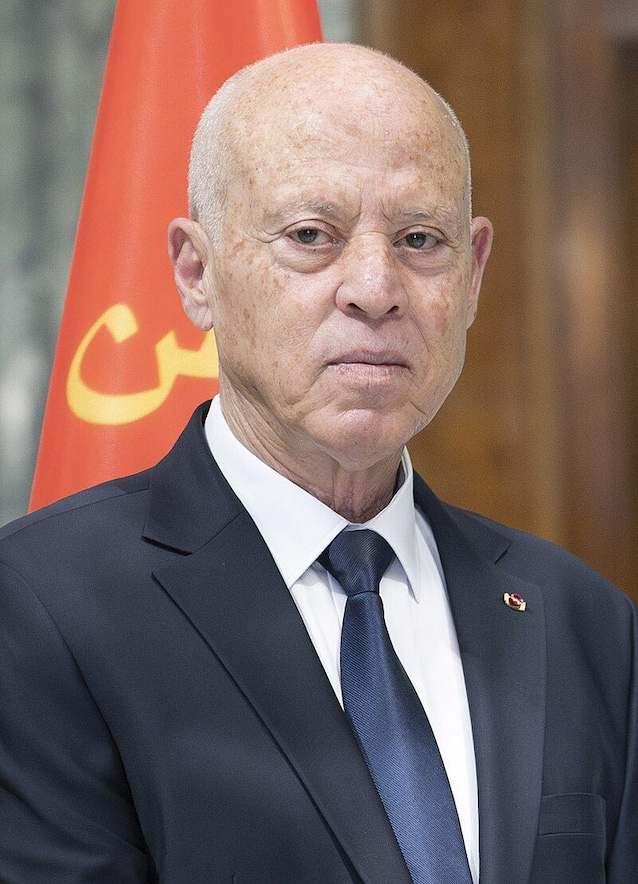
Lastly we can at least say with confidence that to date the Arab Spring has completely failed in an attempt to “bring democracy” to the “Great Middle East enlarged” since even Tunisia, a cot country of the Arab spring has gradually slipped into the grip of a new dictatorial regime, now led by Kais Sieda.