
The gulags were concentration camps established in the Soviet Union in the years of Stalin (1926-1953), were built in the most impervious places, such as Siberia, in order to announce dissidents and common criminals. The prisoners were often forced to forced work and lived in very hard conditions of detention, so much so that the mortality rate was high, despite not having gulag the explicit purpose of eliminating the prisoners. They were closed after Stalin’s death, but some forced work colonies remained in operation until the 80s.
How gulag worked
The word “gulag” is the acronym for Gosudarstvennyj Upvelleje lagerejthat is, central direction of the concentration camps, therefore refers to the ruling body and not to the individual fields. However, the habit of calling the individual prison structures established in the Soviet Union by Stalin is widespread in the West. There were various types of gulags, widespread throughout the territory of the USSR: forced work fields, women’s fields, colonies for popular areas that are not very inhabited and other types.
The Gulags were active from 1926 until Stalin’s death in 1953, but their origins are preceding his dictatorship. Already in the Tsarist Russia there were fields of imprisonment for opponents, known as Katorga, within them numerous Bolsheviks leaders were imprisoned which then became important political exponents of the USSR, including Stalin himself, prisoner from 1913 to 1916. Furthermore, concentration camps were institutions during the civil war that contracted the red army to the counter -revolutionary forces (1918-1922). After the ascent to power, Stalin decided to reactivate the Tsatrists fields and perfect the concentration system.
Who were the prisoners in the gulag
Various categories of people were held in the Gulag: exponents of social categories considered enemies of the Soviet state, such as nobles, clergy, kulaki (landowners); common offenders; Political or presumed opponents, although most of them adhered to communist ideology and supported the Soviet Union. Stalin, in fact, boiled as enemies also the communists who did not perfectly follow his political line and showed that they shared, even partially, the ideas of other Bolsheviks leaders, such as Lev Trotzki (went into exile and killed by Stalin in Mexico in 1940). In the second half of the 1930s, the period of the “great purges” and the most intense repression of opponents, simple suspicions of non -adherence to the Stalinist ideology were enough to end up in the gulag. Moreover, the fields, according to the Stalinist political management, not only served to isolate people considered dangerous, but also had to encourage their “political re -education”.
The living conditions of the prisoners were very hard. The fields were in the most inhospitable locations of the USSR and prisoners were often forced to forced work in the mines, in the construction of dams and bridges and in other sectors. In some cases, prisoners were exposed to fatal dangers, such as uranium extraction without protections.
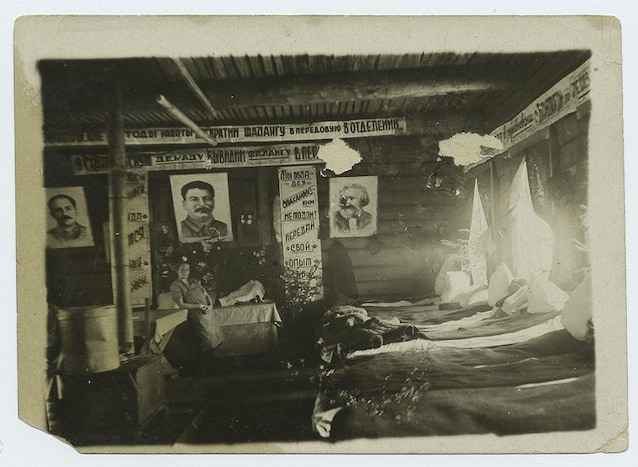
Some famous people were among the imprisonment, such as the writers Solženicyn and Šalamov or the physicist Landau, but not the most important political leaders who, if they entered into contrast with Stalin, were sentenced directly to death. In the Stalinist fields, moreover, some Italian communists who had refuge in the Soviet Union to escape fascist persecutions also ended.
The number of prisoners and dead
In the gulag, about 18,000,000 people were locked up. In moments of maximum system development, more than 2,500,000 people were set at the same time. The mortality rate was high: it is estimated that in the fields a number of prisoners died between 1,000,000 and 1,600,000. However, the Gulag, unlike the Nazi extermination camps, were not explicitly designed to eliminate prisoners. Most of the prisoners were released after serving the sentence.
Closing and memory
After Stalin’s death, the fields were gradually dismantled and in 1960, as part of the detergent promoted by Nikita Kruscev, the Soviet government officially decreed its abolition. Nonetheless, imprisonment and work fields remained in operation for common criminals and political opponents, including the well-known perm-36 field, in the Urali area, closed in 1987.
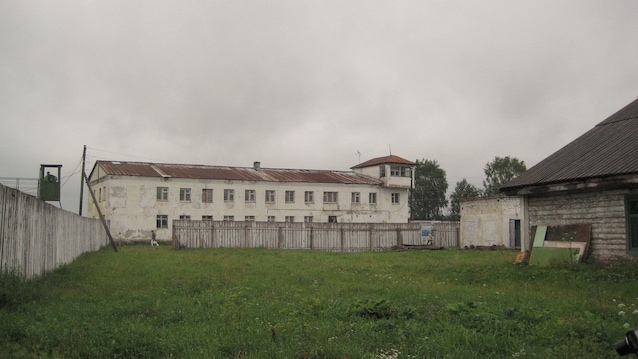
The notoriety of the Gulag in the West is partly due to the book of a former prisoner, Aleksandr Solženicyn, Gulag archipelagopublished in France in 1973 and in other Western countries in the following years (in Italy it came out in 1974), which tells the author’s experience and describes the concentration system. After the dissolution of the Soviet Union, the memory of the Gulag remained alive, and some fields, such as that of Perm, have been transformed into museums.










