The traffic of migrants, nowadays, must be considered as an authentic business, united (with due proportions) to the infamous trafficking of African slaves of the colonization period. At the top of this pyramid of exploitation sit a series of powerful criminal signs of a transnational nature that take advantage of the condition of weakness in which numerous African states are poured, to create real empires of the underworld. Among all, Libya is the country which, by virtue of its weakness and fragmentation, is applying to become the “hub” par excellence of this route.
The demographic dimensions of the trafficking of migrants
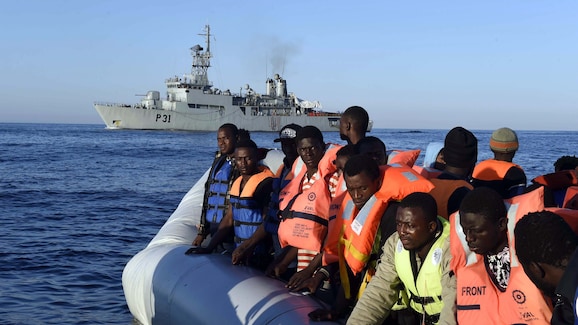
Even if most African migrants move within the continent, a minority part still attempt the crossing towards Europe, often aboard the so -called “sea carts”, precarious boats that feed a lucrative traffic.
According to OECD and international organization for migrations, between 1965 and 2021 about 440,000 Africans, the year left the continent, equal to 0.05% of the population. By comparison, only in 2005 17 million moved within Africa, contributing on the one hand to economic growth, on the other to social tensions.
Between 2010 and 2017, over one million Africans requested asylum in Europe, according to the Pew Research Center, with an increase from 58,000 to 168,000 requests in seven years. Many migrants arrive legally, but remain after the expiry of the visa.
In the meantime, it is estimated that around 2 million irregular migrants are located between Maghreb and Libya, which grows 120,000 units per year. Only 10-15% then try the Mediterranean route, but with costs between $ 4,000 and 6,000 per person, the traffic remains highly profitable for criminal groups.
The traffic routes of migrants
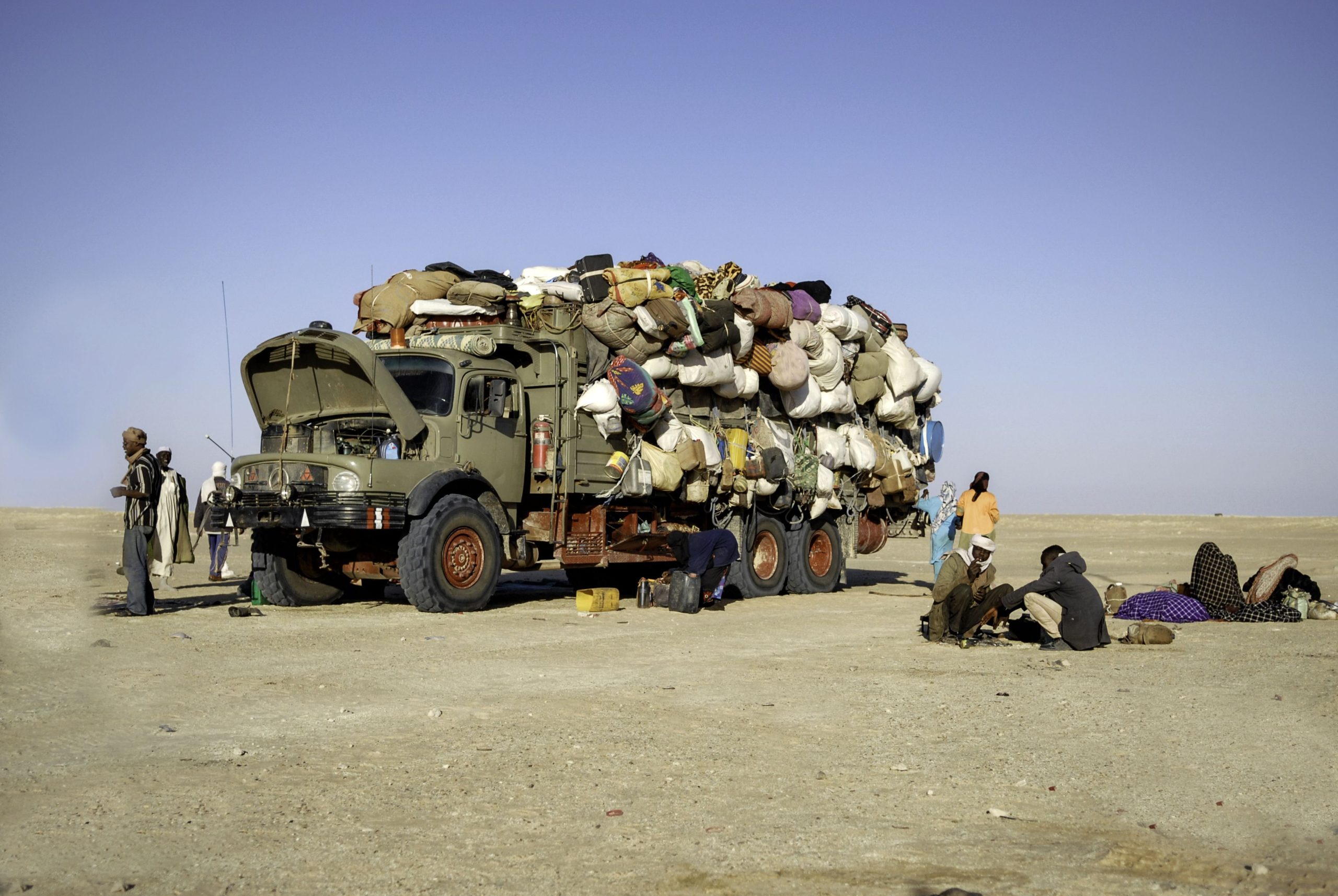
Numerous terrestrial routes for the traffic of migrants have developed in the Maghreb, but the most relevant are two: the first goes from Agadès and Dirkou (Niger) to Sabha (Libya) and then towards the coasts of Tripolitania for boarding towards Europe; The second part from Agadès and Arlit passes through Bamako and Gao (Mali), then reaches Tamamasseet (Algeria) and finally Meghnia, towards the Spanish enclaves of Ceuta and Melilla.
Alongside the Saharan “terrestrial” routes, there are then the so -called “Atlantic routes” with the destination, or passers -by for, Capo Verde, the Canary ones or directly the Iberian peninsula. At first considered as auxiliary paths, the “Atlantic routes” have seen an increase in the activity over the past few years. Data of the Spanish government, referring to the year 2024, speak of a negative record of 10,547 deaths among migrants during the crossing of the Atlantic Ocean to reach the Spanish coast.
Finally, there are the “Mediterranean routes”, that is, the crossing of the Mediterranean Sea, by means of a makeshift vessels mainly directed towards Spain, Malta, Italy and Greece, the latter also affected by the so -called “Balkan route” which, however, is basically reserved for the flows of migrants from the Middle East, from Afghanistan and the Indian subcontinent.
Mafias, lords of war and traffickers
The dimensions of the migratory phenomenon tied up the interests of mafias, traffickers and lords of the war united by the lens to make on the skin of the desperate poor. The exploitation of migrants already begins in their countries of origin and continues once they have reached their destination, in Europe, given that, in many cases, they find themselves in a real slavery condition due to the debts contracts to pay the trip. In the case of women, this almost always involves the fall in the vortex of the prostitution market where the Nigerian mafias have carved out a leading position.
The business of migrant traffic (but also of drugs, weapons and the smuggling of goods of all kinds) has also sucked the Tuareg populations of the Saharan and Sahelian area, once noble shepherds and merchants of gold and salt and today associated with much more shady “exchanges” that led them to collaborate, side by side, with the orbiting Islamic jihadists around the Al-Qaida Galassia first and then ISIS. Finally, let’s not forget the sharing of European crime (Italian mafias, racing, Balkan gangs) of the northern Mediterranean side.
In Libya, migrant traffic is controlled by armed militias related to political power. The dominant figure is Usāma al-Maarī Nağīm, supported by the Al-Radaa (Rada) militia, which in fact manages the business of migrants in the coastal Tripolitania, exercising a strong blackmail power. Mohammed al-Khoja, head of the Department against immigration, was also accused by the United Nations of being involved in traffic. At the top then there is ʿ borimad Mustafa Trabels, interior minister and customs manager, who according to different international accusations deliberately ignore these activities. All three are the leaders of militias who defended Tripoli from General Haftar and are considered pillars of the government of Abdul Hamid Dbeiboh, the only one recognized by Italy. It is also thanks to this political coverage that traffic can continue undisturbed.