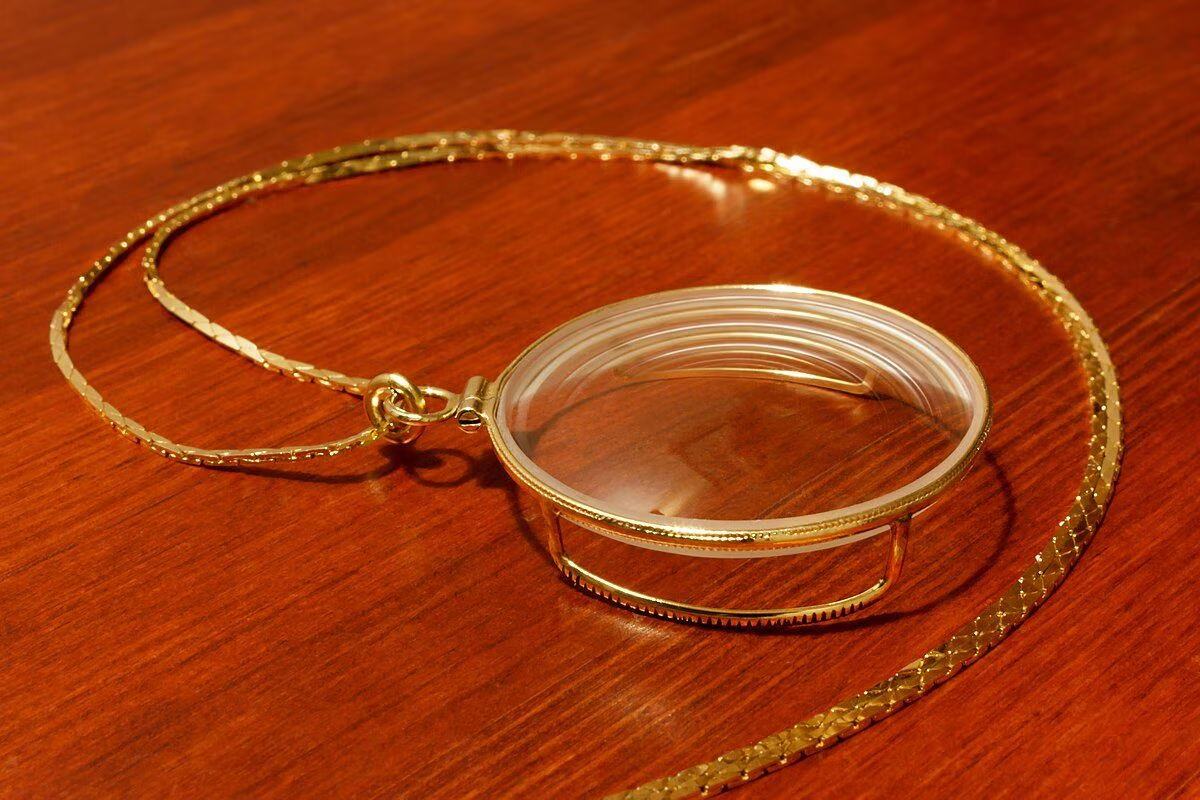
The monocle wasn’t just a bizarre accessory dandy: it was born as an optical tool for correcting myopia, although certainly impractical, but it soon transformed into a symbol of status and refinement. Used in particular by the German military, it was targeted by satire in the nineteenth century and suffered a definitive decline after the world wars. Today it is no longer considered functional, it survives as a historical curiosity and as a cultural icon.
The monocle comes from the quizzing glassa lens with a handle used in the 18th century for reading and observing closely: the novelty was to eliminate the handle and hold it directly in the eye socket. However, it was not at all practical since it corrected only one eye, unlike glasses, fell off easily and required some muscular effort. But it was small, elegant and spectacular: enough characteristics to make it a pocket object loved by aristocrats.
In the eighteenth century, Baron Philipp von Stosch, collector and spy, was among the first to wear it and make it popular (also for this reason, this invention is often attributed to him). From there the monocle quickly went from tool to status symbol. In the nineteenth century it was the favorite accessory of dandyparliamentarians and men of the theater. Often the lenses were made of transparent glass, without any corrective function: wearing it only served to communicate refinement and belonging to the elite.
Precisely because it was ostentatious, the monocle soon became a target of satire; in the 19th century, cartoons of snobs showing off it in unnatural poses abounded. The final blow came in 1925, when the New Yorker he created the mascot Eustace Tilley, an affected character observing a butterfly with a monocle: the definitive representation of the vain pretentious man.
In Germany, however, he maintained a more austere aura. From the 19th century until the Second World War it was associated with Prussian officers and field marshals. Generals such as Erich Ludendorff and other German commanders wore it as a mark of authority and military aristocracy, fixing the monocle in the collective imagination as a symbol of severity and power.
After the Second World War the monocle disappeared: too uncomfortable to wear and too linked to an image of snobbery and militarism. Today it remains a collector’s item or a detail from a theatrical costume, but above all a cultural icon that tells how a useless accessory has managed, for over a century, to represent prestige, fashion and power.