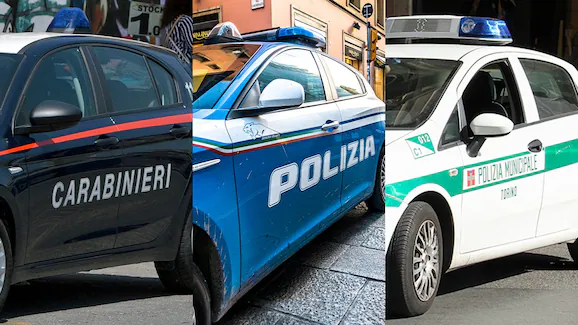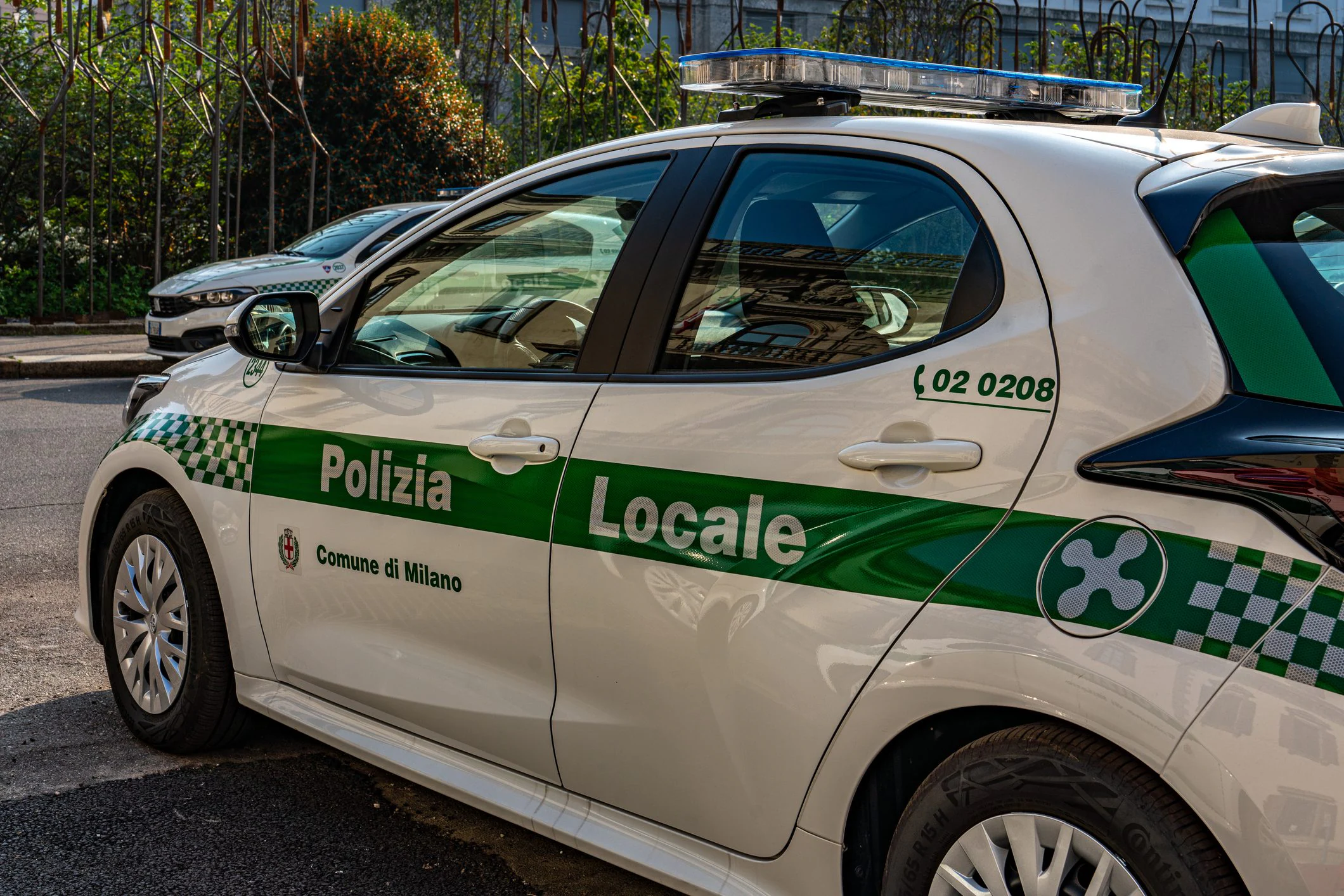
Traveling through the different Italian regions, someone will have noticed that the Local Police cars are not all the same: the colors of the bands change, the symbols on the doors change, even the type of writing changes. While the livery of the Police, Carabinieri and Fire Brigade is always the same throughout Italy (with the exception of the autonomous provinces), a Local Police car from Lombardy and one from Lazio are in fact different, with colors ranging from green to blue and red.
The reason for these differences has to do with the division of competences between the State and the Regions: given that the organization and functioning of the Local Police fall under regional competences, each administration independently chooses colors and symbols for the Local Police vehicles.
Because the liveries of the Local Police are different based on the Region
To understand in detail the reason for these differences we must start from the Constitution. With the reform of Title V (through constitutional law no. 3 of 2001), article 117 was modified, which regulates the division of competences between the State and the Regions. Since then the “Local Administrative Police” has passed under the legislative competence of the Regions, while the State remains with exclusive competence over “public order and security”.
In practice, therefore, it is the Regions that establish how the Local Police is organized and how it functions in their territory.
Added to this is law no. 65 of 1986, the so-called “framework law on the organization of the municipal police”, which in article 6 entrusts the regional laws with the task of determining the characteristics of the uniforms and rank badges and of regulating the characteristics of the means and operational tools supplied to the Corps and services. The only restriction imposed concerns similarity: the uniforms of the Local Police must be visually different from those of the Police Forces and the State Armed Forces.
Clearly, as there are no specific requirements, each Region establishes its own rules. It must be said, however, that this fragmentation is at the center of attempts at national reform: for years, bills to reorganize the entire matter have been discussed in Parliament, some of which propose to assign each body the same single name of “Local Police” throughout Italy.
Among other things, perhaps not everyone knows that the term “Traffic Police” is actually wrong and obsolete (even if it is still used in common language), as confirmed by the Local Police: the correct name is Local Police, which can be divided into Municipal Police, if based in a Municipality or in a Union of Municipalities, and Provincial Police if part of Provinces or Metropolitan Cities.
From Lombardy to Emilia-Romagna: some examples
Let’s take some practical examples: in Lombardy the Local Police car has a white body and a green band (which takes up the color of the regional flag) between 15 and 25 centimeters high, with white/green checkered edges. In the center of the band the writing “Local Police” appears in white, created with Helvetica Black font, while the name of the organization appears in green on the doors. The symbol that characterizes everything is the Camuna Rose, the ideogram contained in the Region’s brand.
In Emilia-Romagna, however, the picture changes. Regional regulations require a basic white bodywork, with a 15 centimeter blue reflective strip. The writing is in white with the Helvetica italic font and is even accompanied by the translation into the main European languages (Local Police – Stadtpolizei – Police Locale – Policía Local) located in a gray band. The regional symbol appears on the bonnet.
In Campania, however, the regional regulation distinguishes between Municipal and Provincial based on the colour. On the white bodywork, the writing “Municipal Police” is in white inside a blue stripe, while the “Provincial Police” travels inside a green stripe. The coat of arms of the relevant local authority (Province, Municipality, etc.) appears on the front fenders.
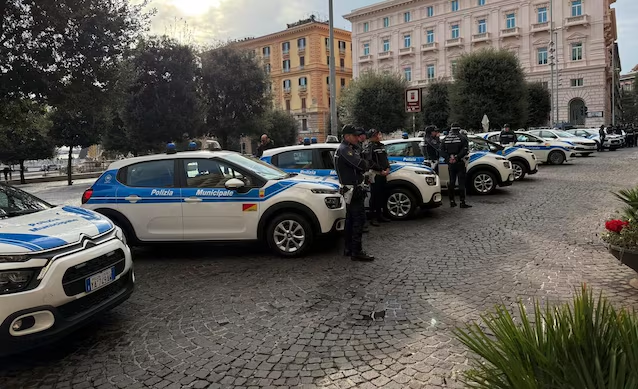
Three Regions, three completely different vehicles, including colours, characters and symbols. And the same goes for all the other regions, each with their own rules.