On November 4, 2025, Italy celebrates National Unity and Armed Forces Day, established to commemorate the armistice which ended the First World War, signed at Villa Giusti. It is therefore a day of celebration of national unity, because Trento and Trieste returned to Italy, but also of the Armed Forces, because all the soldiers who fell during the fight for the Italian homeland are celebrated.
Since 1922 it was a public holiday in all respects, but it was abolished in 1977 to increase the number of working days, and therefore economic productivity, in our country: today, in fact, it is a “suppressed holiday”, i.e. a day that is not a public holiday, but which is still paid to workers as “holiday falling on Sunday” according to most National Collective Labor Agreements (CCNL).
The meaning of the National Unity and Armed Forces Day: what happened on November 4th
On November 4, 1918, the armistice ending the First World War was signed at Villa Giusti in Padua. Italy, after the defeat of Caporetto on 24 October 1917, defeated the Austro-Hungarian army first in the battles of Grappa, at the end of 1917, and then in the final battle of the Piave, in October 1918.
Following the victories, it was announced that “Austria has capitulated” and that “hostilities on land, sea and air on all fronts of Austro-Hungary have been suspended from 3pm today, 4 November”.
This is the famous armistice signed by General Armando Diaz who, at the behest of Vittorio Emanuele III, had taken the place of General Cadorna. The episode according to which many Italian families gave the name “Signed” to their children precisely because at the bottom of the armistice it read “signed, Diaz.”
The establishment of the national holiday and the tomb of the Unknown Soldier
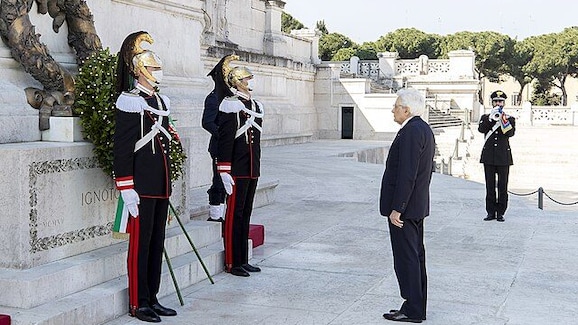
In the first two years following the War, there were no real celebrations on the day of the signing of the armistice: on 4 November 1921, at the behest of the then Minister of War Luigi Gasparotto, the Unknown Soldier, a fallen and never identified soldier, was buried in Rome, on the Altare della Patria, as a symbol of all the Italians who lost their lives during the War.
From the following year, 1922, November 4th became a national holiday, with Royal Decree no. 1354 of 23 October: “November 4, the anniversary of our victory, is declared a national holiday and considered a public holiday for all civil purposes”. With the entry into force of the law, November 4th was officially proclaimed a public holiday.
November 4th today: how is it celebrated and why is it no longer a holiday?
Today November 4th is no longer a day of rest and celebration, but is considered a “civil solemnity”: we go to school and go to work, but it still remains officially recognized as National Unity and Armed Forces Day.
In 1977, however, with Law n.54 it was decided to abolish the holiday from the working calendar, with the aim of increasing the working days in our country:
Since 1977, the celebration of the National Republic Day and the National Unity Day have taken place on the first Sunday of June and the first Sunday of November respectively. The days 2 June and 4 November therefore cease to be considered holidays.
Consequently, November 4th is not considered a “weekday”, but a “suppressed holiday”: in practice, therefore, it is a working day for which workers receive additional compensation, as if they had not enjoyed a holiday because it fell on a day of rest (like Sunday, in fact.)
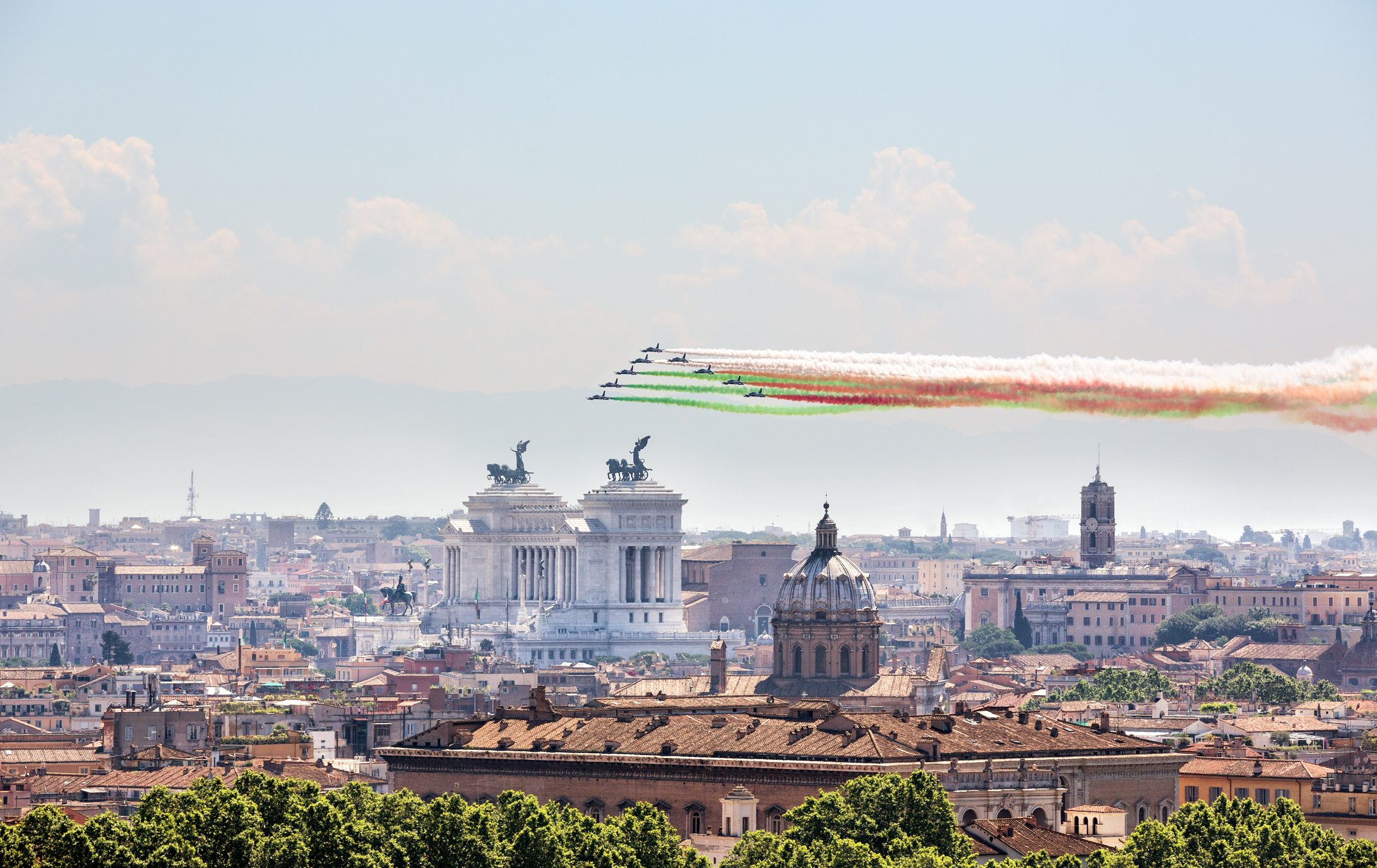
With law 1 March 2024, n. 27 the value of memory and national identity was reaffirmed, enhancing celebration initiatives, including the famous flight of the Frecce Tricolori, the planes of the aerobatic team of the Air Force, and further activities carried out in private, public and educational contexts.