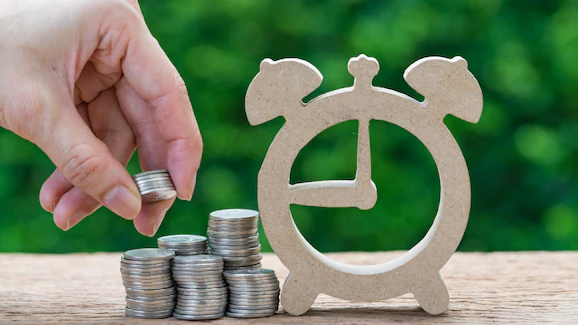
The thirteenth (also called “Christmas bonus”) is an additional monthly salary that is paid to all employees (public and private) and pensioners in the month of December. In practice, it is an “additional” salary, which is added to the 12 paychecks that you receive during the year: hence its name, given that it is equivalent to a 13th month’s salary.
The thirteenth salary, however, does not represent a bonus or a prize: it is simply a part of the salary that accrues during the year and which is then paid in a lump sum at the end of the year. There is no single date for crediting the thirteenth salary: pensioners have already received it on 1 December, public employees will receive it on 15 December, while for private workers the methods change based on the CCNL.
What is the thirteenth and who is entitled to it
The thirteenth, therefore, is an additional month’s salary that is paid to all Italian employees and pensioners in the month of December.
It is important to underline that the thirteenth salary is not a bonus, nor a prize: it is in fact a “deferred salary”. In other words, it means that the employer “sets aside” a part of the salary every month, which is then paid in a lump sum in December.
Since it is not a bonus, the payment of the thirteenth salary is mandatory for employers, as required by the Presidential Decree 1070/1960. In short, today receiving the thirteenth salary is a right guaranteed by all the CCNL (National Collective Labor Agreements) in force in Italy.
Everyone receives this additional monthly payment employed workers (even those on fixed-term contracts, with part-time contracts or apprentices), as well as all pensioners. However, self-employed workers (i.e. holders of a VAT number), occasional collaborators and interns are excluded.
But who pays the thirteenths? The companies themselves pay this monthly payment: only in the case of pensioners is the thirteenth paid by INPS. According to estimates released by the CGIA (Italian General Confederation of Crafts) of Mestre, the thirteenth will be paid to approximately 36 million Italians, including workers and pensioners.
When the thirteenth arrives: why is it lower than the salary?
But when does this thirteenth arrive? The payment date is not the same for everyone, but depends on the individual CCNL: the additional monthly payment is still paid before Christmas, between 10 and 24 December. In the case of public employees, the amount is credited on 15 December 2025. Furthermore, the credit can arrive directly together with the salary, or at a later time.
In general, the thirteenth salary is calculated on the basis of the employee’s overall salary: the salary taken as reference is that relating to the month of December or, in the case of early termination of the employment relationship, to the month of termination of the contract.
To find out the amount of this monthly salary, there is a standard formula, expressed below: simply multiply the gross monthly salary (including any seniority increases) by the number of months worked. At that point, the result is divided by 12.
For part-time workers, however, the amount is calculated on the basis of the hours actually worked.
Finally, it should be specified that the thirteenth month’s salary is taxed: in fact, tax and social security withholdings are applied to this monthly payment (the so-called contributions). At the same time, any bonuses or tax deductions are not calculated for the calculation of the thirteenth salary – which are instead applied to the basic salary – and overtime, travel allowances or expense reimbursements are not included. This is why the amount of the thirteenth is lower than the net monthly payment received each month.